
Not long ago, the options for serious hair loss were pretty limited. You could take finasteride, apply minoxidil daily, or go for surgery. That was basically it.
2026 looks very different. A new generation of regenerative treatments, particularly PRP therapy and stem cell-based approaches, are changing what hair restoration actually means. These are not fringe experiments. They are doctor-administered, clinically supported treatments that thousands of Malaysians are using to recover ground they thought was gone for good.
Here is an honest look at where things stand, what the science actually says, and who these newer approaches are realistically suited for.
Why Hair Restoration Is Shifting Toward Regenerative Medicine
The old approach to treating hair loss was largely about slowing it down. Minoxidil increases blood flow to follicles but needs to be used indefinitely. Finasteride blocks DHT, the hormone responsible for follicle miniaturization, but also requires ongoing use. Neither actually repairs the follicle itself.
Regenerative medicine works differently. Instead of managing the symptom, it tries to address the environment in which the follicle exists, giving weakened or dormant follicles the biological signals and nutrients they need to function properly again.
PRP and stem cell therapies are the two most established examples of this shift in Malaysia right now. For a complete picture of what non-surgical hair loss management looks like in KL today, our hair loss treatment guide covers every stage and option.
How PRP Therapy Works for Hair Restoration
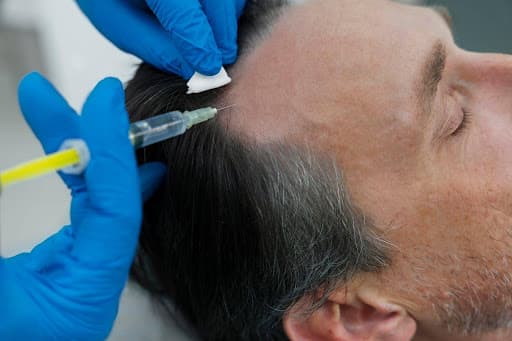
Platelet-Rich Plasma therapy starts with your own blood. A small sample is drawn, spun in a centrifuge, and the platelet-concentrated layer is separated and prepared for injection.
Platelets carry proteins called growth factors, which include PDGF, VEGF, IGF-1, and EGF among others. These are the same signals the body naturally sends to repair tissue after injury. When injected into the scalp at follicle level, they stimulate blood vessel growth, increase cell proliferation, and essentially tell weakened follicles to start producing hair again.
Clinical studies have shown consistent improvements in hair density and thickness in patients with androgenetic alopecia. Most Malaysian aesthetic physicians now recommend PRP as a first-line clinical option for early to moderate hair loss before considering surgery.
Because the treatment uses your own blood, allergic reactions are essentially impossible. Recovery involves mild scalp redness that resolves within hours. Full session details and protocol for our PRP hair treatment programme in Malaysia are available on that dedicated page.
What Stem Cell Hair Treatment Involves
Stem cell hair therapy in Malaysia generally refers to treatments that use growth-factor-rich extracts derived from stem cell cultures, rather than directly transplanting stem cells themselves. The most prominent examples are exosome therapy and stromal vascular fraction (SVF) applications.
Exosome therapy uses tiny vesicles released by stem cells, packed with regenerative signals. When applied to the scalp through micro-injections or microneedling, they deliver a concentrated cascade of growth factors that PRP alone cannot replicate.
Early clinical data is strong. A 2025 study showed approximately 80 percent of patients responding positively to exosome treatment with measurable increases in hair density within six months.
This makes exosome therapy particularly valuable for patients who have tried PRP and want to go further, or for those with more advanced thinning where PRP alone is not producing enough progress. Full details on how it is delivered and what results to expect are on our exosome hair treatment in Malaysia page.
PRP vs Exosome Therapy: Which Is More Effective
Both work. But they work at slightly different depths of the problem.
PRP stimulates existing follicles using your own biology. It is well-studied, affordable relative to more advanced options, and suitable across a wide range of patients.
Exosome therapy delivers a more concentrated and sustained signal because the growth factors are released gradually over days rather than hours. It is also suitable for patients who cannot produce high-quality PRP from their own blood due to illness, age, or medication.
Many clinics in KL now pair both treatments for a more comprehensive protocol, particularly for patients at Norwood Stage 3 or above.
Combining Regenerative Therapy With Hair Transplant Surgery
One of the most important developments in hair restoration is how regenerative treatments are now integrated with surgical procedures.
Surgeons in Malaysia increasingly soak harvested grafts in PRP before implantation to improve graft survival rates. Post-surgery PRP or exosome sessions also help protect native hair from continuing to thin around the transplanted area.
The result is not just about the transplant doing its job. It is about preserving everything else at the same time. If surgery is something you are weighing alongside regenerative treatments, our hair transplant Malaysia page gives a complete overview of what the surgical path involves.
Who Is Seeing the Best Results in 2026
Patients doing best with regenerative protocols in Malaysia generally share a few common factors. They start treatment early, before extensive follicle death has occurred. They commit to a structured session schedule rather than treating it as a one-off procedure. And they combine regenerative therapy with appropriate medical management such as minoxidil or finasteride where applicable.
Hair loss is progressive. The best outcomes come from catching it at the right stage and building a layered approach rather than waiting until surgery is the only remaining option.
What to Expect From a Regenerative Hair Treatment Session
The process itself is straightforward. Numbing cream is applied to the scalp. For PRP, a blood draw is done and processed on site while you wait. The injections take around twenty to thirty minutes. Mild redness and scalp sensitivity may follow for a day or two.
Exosome treatments follow a similar process but use pre-prepared material rather than your blood. Some protocols combine microneedling with the exosome application to enhance penetration.
You will not see overnight results. The regenerative process takes time. Most patients notice reduced shedding within four to six weeks and visible improvement in density by three to four months.
Realistic Expectations for Hair Restoration Results
It is worth being direct about this. Regenerative therapy works best when follicles are still alive but underperforming. If significant scarring or years of complete baldness have destroyed the follicular structure in an area, no amount of PRP or exosome therapy will bring those follicles back. Surgery would be needed to restore coverage in those zones.
But for patients with active thinning, diffuse density loss, or early recession, the combination of modern regenerative medicine and consistent medical management offers genuinely impressive results that were not available five years ago.
To begin with a proper scalp evaluation and get a clear picture of where your hair loss sits and what works best next, book a consultation at Nexus Clinic.
Frequently Asked Questions
How is stem cell hair treatment different from PRP?
PRP uses growth factors from your own blood platelets. Stem cell-based treatments like exosome therapy use signals derived from stem cell cultures, which carry a broader and more sustained regenerative effect. Exosomes tend to deliver results over a longer period than PRP.
Is exosome hair therapy available in Malaysia?
Yes, a growing number of licensed aesthetic clinics in KL and major cities now offer exosome hair therapy as part of their hair restoration programme.
How many sessions of PRP do I need before seeing results?
Most patients notice reduced shedding and early regrowth after two to three sessions. However, the standard loading protocol of three to four sessions is needed to build a lasting regenerative foundation.
Can I do PRP and exosome therapy at the same time?
Some clinics do combine them, and early results suggest a synergistic benefit. Your doctor will assess whether combination therapy makes clinical sense based on your hair loss stage.
Does regenerative therapy work for scarring alopecia?
Scarring alopecia, where inflammation has permanently destroyed follicles, does not respond well to regenerative therapy. A dermatologist assessment is essential before any treatment for this type of hair loss.
How long does a PRP session take?
From blood draw to completed injections, a PRP session typically takes forty-five minutes to an hour.
What should I avoid after a PRP session?
Most doctors recommend avoiding intense exercise, alcohol, and direct sun on the scalp for 24 to 48 hours after a session to allow the injection sites to settle properly.
Can exosome therapy replace a hair transplant?
No. Exosome therapy can significantly improve density and slow progressive hair loss, but it cannot fill areas where follicles have been completely inactive for years. For those areas, surgical transplantation remains the only way to restore visible coverage.
Is regenerative hair treatment safe?
PRP is considered extremely safe because it uses autologous material from your own body. Exosome therapy using clinically prepared products from certified labs also carries a strong safety profile. Always ensure your clinic uses medically certified materials and that the procedure is administered by a licensed doctor.
Will I need to keep doing these treatments forever?
For PRP and exosome therapy, ongoing maintenance is generally recommended because the underlying causes of hair loss continue. Many patients do a loading phase followed by sessions every six to twelve months. Once hair transplant surgery has been done, the transplanted hair is permanent, though native hair may still require maintenance treatment.
✓ Reviewed by Dr. Preetha Nair, Aesthetic Medical Doctor – Nexus Clinic KL