
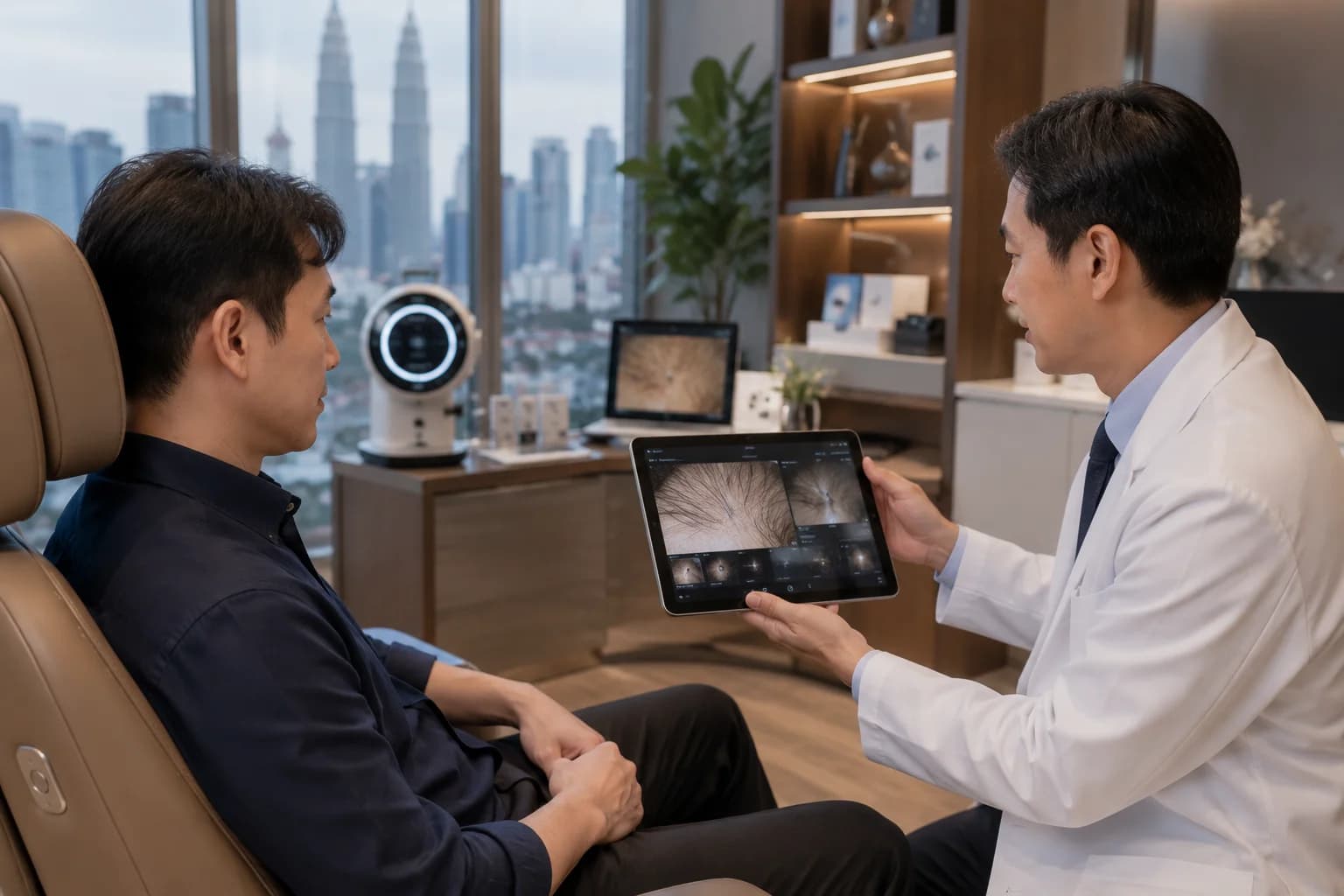

Kuala Lumpur has quietly become one of the better cities in Asia to get a hair transplant. Not just because of pricing (though that is certainly competitive) but because the concentration of trained doctors, modern clinic facilities, and a well-regulated medical environment has reached a point where outcomes rival what you would get paying considerably more in London or Sydney.
But the market is large enough that significant variation in quality exists. Knowing what to look for, what questions to ask, and what realistic results look like will save you from making a very expensive mistake.
This guide covers everything from how to evaluate clinics to what your head will look like at various stages of recovery.
Why Kuala Lumpur for a Hair Transplant
Malaysia’s medical tourism sector is mature and well-established. The Malaysian Medical Council regulates practitioners, and the MOH provides oversight of clinics and procedures. This regulatory framework, combined with competitive pricing, attracts both local patients and medical tourists from Singapore, Indonesia, Australia, and the Middle East.
In KL specifically, you benefit from a concentration of aesthetic clinics in established medical hubs, easy logistics, and doctors who have often trained internationally before bringing those skills back to Malaysia.
The average cost of a hair transplant in KL is considerably lower than comparable quality in the UK, Australia, or the United States, while using the same FUE techniques and technology. This makes it genuinely attractive without being a compromise.
Understanding the Types of Hair Transplant Available in KL
Modern KL clinics offer several variations of hair transplant technique, each with different strengths.
Standard FUE is the most common. A micro-punch harvests follicular units individually from the donor zone, leaving only tiny round marks that fade over time. No strip of scalp is removed. Most clinics performing FUE in KL use tools ranging from 0.7mm to 0.9mm in diameter for extraction.
Sapphire FUE replaces the steel blades used to create implantation channels with gemstone-tipped instruments. This allows finer, more precise incisions, which supports higher density placement and potentially faster healing.
DHI (Direct Hair Implantation) uses a Choi implanter pen, which combines the creation of the channel and the insertion of the graft into one step. This reduces the time grafts spend outside the body and allows tighter density. DHI typically costs more than standard FUE but is preferred for certain high-density crown or hairline cases.
Some clinics also offer combination approaches, using FUE for extraction and DHI for implantation. Your doctor will recommend the most appropriate technique after assessing your specific case and donor zone. For a clear comparison of these techniques and which situations each one suits, see our FUE hair transplant in Malaysia guide.
How to Evaluate Hair Transplant Clinics in KL
Not all clinics that advertise hair transplants in KL are equal. Here is a practical evaluation checklist.
Verify that the surgeon is licensed and registered with the Malaysian Medical Council. ISHRS membership is an additional indicator of specialized training.
Ask specifically who performs the procedure. In some clinics, the doctor designs the hairline and does the first stage while technicians perform the extraction and implantation. In the best clinics, a qualified doctor is present and active throughout the entire procedure.
Ask to see before and after photographs of cases with hair loss patterns similar to yours. Generic marketing photos are not useful. Patient-specific results are.
Understand exactly what is included in the quoted price. Some clinics quote a base rate and then add on medications, follow-up appointments, and post-op care separately.
Be sceptical of unusually low pricing. Below RM 4 per graft for FUE in a KL clinic should prompt questions about who is performing the procedure and under what conditions.
The Consultation Process: What Should Happen
A proper hair transplant consultation in KL should involve a thorough scalp examination, ideally using a dermatoscope or trichoscope to assess follicle health and donor area density. Your doctor should map your hair loss pattern, discuss your Norwood stage, and give you a realistic estimate of graft count needed.
The consultation should also involve an honest conversation about your donor zone. Not everyone has a donor area that can sustain the coverage they are hoping for. A good doctor will tell you this clearly rather than take your money and deliver a result below expectations.
You should leave the consultation knowing exactly what technique will be used, how many grafts are planned, what the hairline design looks like, and what the full cost breakdown is. Our hair transplant in Malaysia page gives a full overview of what the Nexus Clinic consultation and programme includes.
What KL Clinics Charge for Hair Transplants in 2026
| Technique | Cost Per Graft | Typical Graft Range | Approximate Total Cost |
|---|---|---|---|
| Standard FUE | RM 6 to RM 12 | 1,500 to 4,000 grafts | RM 10,000 to RM 25,000 |
| Sapphire FUE | RM 8 to RM 14 | 1,500 to 4,000 grafts | RM 10,000 to RM 25,000 |
| DHI Direct Hair Implantation | RM 12 to RM 18 | 1,500 to 4,000 grafts | RM 10,000 to RM 25,000 |
Month by Month: What Recovery Looks Like
Week 1 to 2: The transplanted area will have small crusts or scabs at each graft site. The donor area will have tiny round marks from extraction. Some swelling around the forehead is common in the first three days. Follow your clinic’s washing instructions carefully during this period.
Weeks 2 to 6: The transplanted hairs begin to shed. This is normal and expected. It reflects the follicles entering a resting phase. Many patients find this the most psychologically challenging part because the scalp can look similar to before surgery for a period.
Months 3 to 4: New growth begins. Initially, the emerging hairs are fine and light. You may notice them before others do.
Months 6 to 9: Density increases meaningfully. Most people start feeling genuinely positive about the result during this period.
Month 12: The final result. At this point, the transplanted hair is growing normally and the density is at its mature level. Most consultations for final evaluation happen at this stage.
Protecting Your Result After a Transplant
The transplanted hair is permanent. But native hair that was not transplanted can continue to thin if the underlying cause of hair loss is not managed.
Most doctors in KL recommend continuing or starting medications like minoxidil or finasteride alongside the transplant to protect remaining native hair. Adding PRP hair treatment sessions post-surgery is also increasingly common as a way to sustain overall scalp health and protect non-transplanted follicles.
Sun protection during the first month is important for graft survival and donor area healing. Avoiding strenuous exercise, swimming, and direct scalp trauma for the first few weeks is standard advice. For patients who want to understand all their options before committing to surgery, our hair loss treatment overview covers the full non-surgical spectrum first.
Book a consultation at Nexus Clinic to assess your candidacy properly and get a thorough scalp evaluation before making any decisions.
Frequently Asked Questions
How long does a hair transplant procedure take in KL?
Most FUE procedures take between five and eight hours depending on the graft count. Larger sessions involving 3,000 or more grafts may be split across two days.
Can I fly home the day after a hair transplant?
Most doctors advise waiting at least three to five days before flying to allow initial healing and to be accessible for the first post-operative check. International medical tourists should plan for at least a week in KL.
Is there a risk of infection after a hair transplant?
Infection risk is low when procedures are performed in a properly sanitised clinical environment and aftercare instructions are followed. Your doctor will prescribe antibiotics for the initial period as a precaution.
Do transplanted hairs fall out after the procedure?
Yes, and this is expected. Transplanted hairs shed within the first two to four weeks as follicles enter a resting phase. This is a normal part of the process, not a sign of failure. Permanent new growth begins around months three to four.
Will my transplanted hair need cutting and styling like normal hair?
Yes. Once established, transplanted hair grows like any other hair and can be cut, coloured, and styled normally.
What if I am not happy with my results at 12 months?
A reputable clinic will offer a follow-up consultation and honest assessment of what further options exist. This might include additional grafts to increase density or addressing areas where growth was lower than expected.
Can beard or body hair be used as donor hair for a scalp transplant?
In cases where the scalp donor zone is insufficient, body hair transplant (BHT) using beard, chest, or back hair is possible. These hairs have different growth characteristics and texture from scalp hair, and results vary more widely. It is generally used as a supplementary approach rather than a primary one.
How many total grafts can be harvested from a typical donor zone?
Most patients have a lifetime harvest potential of 5,000 to 8,000 grafts from the scalp donor zone. Surgeons take this into account to ensure future options are preserved.
Does a hair transplant affect the top and sides of my head equally?
No. The transplanted area and the native hair are separate. The transplanted area produces permanent new growth. The native hair in untreated areas may continue to thin over time if the underlying cause is not managed.
Is the hairline designed by the doctor or by me?
It is a collaborative decision. The doctor proposes a hairline design that suits your facial proportions, age, and the realistic coverage possible from your donor zone. Your input matters, but a skilled surgeon will explain why certain hairline positions are more natural and sustainable than others.
✓ Reviewed by Dr. Preetha Nair, Aesthetic Medical Doctor – Nexus Clinic KL