
There are a lot of clinics in KL offering hair transplants. There are a lot of Instagram pages showing impressive before and after results. And there are a lot of very different price points that make it genuinely difficult to figure out who to trust.
The problem is that hair transplant surgery is not a product you can return if you are unhappy. If the result is poor, correction is possible but difficult, expensive, and limited by how much donor hair you have left. The margin for error is small, and who you choose matters enormously.
Here is a practical framework for making a well-informed decision.
 Look at the naturalness of results, not just the density. Does the hairline look human? Are the angles right? Is there evidence of the pluggy or doll-like appearance associated with older techniques or poor execution?
If a clinic cannot or will not show you relevant cases, that is a signal. For context on what well-executed FUE results look like and what the technique involves, our FUE hair transplant Malaysia overview gives a clear picture.
Start With Credentials Not Marketing
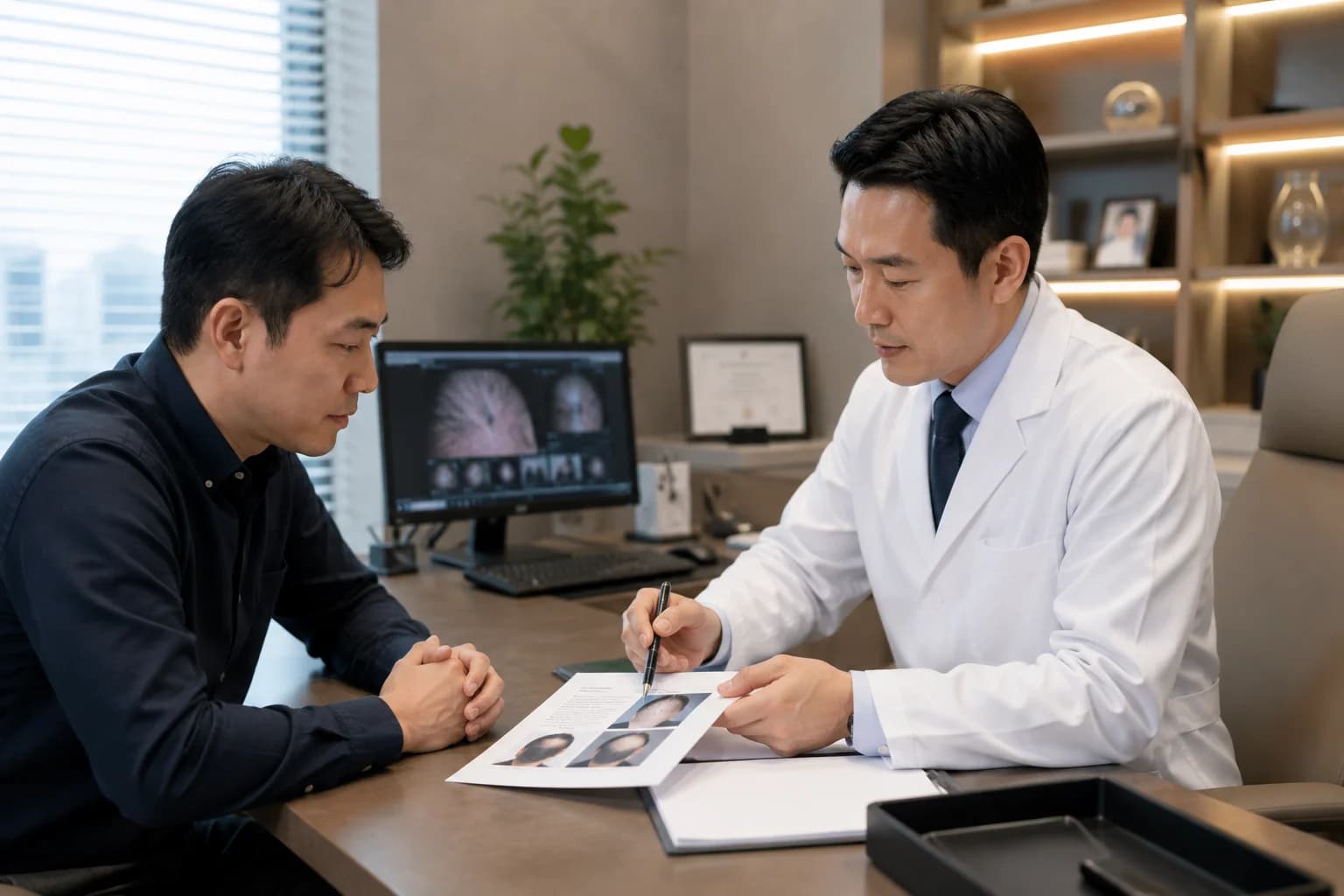
The first filter is whether the surgeon performing your procedure is legitimately qualified. In Malaysia, hair transplant surgery must be performed by a doctor registered with the Malaysian Medical Council (MMC). This is non-negotiable. Beyond basic registration, look for: Specialist training in aesthetic or reconstructive medicine. Many good hair transplant doctors in KL have completed postgraduate training in aesthetic medicine and have dedicated significant clinical time to hair restoration specifically. ISHRS membership. The International Society of Hair Restoration Surgery is the leading international body for hair restoration professionals. Membership requires meeting standards of training, case volume, and professional conduct. It is a useful indicator of serious engagement with the specialty. Verifiable experience. Not general aesthetic medicine experience. Specific hair transplant case volume. A doctor who has performed 50 procedures is in a different league from one who has performed 500, even if their general credentials look similar.Ask Who Specifically Performs Your Procedure
This is the question most people do not ask and most clinics do not volunteer information about unprompted. In some hair transplant setups, the qualified doctor does the consultation, designs the hairline, and then hands over to trained technicians for the extraction and implantation. The doctor may supervise at a distance or check in periodically. In the best setups, a qualified doctor is actively involved throughout the procedure. Why does this matter? Because graft survival rates, implantation angle, and hairline naturalness all depend on the skill and attention of whoever is placing each follicle. These are decisions made hundreds or thousands of times per procedure. The difference between a doctor with 500 transplants of experience and an undertrained technician is not theoretical. It shows up in your results. Ask directly: who will be performing my extraction and implantation? If the answer is vague, that is informative.Evaluate Before and After Results Properly
Every clinic has before and after photos. Most of them show their best cases. The question is whether those cases are relevant to yours. Ask to see results from patients with a similar hair loss pattern, similar Norwood stage, and similar hairline zone to yours. A clinic with excellent crown restoration results might not have as much experience with hairline design specifically.
Look at the naturalness of results, not just the density. Does the hairline look human? Are the angles right? Is there evidence of the pluggy or doll-like appearance associated with older techniques or poor execution?
If a clinic cannot or will not show you relevant cases, that is a signal. For context on what well-executed FUE results look like and what the technique involves, our FUE hair transplant Malaysia overview gives a clear picture.