
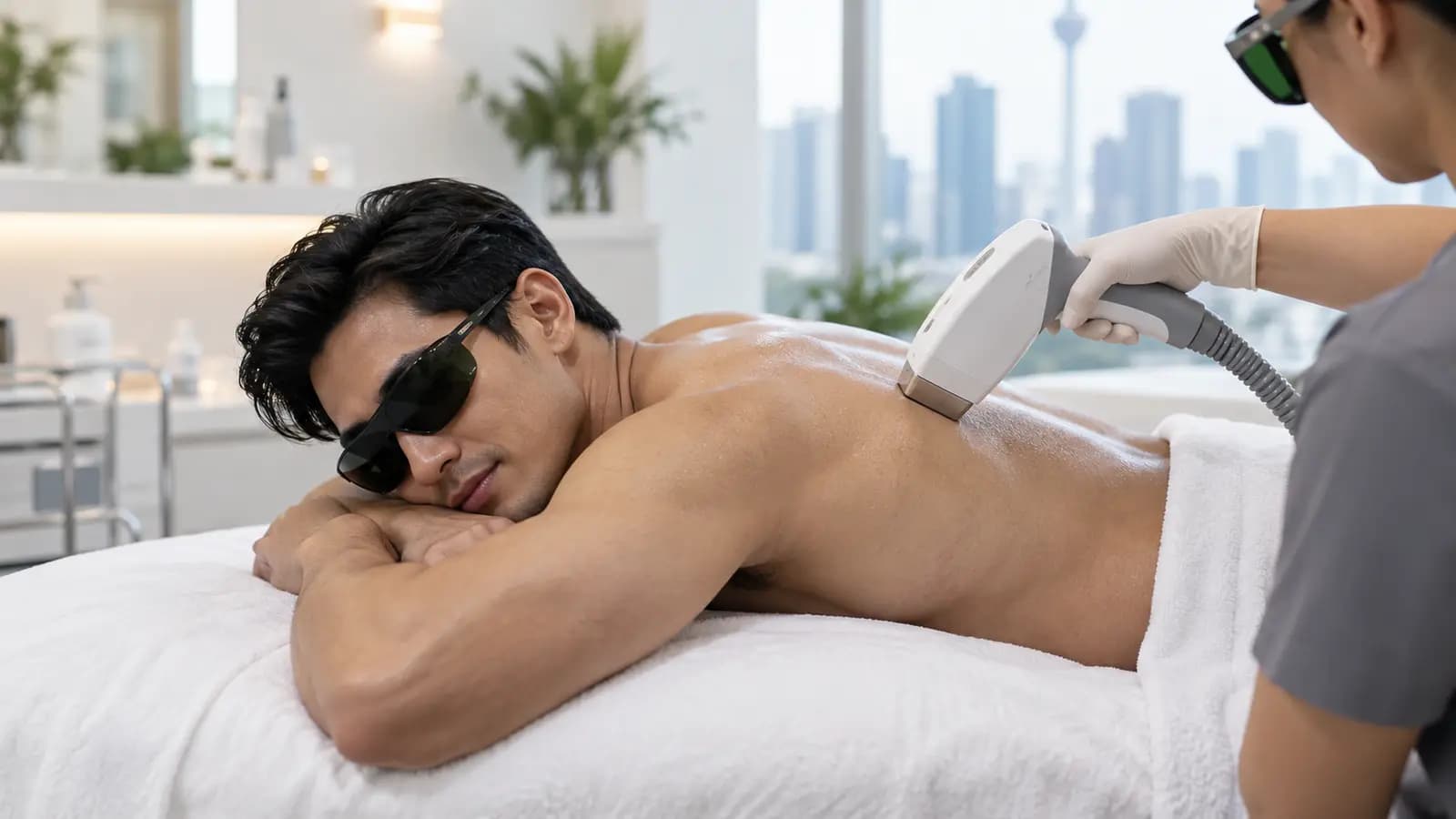
Testosterone has an inverse effect on the calculation of laser hair removal sessions than most men would expect going into a session. Male hair is coarser, denser and seated deeper within the follicle than on the same area in females, providing each follicle with greater pigment to target, but requiring more pulses and sessions for full damage of the follicle, and dormant testosterone follicles can be activated months into a session, causing a rise in unplanned hair growth. None of this detracts from the effectiveness of laser hair removal for men, it simply alters the expected appearances of a session count and the general expectations of a session count from a generic article.
What a Realistic Session Count Looks Like
| Area | Typical sessions | Why |
|---|---|---|
| Beard line, neck | 6 to 8 | High follicle density and hormone influenced growth surrounding the jaw |
| Chest, abdomen | 6 to 10 | Thick, dense hair heavily influenced by testosterone |
| Back, shoulders | 6 to 10 | Same hormone influence with a distinctive pattern worth noting, covered below |
| Arms, legs | 6 to 8 | Generally more consistent response, less hormonally reactive than the chest or back |
| Underarms | 6 to 8 | Generally fairly predictable response across the board |
Sessions are generally spaced at intervals of 4 to 8 weeks to accommodate the hair growth cycle, as only follicles in active growth at the time of treatment will respond to the laser. Each session generally reduces visible hair by approximately 10 to 15 percent, building into an overall reduction of around 70 to 80 percent visible hair after completion of a full course.
Why Men Require More Sessions Than The Number Suggested Elsewhere
A significant portion of this comes down to biology rather than your clinic or laser. Coarser, deeper rooted follicles genuinely require more exposure energy for complete damage, and hormonally active areas, namely the chest, back and beard specifically, can have inconsistent hair loss where certain areas thin out while others hold firm, and testosterone can activate dormant follicles months into a session that were never targeted before, which is normal and part of the process to not target new hair growth.
- Facial and neck hair tends to require the upper end of the session range due to density and hormonal influence in the area around the jaw
- Body areas, such as the chest and back, tend to require touch up sessions after a full course as hormonally driven follicles cycle into and out of dormancy
- Legs, arms and underarms generally have more predictability and less likelihood of requiring maintenance beyond a full course
The Back And Shoulders Deserve A Specific Mention
This is worth noting before you book, rather than after you've had one session. A recent clinical review looking at a condition known as paradoxical hypertrichosis, where treated hairs become thicker and denser and grow back, found that this reaction was significantly more prevalent in males than females, and specifically more likely to appear across multiple treatment areas in male patients, namely the back and shoulders. Researchers pointed to the combination of androgen driven follicular activity and a naturally higher degree of terminal hair density carried by men in the specific area as being the likely cause, particularly if the laser settings are not conservatively enough adjusted for the density of terminal hair.
This is not a reason to avoid treating the back and shoulders, but a reason to ensure that whoever is operating the laser is genuinely experienced in treating male patients specifically, and not applying standard settings used for an average female client. Sun protection has also been shown to reduce the likelihood of this reaction developing over the course of a treatment, another consideration in aftercare discipline.
Where Malaysian Hair Characteristics Fit Into This
Most Malaysian men carry naturally dark, coarse hair, which is generally a benefit in terms of laser response as dark pigments absorb laser energy more effectively than fine, light hair does. How this pans out specifically on Asian hair types, including density and growth patterns that affect session planning, is covered in more detail in laser hair removal for dark Asian hair, which is worth a look in as it goes into greater length about the hair aspect of this equation than most generic articles do.
Setting Expectations That Reflect Reality
Many men come into a session expecting an almost permanent, total hair removal after a given number of visits, and get disappointed at continued growth in some follicles. The more accurate approach to the process and expectation setting is significant, long term reduction, rather than a guarantee, especially in hormonally driven areas. A more general view of what permanent means in practice and how expectations should be set entering a full course is covered in permanent laser hair removal in Malaysia, 2026 edition, which is a more honest look at the process than most marketing materials would have you believe.
What a Consultation Should Go Over
Before laying out a plan, a proper assessment needs to look at your actual hair density and coarseness in the area you want treated, as a beard line and a lower leg do not have the same response even on the same person. Your skin tone will factor in to which wavelength of laser is safest, and your practitioner should specifically ask about testosterone use, whether prescribed or otherwise, as this will change how your follicles respond and how many touch up sessions you are likely to need down the line. You can find more general information on treatment options and expectations from a full course on the clinic's laser hair removal page.
A Few Practical Things To Know
- Hair shedding from treated follicles generally begins 7 to 10 days after a session and continues over the following 2 to 3 weeks, this is normal and not a sign of poor response.
- Pain tolerance is individualised but many men report the sensation as being manageable, although denser areas such as the back and chest can be more intensive.
- Sun protection is not optional during your treatment course, it directly impacts the safety and the likelihood of unusual reactions such as paradoxical hypertrichosis.
- Testosterone therapy or naturally high androgen levels means that ongoing maintenance sessions are more likely than a single course, this should be discussed honestly rather than dismissed.
- The practitioner's experience with male hair density and pattern is as important as the device itself, ask them directly how much male experience they actually have.
Frequently Asked Questions
How many sessions does a man need for laser hair removal?
Most men need anywhere between 6 to 10 sessions depending on the area, with hormonally driven areas generally reaching the upper end of this range.
Does laser hair removal hurt more in men than women?
Pain is individualised but many men report the sensation as being comparable to a quick pinprick, with denser areas such as the back and chest being more intense.
Why is my hair growing in a new spot after laser hair removal?
Testosterone can activate dormant follicles that were not in an active growth cycle at the time of your sessions, causing a new rise in hair growth. This is normal and new hair entering a growth cycle, not an indication of failure in previous sessions.
Is laser hair removal permanent in men?
Laser hair removal offers significant, long term reduction of visible hair, rather than an absolute guarantee, with a full course generally reducing visible hair by 70 to 80 percent.
Can laser hair removal cause hair to grow thicker?
In rare cases, a reaction known as paradoxical hypertrichosis can occur, where treated hairs become thicker and denser, and clinical data suggests this to be more common in men, with the back and shoulders being specific areas to note.
Which areas take the most sessions for men?
Facial and neck hair, along with the chest and back, generally take the upper end of the session range due to hormone driven density, compared to legs, arms and underarms which have more predictability.
Ready To Build A Treatment Plan That Takes Your Hair and Skin Into Account?
Male hair density, hormone influence and skin tone all play a part in determining how many sessions you will actually need, and this is a far more accurate conversation in person than a generic session count online. Book a consultation with the team at Nexus Clinic KL for a proper assessment, or message us on WhatsApp if you'd like to ask a few questions first.