
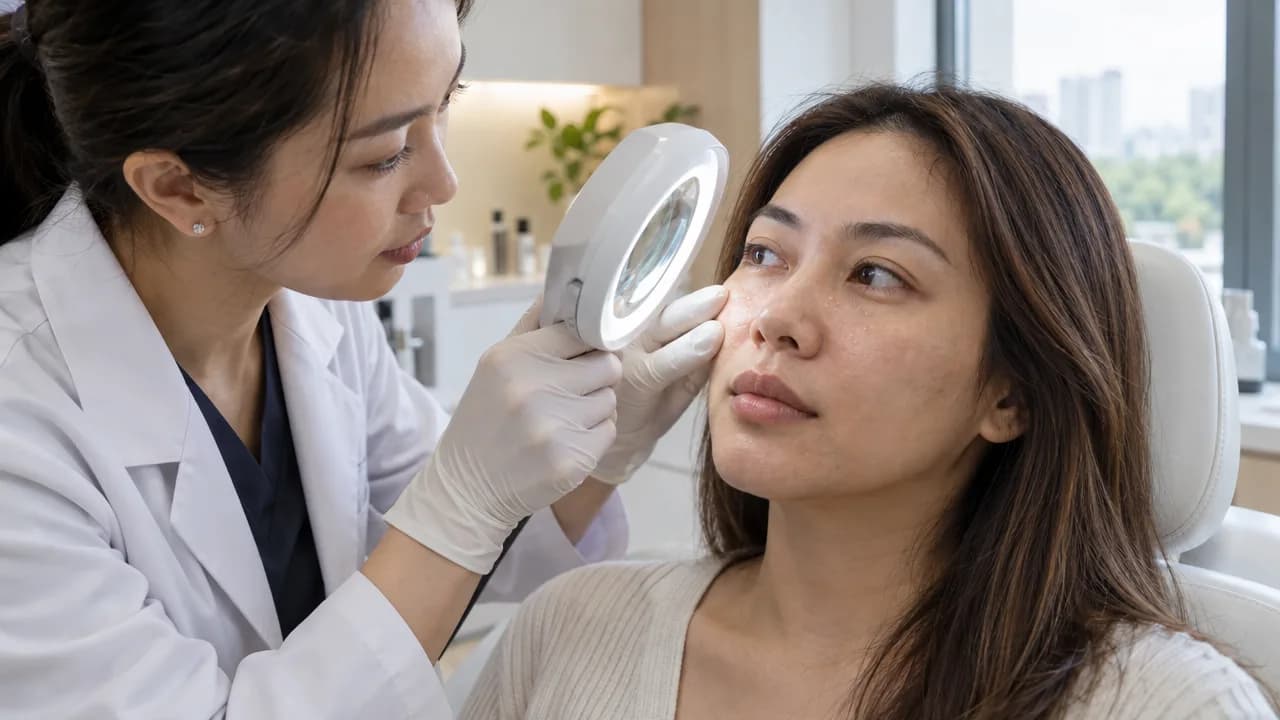

Small, firm white bumps clustered around the eyes, cheeks, or forehead are frequently mistaken for stubborn whiteheads or closed comedones. In reality, these tiny dome-shaped cysts are known clinically as milia. Unlike conventional acne blemishes, milia do not contain pus, sebum, or bacterial infection, which explains why standard pimple patches, drying spot treatments, and over-the-counter acne washes fail to clear them. In Malaysia's warm, humid climate, heavy skincare layering, occlusive sunscreens, and frequent transitions between outdoor heat and indoor air-conditioning commonly disrupt natural skin cell shedding, leading to keratin entrapment beneath the epidermis.
At Nexus Clinic Kuala Lumpur, our MOH Letter of Credentialing and Privileging (LCP) certified aesthetic physicians evaluate and treat milia using sterile, precision clinical techniques designed specifically to protect melanin-rich Asian skin (Fitzpatrick skin phototypes III to V) from scarring and post-inflammatory hyperpigmentation (PIH).
What Are Milia? Understanding Keratin Cysts Beneath the Skin
Milia (singular: milium) are tiny, benign subepidermal keratin cysts that typically measure between 1 and 2 millimetres in diameter. They appear as pearly white or yellowish papules just beneath the outer layer of the skin (the epidermis). Because they sit trapped under a fully intact roof of skin cells with no natural pore opening to the surface, they feel noticeably firm and smooth to the touch rather than soft or inflamed.
A healthy epidermis continuously sheds dead skin cells (corneocytes) through natural desquamation. When this shedding process slows down or becomes obstructed, keratin, a structural protein found in skin, hair, and nails, becomes sealed inside a microscopic pocket. Over time, this trapped protein hardens into a tiny pearl-like cyst.
Primary vs. Secondary Milia
Dermatologists classify milia into two main clinical categories depending on how they develop:
- Primary Milia: These arise spontaneously when dead skin cells fail to exfoliate properly and become trapped near hair follicles or sweat glands. Primary milia frequently appear around the thin periorbital skin (under the eyes and upper eyelids), upper cheeks, forehead, and nose in both teenagers and adults.
- Secondary Milia: These develop after trauma, inflammation, or disruption to the skin barrier. Triggers include blistering sunburns, aggressive ablative laser procedures, dermabrasion, thermal burns, chronic inflammatory rashes, or prolonged application of potent topical steroid creams. As the epidermis heals and regenerates over damaged sweat ducts, keratin becomes sealed underneath the newly formed tissue.
Milia vs. Whiteheads vs. Syringoma: Key Differences
Because several facial bumps share a similar visual appearance, accurate diagnosis by a medical doctor is essential before attempting any removal method.
| Clinical Feature | Milia (Keratin Cysts) | Closed Comedones (Whiteheads) | Syringoma (Sweat Gland Tumours) |
|---|---|---|---|
| Core Composition | Hardened keratin protein trapped under intact skin | Oxidised sebum, dead skin cells, and bacteria inside a pore | Benign overgrowth of eccrine sweat duct cells |
| Visual Appearance | Distinct, pearly white or yellow firm dome (1 to 2 mm) | Flesh-coloured or whitish small bump with a follicular pore | Skin-coloured to slightly yellowish soft, flat-topped papules |
| Common Locations | Under eyes, eyelids, upper cheeks, forehead | T-zone, chin, jawline, cheeks, back | Lower eyelids, upper cheeks, neck, chest |
| Response to Squeezing | Cannot be expressed without lancing; squeezing bruises skin | Can rupture and inflame surrounding follicle if squeezed | Does not express any fluid or keratin; purely cellular tissue |
| Clinical Resolution | Sterile micro-lancing extraction, medical chemical peels, retinoids | Salicylic acid peels, medical acne protocols, topical exfoliants | Targeted ablative laser or electrosurgery by a physician |
Common Causes of Milia in Malaysia's Climate
While milia can affect anyone regardless of age or gender, environmental and skincare factors in Malaysia play a notable role in triggering recurring bumps:
- Heavy, Occlusive Skincare and Cosmetics: Rich eye creams, thick night balms, petroleum-based ointments, and heavy mineral makeup can coat the delicate periorbital area and block natural keratin turnover.
- Inadequate Cleansing of Water-Resistant Sunscreens: Daily broad-spectrum SPF is essential in Malaysia's high UV index, yet failing to thoroughly emulsify and cleanse water-resistant sunscreens at night leaves behind film residue that impedes surface exfoliation.
- Cumulative UV Sun Damage: Chronic exposure to strong equatorial sunlight thickens the outer stratum corneum (solar elastosis), making it harder for microscopic keratin plugs to shed naturally.
- Repeated Heat and Air-Conditioning Cycling: Moving frequently between humid outdoor heat (28°C to 34°C) and dry, air-conditioned offices dehydrates the skin barrier, prompting compensatory oil production and sluggish cell desquamation.
- Misuse of Potent Topical Steroids: Unsupervised use of strong steroid creams on the face thins the epidermis and alters local healing, predisposing the skin to secondary milia clusters.
Why You Should Never Squeeze or Pop Milia at Home
Attempting to squeeze, pinch, or dig out milia at home using fingernails, bobby pins, or unsterilised comedone extractors is one of the most common causes of avoidable facial scarring seen in aesthetic clinics.
- No Surface Pore Opening Exists: Unlike a ripe pimple or blackhead, a milium sits beneath a completely closed layer of intact epidermis. Applying lateral finger pressure forces the hard keratin cyst deeper into the dermis rather than pushing it outward.
- High Risk of Post-Inflammatory Hyperpigmentation (PIH): Malaysian patients predominantly have Fitzpatrick skin types III, IV, and V. Crushing or tearing the delicate skin around the eyes triggers localized inflammation, which stimulates melanocytes to deposit stubborn dark brown marks that take months to fade.
- Permanent Atrophic Scarring and Broken Capillaries: The skin around the eyelids and upper cheeks is among the thinnest on the human body. Aggressive squeezing ruptures tiny superficial blood vessels and tears dermal collagen fibres, leaving behind permanent pitted scars or telangiectasia.
- Secondary Bacterial Infection: Introducing skin bacteria into a self-inflicted micro-wound can transform a harmless, non-inflamed keratin cyst into a painful, infected pustule or localized cellulitis.
Doctor-Led Clinic Treatments for Milia at Nexus Clinic KL
Professional medical removal removes the keratin core cleanly while preserving the integrity of the surrounding skin barrier. Following a clinical skin examination at Nexus Clinic Kuala Lumpur, our LCP-certified aesthetic physicians tailor a single or combined protocol based on the size, depth, and location of your milia.
1. Sterile Medical Extraction (Micro-Lancing)
Sterile extraction is the gold-standard clinical method for immediate removal of established milia, particularly those located near the delicate lower eyelid or lash line where acids and lasers require extra caution.
- How It Works: After disinfecting the skin with medical-grade antiseptic, the doctor uses a tiny, single-use sterile needle or micro-lancet to create a microscopic opening directly over the roof of the cyst. Using gentle, calibrated pressure with a sterile comedone extractor, the intact keratin pearl is lifted out completely.
- Clinical Advantage: Immediate clearance in a single visit with minimal trauma to surrounding tissue and no bleeding or deep bruising.
2. Medical-Grade Chemical Peels
When milia appear alongside congested pores, dull skin texture, or recurring comedonal breakouts across the forehead and cheeks, controlled exfoliation accelerates cellular turnover and prevents new cysts from forming. Exploring a tailored chemical peel treatment in Malaysia helps dissolve the intercellular glue holding dead corneocytes together.
- How It Works: Physicians apply calibrated concentrations of alpha-hydroxy acids (such as glycolic or lactic acid) or beta-hydroxy acids (salicylic acid) to promote controlled epidermal shedding.
- Clinical Advantage: Unroofs shallow keratin plugs gradually, refines rough skin texture, and reduces future recurrence across larger facial zones.
3. Comprehensive Acne & Comedone Control Protocols
Patients who experience mixed facial congestion, where milia coexist with blackheads, whiteheads, and inflammatory blemishes, benefit from a structured medical acne treatment in Malaysia programme.
- How It Works: Combines medical-grade topical retinoids (such as adapalene or tretinoin prescribed by a doctor), sebum-regulating protocols, and gentle pore-clearing therapies to normalise follicular keratinisation.
- Clinical Advantage: Addresses underlying oil imbalance and sluggish skin turnover simultaneously so both acne breakouts and keratin cysts remain controlled long-term.
How to Prevent Milia from Returning
Once existing milia are safely extracted, adopting targeted daily skincare habits helps keep epidermal cell turnover running smoothly in Malaysia's climate:
- Double Cleanse Every Evening: Use a gentle micellar water or lightweight cleansing oil first to dissolve waterproof sunscreen and makeup, followed by a mild, pH-balanced gel cleanser.
- Switch to Non-Comedogenic Eye and Face Moisturisers: Replace heavy, petrolatum-rich eye creams with lightweight gel-creams or humectant serums containing hyaluronic acid or niacinamide.
- Incorporate Gentle Chemical Exfoliation: Use a mild salicylic acid (BHA) or lactic acid (AHA) exfoliant one to two times weekly on the cheeks and forehead (avoiding the immediate eyelid margin) to prevent dead cell buildup.
- Apply Lightweight Broad-Spectrum Sunscreen Daily: Choose fluid, non-comedogenic SPF 50+ formulations to protect against UV-induced stratum corneum thickening without clogging pores.
When to See a Doctor
You should book a professional medical assessment rather than waiting for home resolution if:
- Bumps are located close to your eyelashes, upper eyelids, or tear ducts where home tools pose a serious eye injury risk.
- White or flesh-coloured bumps persist for more than 6 to 8 weeks or continue multiplying across your cheeks and temples.
- You are unsure whether the bumps are milia, closed comedones, syringomas, or xanthelasma (cholesterol deposits around the eyes).
- Previous attempts at squeezing have left behind dark spots, redness, or tiny indented scars.
Frequently Asked Questions
Do milia go away on their own without treatment?
Primary milia in adults occasionally resolve naturally over several months as the epidermis renews itself, though deeper keratin cysts often persist indefinitely until a doctor performs sterile extraction.
Is professional milia extraction painful?
Discomfort is minimal. The doctor uses a fine sterile needle to create a tiny surface opening before gently lifting out the keratin plug, taking only a few seconds per bump.
Can chemical peels remove deep milia under the eyes?
Chemical peels work well for shallow milia and preventing new cysts on the cheeks and forehead, whereas deep bumps near the eyelids are more safely removed via sterile micro-lancing.
How long does the skin take to heal after clinical milia removal?
Tiny pinpoint redness at the extraction site typically fades within 24 to 48 hours. Keeping the area clean and applying broad-spectrum sunscreen prevents post-treatment dark marks.
Why do I keep getting milia around my eyes?
The eyelid skin lacks oil glands and has slower natural exfoliation. Heavy eye creams, rich concealers, and incomplete makeup removal frequently trap keratin in this delicate zone.
Are milia contagious or caused by poor hygiene?
No. Milia are harmless, non-infectious keratin cysts caused by trapped skin protein rather than dirt or bacteria, and they cannot spread from person to person through touch.
Schedule a Skin Assessment at Nexus Clinic Kuala Lumpur
If persistent white bumps or congested skin texture are affecting your confidence, consult an MOH LCP-certified aesthetic physician for an accurate diagnosis and safe removal plan.
Visit Nexus Clinic KL at LG 10, Lower Ground Floor, Wisma UOA 2, No. 21 Jalan Pinang, 50450 Kuala Lumpur (open Monday to Saturday, 9:00 AM to 6:00 PM). Call our clinical team at 016-774 5699 or WhatsApp 016-824 5699.