


You Hit Your Target. Now What?
Reaching your goal weight on Ozempic is a genuinely significant achievement. For many Malaysians who have struggled with weight for years, the medication has provided a level of appetite control and metabolic support that made consistent weight loss possible in a way that diet and exercise alone had not. The weeks and months of smaller portions, reduced cravings, and gradual progress on the scale have paid off, and you are now at the weight you were aiming for.
But hitting your goal immediately raises a new set of questions. Do you keep taking the medication? Do you stop it now that the work is done? What happens to your weight if you stop? Is it safe to take Ozempic long term in Malaysia? And if you do stop, how do you protect the results you have worked hard to achieve?
These questions do not have simple one-size-fits-all answers, but the research is clear enough to give you a practical framework for thinking through your options. Understanding what actually happens when semaglutide leaves your system, and what the evidence says about maintaining weight loss after stopping, will help you and your doctor make a more informed decision about the path forward.
What Actually Happens When You Stop Ozempic
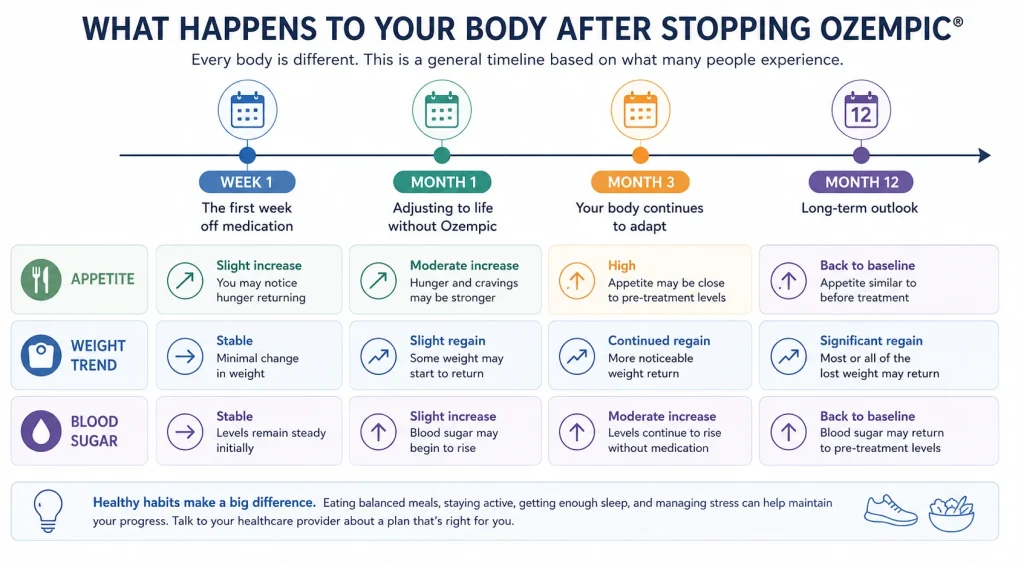
Ozempic works because semaglutide continuously mimics the GLP-1 hormone in your body, suppressing appetite, slowing gastric emptying, and supporting insulin function. As long as you are taking the medication, these effects are active. When you stop, the semaglutide clears from your system gradually, and all of these effects begin to reverse.
For most people, the appetite-suppressing effect begins to fade within one to two weeks of the last injection. This means the signals telling your brain you are full after eating a small amount begin to weaken, and hunger returns closer to the level it was at before you started the medication. For many people, this feels like a noticeable shift. Cravings that had been quiet during treatment may start to resurface, and the sense of control over food intake that the medication had provided begins to diminish.
Blood sugar regulation also returns to its pre-treatment pattern relatively quickly after stopping, which is an important consideration for people who were using Ozempic to support diabetes management alongside weight loss. If blood sugar control was inadequate before starting the medication, it is likely to become inadequate again after stopping unless significant dietary and lifestyle changes have been made and maintained during the treatment period.
Any non-serious side effects that were present during treatment, such as mild nausea or reduced appetite, also disappear as the medication clears. Many people who found the appetite suppression uncomfortable or who struggled with nausea actually feel noticeably better within the first week or two of stopping the medication.
The Two-Thirds Rule: What the Research Says About Weight Regain
The most frequently cited finding in the clinical literature on stopping Ozempic comes from the STEP 1 trial extension, a rigorous study that followed patients after discontinuing semaglutide. The results showed that participants regained an average of two-thirds of the weight they had lost within approximately one year of stopping the medication. This finding has been replicated across multiple studies and is considered one of the most consistent patterns in GLP-1 research.
This statistic is often presented as a reason not to stop Ozempic, but it is worth understanding why it happens rather than treating it simply as a failure. The weight regain after stopping semaglutide is not caused by a lack of willpower or by the medication somehow damaging the metabolism. It is caused by the fact that obesity and weight management involve complex hormonal and neurological systems that the medication was actively supporting. When the medication is removed, those systems return to their pre-treatment state, which for many people means higher hunger levels, lower satiety signalling, and a metabolic set point that favours weight regain.
However, two-thirds regain also means one-third maintained, and many patients in real-world settings maintain significantly more than the trial average, particularly those who build strong dietary habits and exercise routines during the treatment period. The trial average includes people who made minimal lifestyle changes and people who made significant ones. Your individual outcome will depend heavily on what habits you have built and maintained during your time on Ozempic.
Maintenance Dose vs Full Stop: Understanding Your Options
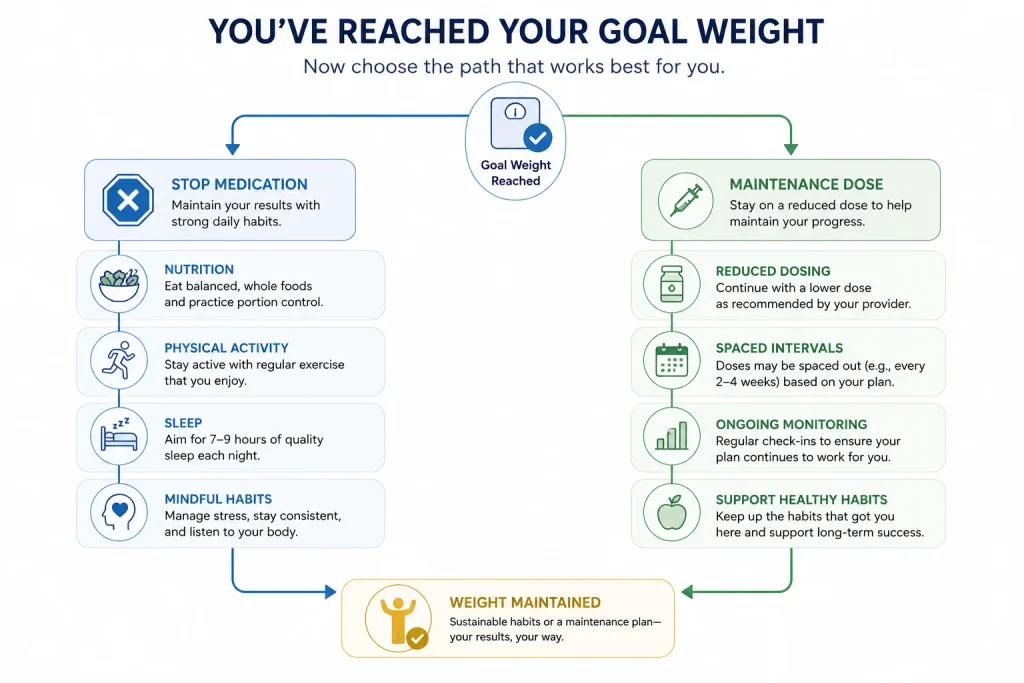
Stopping Ozempic entirely is not the only option when you reach your goal weight. Many doctors in Malaysia and internationally now discuss the concept of a maintenance dose, which involves reducing the dose to the lowest level that continues to provide enough appetite support and metabolic benefit to prevent significant weight regain without requiring the full therapeutic dose.
For some patients, a dose reduction from 1mg to 0.5mg after reaching goal weight provides enough ongoing support to maintain results while reducing both the cost and the intensity of any remaining side effects. For others, the maintenance strategy might involve continuing at the current dose for a defined period while building lifestyle habits, then attempting a gradual taper rather than an abrupt stop. The right approach depends entirely on individual factors including how the weight was lost, what habits have been established, the patient’s medical history, and their doctor’s clinical judgment.
If you are considering how to approach the period after reaching your goal weight, discussing this explicitly with the doctor who prescribes your Ozempic is essential. The GLP-1 weight loss programme at Nexus Clinic includes ongoing monitoring and support to help patients navigate these decisions rather than facing them alone.
Can You Take Ozempic Long Term in Malaysia?
This is one of the most common questions raised by Malaysian patients who have responded well to Ozempic and are concerned about what happens if they stop. The honest answer is that long-term safety data for semaglutide is still accumulating, but the evidence currently available is reassuring for most patients who are appropriate candidates for the medication.
Clinical trials have followed semaglutide users for up to two years, and within those timeframes the medication has shown a strong safety profile for most patients. More recent real-world data from patients who have used GLP-1 medications for longer than two years is beginning to emerge, and early findings suggest that long-term use does not appear to introduce significant new risks for the majority of patients, though monitoring of kidney function, pancreatic health, and other parameters is recommended.
There is also a strong clinical argument for long-term use in people whose weight is chronic and metabolic in nature rather than circumstantial. If the underlying physiology makes maintaining a healthy weight extremely difficult without pharmaceutical support, treating obesity as the chronic condition it is, rather than using medication only until a short-term goal is reached, is increasingly how specialists approach long-term weight management globally. In Malaysia, this conversation is still evolving, and access to long-term prescriptions depends on individual clinics and prescribing doctors.
For people who are not appropriate for long-term Ozempic use, or who prefer not to remain on medication indefinitely, the focus must shift to building the habits and physical foundation that give them the best possible chance of maintaining their results without continued pharmaceutical support.
Building Habits Before You Stop
The clinical evidence is consistent on one point: people who build strong dietary and exercise habits during their time on Ozempic maintain significantly better weight outcomes after stopping than those who rely on the medication alone without changing their underlying behaviours. This makes practical sense. Ozempic provides a window during which eating less and moving more feels more achievable because appetite is suppressed and cravings are reduced. Using that window to build habits that can function independently of the medication is the most important thing you can do to protect your results.
Protein intake deserves particular attention. One of the less-discussed consequences of significant weight loss on Ozempic is muscle loss. Because the medication reduces total calorie intake and because the body breaks down both fat and muscle tissue during weight loss, patients who lose substantial amounts of weight without prioritising protein and strength training often find that a meaningful proportion of what they lost was muscle rather than fat. When appetite returns after stopping the medication and weight begins to come back, it tends to return primarily as fat rather than muscle, which is both a health concern and a body composition concern. Maintaining higher protein intake, around 1.2 to 1.6 grams per kilogram of body weight daily, and incorporating resistance training helps preserve muscle during the weight loss phase and makes maintenance significantly easier afterward.
Regular physical activity, particularly a combination of aerobic exercise and strength training, is the single most consistent predictor of maintaining weight loss outcomes after stopping any weight loss medication. For Malaysians, building sustainable exercise habits that work within the local climate and lifestyle, including morning walks, gym sessions, swimming, or home-based workouts, gives the best foundation for the post-medication period. Aim for at least 150 minutes of moderate aerobic activity per week combined with two strength sessions, and try to establish this as a regular pattern before rather than after stopping Ozempic.
What to Expect in the First Three Months After Stopping
The first month after stopping Ozempic is the period of highest risk for rapid weight regain because appetite returns most noticeably during this window. Many people are surprised by how hungry they feel in the first few weeks compared to their experience during treatment. This is normal and reflects the body readjusting to its natural hunger hormone levels, but it requires conscious management to avoid returning to eating patterns that pre-date treatment.
During the first month, focus on maintaining the eating patterns that worked during treatment as closely as possible. Continue eating smaller, more frequent meals, prioritise protein and vegetables, and be cautious about returning to foods that were limited during the treatment period. The hunger is real, but it typically stabilises over the first four to six weeks after the last dose as the body finds a new equilibrium.
By months two and three, most people have a clearer picture of how much their weight and eating patterns are shifting. Some people find that the habits they built during treatment hold relatively well and that their weight stabilises close to their goal with moderate effort. Others find the pull toward previous patterns stronger than expected and may need to discuss options with their doctor, which might include resuming a lower maintenance dose, considering an alternative medication, or intensifying lifestyle support.
People who are navigating the period after reaching their Ozempic goal weight and who want medical support throughout the process can access ongoing monitoring through the doctor-monitored weight loss programme at Nexus Clinic. Having a doctor track your progress during the transition off medication and help you adjust your approach based on what is actually happening with your weight and health markers is significantly more effective than trying to manage this phase alone.
Signs You Are Ready to Taper vs Signs You Need to Stay on It Longer
Not everyone should stop Ozempic at the moment they reach their goal weight. If you have reached your target but are still managing an underlying condition such as type 2 diabetes or PCOS that also benefits from semaglutide, your doctor may recommend continuing the medication to support those conditions even after the weight goal is achieved.
You may be ready to consider tapering if your weight has been stable at or near your goal for at least two to three months, if your blood sugar and other metabolic markers are well controlled, if you have established consistent dietary habits and a regular exercise routine that feel sustainable independently of the medication, and if you and your doctor have a clear plan for monitoring your progress after stopping.
You are probably better served by continuing the medication longer if your weight is still fluctuating significantly, if the habits you need to maintain results long term are not yet well established, if you have a medical condition that is meaningfully improved by the medication, or if previous attempts to stop or reduce the dose have resulted in rapid weight regain that caused health concerns.
Frequently Asked Questions
Do you regain weight after stopping Ozempic in Malaysia?
Most people regain some weight after stopping, with clinical studies showing an average regain of about two-thirds of lost weight within one year. The amount individuals regain varies significantly based on lifestyle habits built during treatment.
What is the maintenance dose of Ozempic after weight loss?
This varies by patient and should be decided with your prescribing doctor. Some patients continue at a reduced dose of 0.5mg, while others taper off over several weeks. There is no universal maintenance protocol, and the right approach is individual.
Can you take Ozempic long term in Malaysia?
There is no regulation preventing long-term prescription for appropriate patients, and clinical data for up to two years shows a reasonable safety profile for most users. The decision should be made with a doctor based on your specific health history, goals, and ongoing monitoring. Nexus Clinic’s Ozempic Malaysia page outlines what doctor-supervised treatment involves.
What happens to blood sugar after stopping Ozempic in Malaysia?
For people who were managing blood sugar with Ozempic, levels will return toward pre-treatment patterns after stopping. Anyone who was using the medication for diabetes management should have a plan in place with their doctor for alternative blood sugar management before stopping Ozempic.