


Why Ozempic Side Effects Feel Different for Malaysians
Ozempic has become one of the most discussed weight loss and diabetes management medications in Malaysia over the past two years. As more Malaysians begin using semaglutide under medical supervision, questions about side effects have become increasingly common. What should you expect during the first few weeks? What is a normal response to the medication and what is a signal that something is wrong? When should you push through the discomfort and when should you contact your doctor immediately?
These questions deserve clear and honest answers, and the context matters. Malaysians taking Ozempic often face particular challenges related to diet, climate, and medication access that can influence how side effects present and how severe they feel. Understanding this gives you a much better foundation for managing the medication safely and effectively.
It is important to state clearly that Ozempic in Malaysia is a prescription medication. It should only be taken under the supervision of a licensed doctor who has assessed your suitability for the medication. This article is educational and does not replace professional medical advice.
How Ozempic Works and Why Side Effects Happen
Ozempic contains semaglutide, a GLP-1 receptor agonist. GLP-1 is a hormone naturally produced in the gut after eating. It tells the pancreas to release insulin, slows the rate at which food moves through the stomach, and signals the brain that the body is full. Semaglutide mimics this hormone but does so far more powerfully and for far longer than the natural version, which only stays active for a few minutes after release.
Most of the side effects associated with Ozempic are a direct result of the medication slowing gastric emptying and affecting digestion. Food stays in the stomach for much longer than usual, which causes feelings of fullness, nausea, and digestive discomfort. The body is not used to this altered pace of digestion, and the first few months of treatment are essentially an adjustment period as the stomach, intestines, and nervous system adapt to the new signal.
The Most Common Side Effects and What They Feel Like
Nausea is the most frequently reported side effect of Ozempic, particularly during the early stages of treatment and after each dose increase. The nausea can range from a mild queasiness that lasts a few hours after injection to more persistent waves of discomfort that continue for several days. For most people, nausea is at its worst during the first two to four weeks at a new dose and then gradually improves as the body adjusts.
Diarrhoea and constipation are both reported by Ozempic users, sometimes alternating between the two. Diarrhoea tends to occur more often in the early weeks, while constipation becomes more common as the dose increases and gastric emptying slows further. Both are generally manageable and tend to improve over time, though they can be uncomfortable in the short term.
Vomiting occurs in a smaller proportion of users but is more likely to happen when the dose increases too quickly or when the person eats foods that are too rich, too large, or too fatty for the stomach to handle at its slowed pace. This is one of the reasons why dietary adjustments are an essential part of starting Ozempic successfully.
Abdominal pain and bloating are also common, particularly after eating. The pain is usually a dull, uncomfortable pressure rather than sharp or severe. It tends to improve as the stomach adjusts to the medication and as the person learns which foods and eating habits work better during treatment.
Reduced appetite is technically a desired effect of the medication rather than a side effect, but some people find the level of appetite suppression more extreme than they expected, particularly in the early weeks. This can lead to eating too little, which in turn contributes to fatigue and lightheadedness, especially in the heat of a Malaysian afternoon.
Injection site reactions, including mild redness, itching, or small lumps at the injection site, are reported by some users. These are generally temporary and do not indicate a serious reaction in most cases. Rotating the injection site between the abdomen, thigh, and upper arm helps reduce this.
Side Effects That Are Normal vs Ones That Need Attention
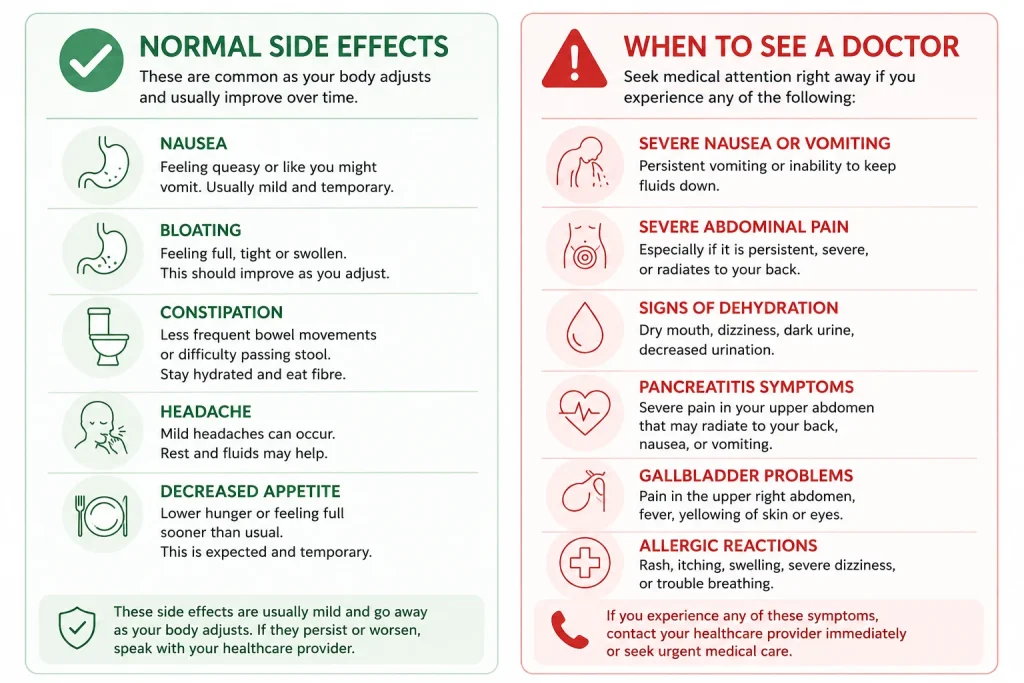
Knowing the difference between expected side effects and warning signs is one of the most important things you can understand before starting or continuing Ozempic. The table below summarises the key distinctions.
Normal and expected side effects that tend to improve over time include mild to moderate nausea lasting a few hours after injection, loose stools or mild diarrhoea in the first few weeks, mild constipation at higher doses, reduced appetite and a sense of fullness after small amounts of food, mild fatigue particularly during the first dose increase, and minor injection site redness or tenderness that resolves within a day or two.
Side effects that warrant a call to your doctor include persistent vomiting that makes it impossible to keep food or water down, diarrhoea severe enough to cause dehydration, nausea that does not improve at all after four to six weeks at a stable dose, significant fatigue or weakness that does not resolve, new or worsening heartburn or acid reflux that interferes with daily life, and mood changes including increased anxiety or depressive symptoms.
Side effects that require immediate medical attention include severe or persistent abdominal pain that may radiate to the back, as this can be a sign of pancreatitis, a rapid heart rate or palpitations, difficulty swallowing or a lump in the throat or neck, vision changes, and any symptoms that feel unusual and severe. If you experience these, seek medical help without waiting to see if they resolve on their own.
How Long Do Side Effects Last at Each Dose Stage
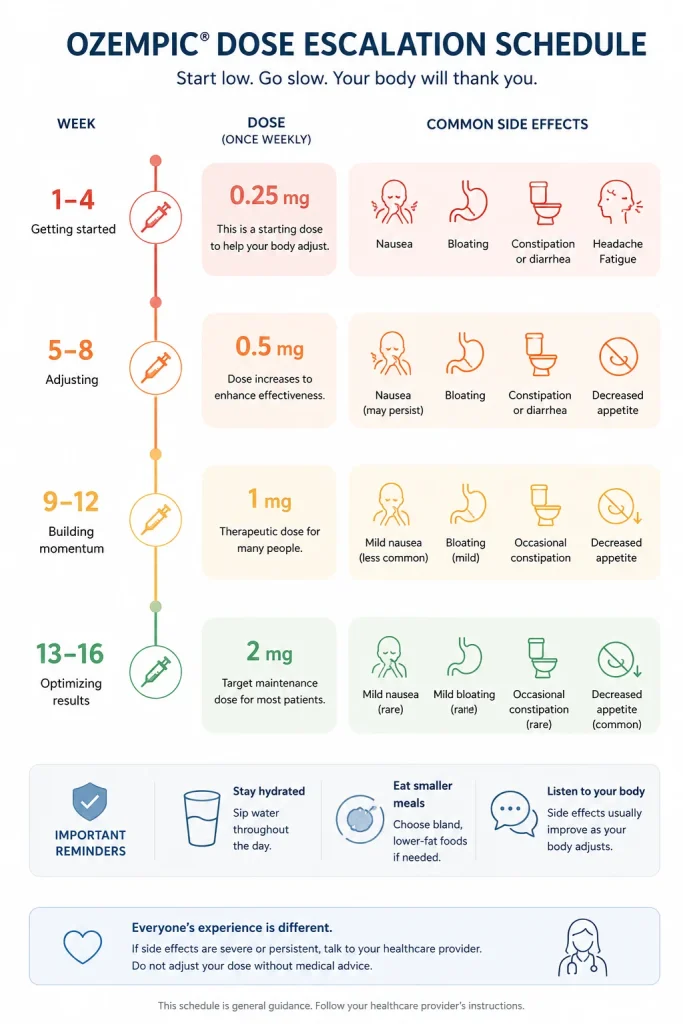
Ozempic is introduced gradually to reduce the severity of side effects. The standard starting dose is 0.25mg weekly for four weeks, which is a sub-therapeutic dose used purely to help the body adjust. At this dose, many people experience only mild nausea or no significant side effects at all.
When the dose increases to 0.5mg at week five, the adjustment period begins again. Most people experience the most significant side effects during the first two to three weeks of each new dose level. By the end of the fourth week at a stable dose, the majority of side effects have reduced meaningfully. Some people continue to experience mild nausea for longer, but it typically does not reach the intensity of the first week at a new dose.
At 1mg, which is the standard therapeutic dose for many patients, the side effects follow a similar pattern of initial discomfort that fades over several weeks. It is worth noting that not everyone needs to reach 1mg. Many Malaysians achieve effective blood sugar control or weight management results at 0.5mg, and a good prescribing doctor will evaluate whether increasing the dose is necessary rather than following a fixed escalation schedule automatically.
Malaysian-Specific Factors That Affect Side Effects
Malaysian dietary habits can significantly influence how severely Ozempic side effects are experienced. Traditional Malaysian meals are often high in refined carbohydrates, including white rice, noodles, bread, and sweetened beverages. These foods cause relatively rapid gastric activity, which contrasts sharply with the slowed gastric emptying that Ozempic produces. Eating a large plate of nasi lemak or mee goreng while on Ozempic is much more likely to trigger nausea, bloating, and discomfort than eating a smaller portion of lower-fat, lower-carbohydrate food. Adapting to smaller, simpler meals during the adjustment period makes a significant difference to how tolerable the side effects feel.
Malaysia’s heat and humidity add another layer of complexity. The combination of reduced food intake from appetite suppression and fluid loss through sweating in tropical temperatures creates a real risk of mild dehydration, which makes nausea, headaches, and fatigue significantly worse. Staying well hydrated is important for everyone on Ozempic, but it is particularly critical for Malaysians who are frequently outdoors in warm weather or in environments without consistent air conditioning.
There is also the issue of access. As noted in media reports and clinical discussions within Malaysia, some Ozempic in circulation has been obtained through unofficial channels due to supply shortages. Medication obtained outside a proper prescription process carries risks that go beyond side effects, including counterfeit products, incorrect storage, and lack of medical supervision. Using Ozempic under proper medical supervision at a licensed clinic is the safest way to use this medication and the only way to receive appropriate monitoring and dose management.
The NPRA 2025 Alert: Ozempic and Surgery Risk
In 2025, Malaysia’s National Pharmaceutical Regulatory Agency (NPRA) issued guidance highlighting a specific risk associated with GLP-1 medications including Ozempic for patients undergoing surgery. Because Ozempic significantly slows gastric emptying, food and liquid can remain in the stomach far longer than normal. This creates a risk during anaesthesia because stomach contents could be inhaled into the lungs if the patient vomits while under general anaesthetic. This complication, called aspiration, can be serious.
If you are on Ozempic and planning any surgical procedure, you must inform your surgeon and anaesthetist well in advance. Most guidelines now recommend stopping GLP-1 medications at least one week before elective surgery. This applies to dental surgery under general anaesthesia as well. Do not assume your surgical team is aware you are on Ozempic unless you have told them explicitly.
When Should You Stop Taking Ozempic
There are several situations in which stopping or pausing Ozempic is the right decision, and knowing these in advance helps you act quickly if any of them arise.
You should stop and contact your doctor immediately if you experience any of the following: severe abdominal pain that is persistent or worsening and may radiate to the back, which could indicate pancreatitis; a lump or swelling in the neck; vision disturbances or changes that are new; an allergic reaction including skin rash, swelling of the face, lips, or tongue, or difficulty breathing; or symptoms of severely low blood sugar such as shaking, sweating, confusion, or fainting, which is rare with Ozempic alone but can occur when it is used alongside other diabetes medications.
You should also discuss stopping or pausing Ozempic with your doctor if you are not achieving meaningful weight or blood sugar improvement after three to six months at a therapeutic dose, if you are struggling with side effects that have not improved after a full adjustment period at a stable dose, if you have reached your target weight and are planning to transition off the medication, or if you are planning surgery in the near future.
Side effects alone are rarely a reason to stop Ozempic permanently if they are within the expected range and improving over time. However, that judgment should always involve your prescribing doctor rather than being made unilaterally based on discomfort alone.
How to Reduce Side Effects Practically
Several practical strategies help reduce the severity of Ozempic side effects, and most doctors will discuss these at the time of starting treatment.
Eating smaller meals more frequently works better than eating two or three large meals while on Ozempic. The slowed gastric emptying means large volumes of food cause far more discomfort than the same total calories spread across smaller portions throughout the day.
Avoiding high-fat and highly spiced foods during the adjustment period significantly reduces the likelihood of nausea and vomiting. This can be challenging in the context of Malaysian food culture, but even making moderate modifications to fat content and portion size makes a noticeable difference.
Taking the injection at a consistent time each week, ideally in the evening, means any initial nausea peaks while you are sleeping rather than during your working day. Some people find that injecting before bed reduces the perceived impact of side effects considerably.
Staying well hydrated is essential. Aim for at least two litres of water daily, more if you are spending time outdoors in Malaysia’s heat. Herbal teas and clear broths can also help with nausea while maintaining fluid intake.
If you are experiencing ongoing difficulties managing side effects and want to explore your options under medical supervision, the weight loss programme at Nexus Clinic provides structured support with experienced doctors who understand the specific challenges Malaysian patients face when using GLP-1 medications.
Frequently Asked Questions
How long do Ozempic side effects last?
For most people, the most significant side effects occur during the first two to four weeks at each new dose level and reduce significantly after that. Some mild nausea may persist at a lower intensity for longer but rarely remains at the initial severity beyond six to eight weeks at a stable dose.
Can Ozempic side effects be reduced?
Yes. Dietary modification, smaller meals, good hydration, and timing the injection appropriately all help reduce side effect severity meaningfully. In some cases, a slower dose escalation schedule decided by your doctor can also help.
What are the most common Ozempic side effects in Malaysia?
Nausea, reduced appetite, and loose stools are the most commonly reported side effects among Malaysian users, largely consistent with the global data but influenced by dietary patterns and climate.
When should you stop taking Ozempic due to side effects?
If side effects are severe, worsening rather than improving after the adjustment period, or if you experience any of the red flag symptoms listed above, contact your doctor promptly. Do not stop the medication without discussing it with your doctor first unless you are experiencing a medical emergency.