
Not every tattoo regret calls for a blank canvas. Sometimes you love most of a design but want one name gone. Sometimes you have a new piece planned and the old ink is too dark for the artist to work over. Partial tattoo removal is the answer in both cases.
This article explains what partial removal involves, how pico laser is used to fade or lift specific areas, and how to plan the timeline if a cover-up is the end goal.
What Partial Tattoo Removal Means
Full removal aims to clear a tattoo entirely. Partial tattoo removal has a narrower brief. It is used in two main ways.
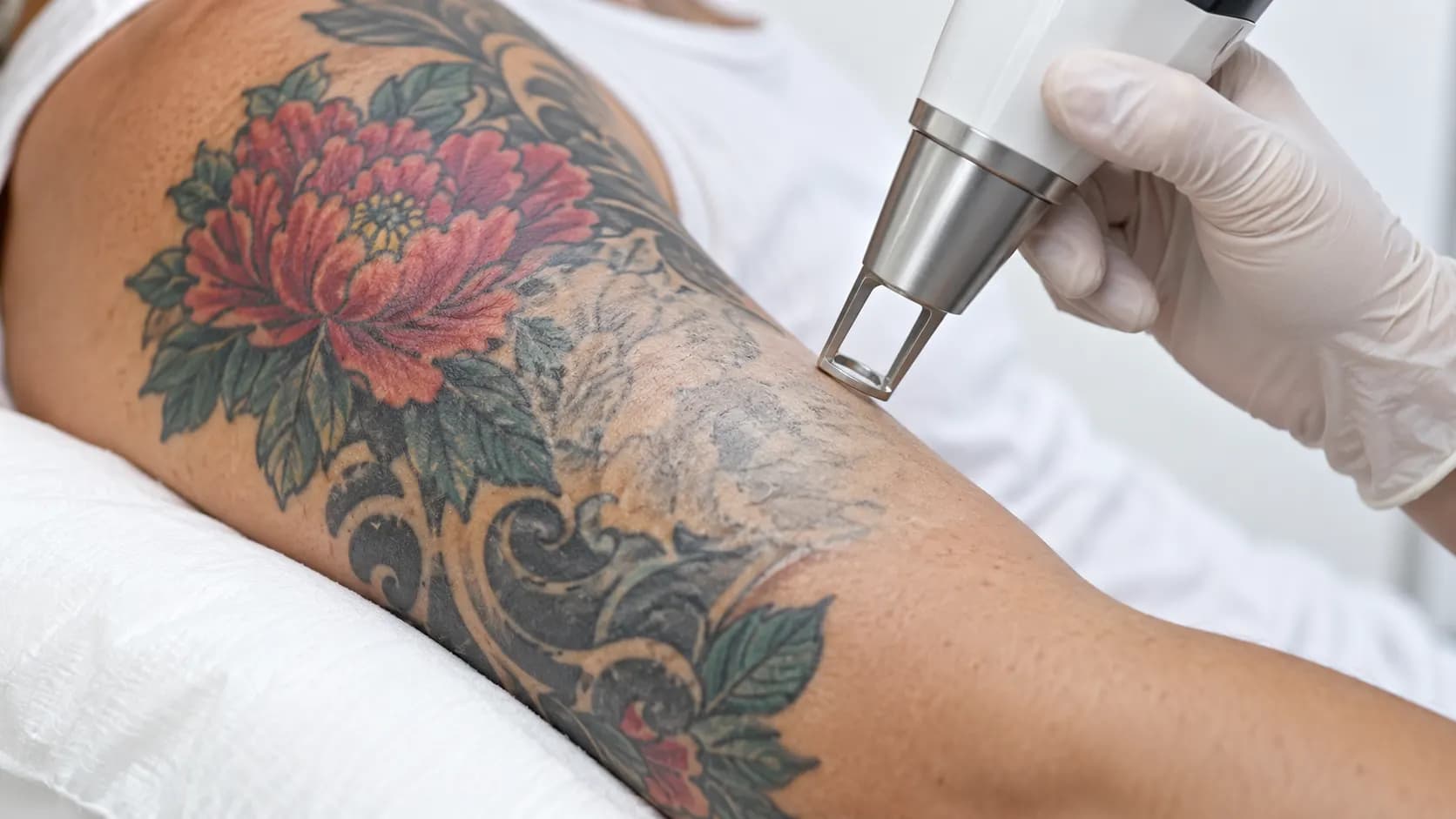
The first is fading. The whole tattoo, or a section of it, is lightened by several shades so a tattoo artist can design a cover-up without being restricted by heavy black or saturated colour underneath. The goal is not to erase the tattoo but to give the artist room to work.
The second is element removal. A single part of a larger design is targeted, such as a name inside a heart or a line of text that no longer fits. The surrounding artwork is left untouched.
How Pico Laser Handles Precision Work
Pico laser delivers energy in extremely short pulses, measured in picoseconds. These pulses shatter ink particles into tiny fragments that the immune system gradually clears. Because the pulses are so brief, less heat spreads into surrounding skin, which reduces the risk of scarring and pigment changes.
For partial work, the practitioner adjusts the spot size and treats only the mapped area. Skilled hands can follow the outline of a name or shape while leaving neighbouring ink alone. Where fading is the goal, the section is treated at a setting chosen to lighten rather than fully clear.
Pico technology also copes well with stubborn colours such as blue and green, which matters for cover-ups where mixed colour ink needs to be softened.
What Affects the Number of Sessions
How the skin responds to laser treatment varies considerably between patients, and there are no fixed session guarantees. The main factors that influence how many sessions are needed and how much fading is achievable include:
- Ink colour, with black usually responding fastest and some bright colours taking longer
- Ink depth and density, which are often higher in professional tattoos
- Age of the tattoo, since older ink has already started to break down naturally
- Skin type and individual immune response, which affect how efficiently the body clears fragmented ink
- The specific laser device used and the settings chosen by the treating practitioner
- How much fading is required before the cover-up can proceed
Your practitioner will give you a realistic assessment at consultation, but the outcome can only be confirmed as treatment progresses.
Planning a Cover-Up Timeline
A cover-up is a joint project between your laser clinic and your tattoo artist. The best results come when the two are coordinated early.
Start by consulting your tattoo artist about the new design. They will tell you how much fading is needed and which areas are the biggest obstacle. Bring that information to the laser consultation so the treatment plan matches the artist's requirements.
Sessions are spaced around 6 to 8 weeks apart to allow the skin to heal and the immune system to clear ink. A fading programme can therefore take several months, so plan well before your booked tattoo date.
After the final laser session, the skin needs time to fully settle before new ink goes in. Most practitioners recommend waiting at least a couple of months, and your artist may have their own preference. Full details of what to expect, including tattoo removal pricing in Malaysia, are available at consultation.
Removing a Single Element
When only one part of a tattoo is being removed, the aim is usually complete clearing of that element. This may require more sessions than fading for a cover-up, since the ink has to go entirely rather than simply lighten. The number depends on ink colour, depth, density and age, as well as skin type and how the area responds.
At the consultation, the practitioner will explain what is realistic, whether a faint shadow might remain, and how the treated area will blend with the surrounding design once healed.
Aftercare Between Sessions
Keep the area clean and moisturised, avoid picking at any blistering or scabbing, and stay out of direct sun. Sun protection is especially important in Malaysia, where strong UV exposure can cause pigmentation over treated skin. Avoid swimming and heavy sweating for the first few days after each session.
If you are considering a cover-up or want one element of a tattoo removed, Nexus Clinic in Kuala Lumpur offers pico laser tattoo removal with doctor-led assessment, so the plan is built around your end goal.
Frequently Asked Questions
How many sessions does partial tattoo removal take?
Response varies with ink colour, depth, density, tattoo age, skin type, the laser device used and how much fading is required. Your practitioner can give an initial estimate at consultation, with more clarity as treatment progresses.
Can the laser remove just one word from a tattoo?
Yes. Pico laser can be targeted with precision, allowing a specific word, name or shape to be treated while the surrounding design is left intact.
How long should I wait after laser before getting the cover-up?
Allow the skin to heal fully after the last session, typically at least a couple of months, and confirm timing with your tattoo artist.
This article is for general information only. Please consult a qualified doctor for advice about your individual health situation.