
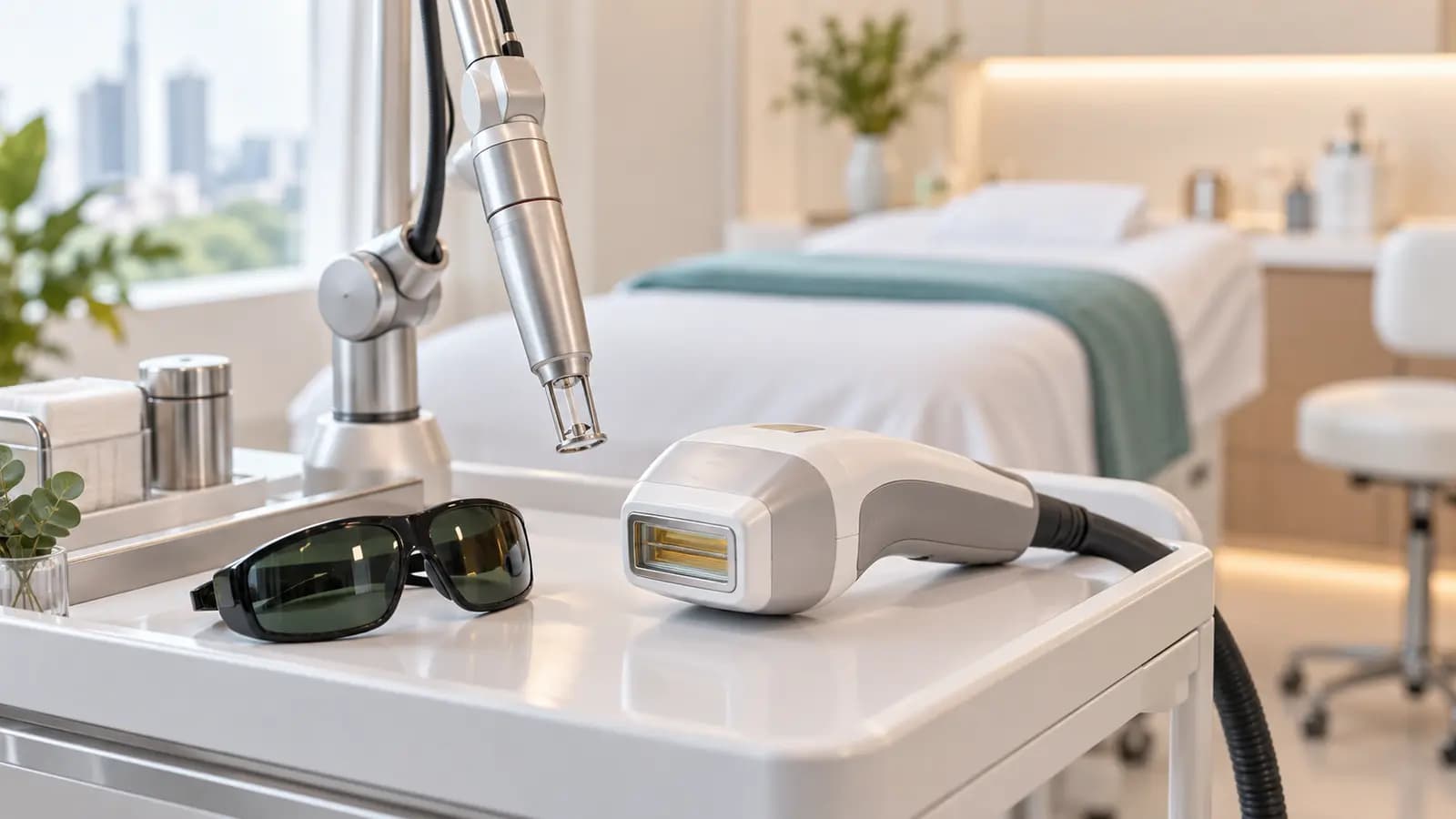

While IPL is a popular laser procedure, it is more accurately a source of Intense Pulsed Light which spreads out over the skin in a range of wavelengths rather than a single concentrated beam. Pico laser on the other hand is a true laser that employs picoseconds (trillionths of a second) of focused pressure and energy rather than heat to shatter pigment into the bloodstream. While both procedures fall under the umbrella of ‘pigmentation treatment’ on clinic treatment menus, the reason one might be advised over the other has more to do with the nature of the pigmentation being treated, than it does the treatment's name.
What's Actually Happening Underneath the Skin
IPL works via heat generated from the absorption of light by pigment and blood vessels, damaging the targeted cells and coagulating small vessel, hence why IPL has equal appeal for treating redness and broken capillaries as it does for treating brown spots. As IPL spreads out light across a range of wavelengths, the energy is more diffused and can affect larger and more superficial areas at a time. This can be ideal for a more generalised surface concern like sun damage and a mild dullness or irregularity in the skin tone.
Pico laser employs a more concentrated and deeper approach, using picoseconds of focused pressure to shatter pigment into tiny micro-fragments that can be easily removed by the body's natural mechanisms. As there is less overall thermal energy with pico laser compared to IPL, the depth of penetration can be greater and potentially safer for darker skin tones.
| IPL | Pico Laser | |
|---|---|---|
| Technology type | Broad spectrum light, not a true laser | Concentrated laser, picosecond pulses |
| Mechanism | Photothermal, heat converts pigment and vessels | Photoacoustic, pressure shatters pigment |
| Penetration | Surface level, spread across a wider area | Deeper, more targeted |
| Best suited for | Mild sun damage, redness, overall dull tone, freckles | Melasma, stubborn dark spots, dermal pigmentation |
| Heat generated | Higher | Minimal |
| PIH risk on darker skin | Higher with aggressive settings | Lower, though still possible if mismanaged |
| Downtime | Mild redness, temporary darkening of spots before flaking off | Minimal, redness settles within hours to a day |
Matching the Concern to the Right Technology
The mistake is often for patients to pick the treatment which appears superior, rather than which addresses their specific concern. Here are a few general rules of thumb:
- For general surface dullness, mild irregular tone, light freckling, or accompanying redness and capillary issues, IPL is often ideal since it works across a larger surface area in one pass and can handle the vascular component which pico laser doesn't address.
- For deeper concerns like melasma, stubborn dark spots that have failed other treatments, or dermal pigmentation, pico laser can offer a more targeted and lower heat approach.
- For redness or capillaries in a combination with pigmentation, IPL's dual approach for both can be genuinely more efficient.
- For post-acne dark marks, it can depend on whether the concern is superficial or scarring which may require pico laser.
A combination approach can also be considered if someone wants IPL for general tone improvement and pico laser for stubborn deep spots which IPL isn't able to penetrate.
Why This Split Matters More on Malaysian Skin
Malaysian skin tends to fall into the III-V Fitzpatrick category, which tends to be more prone to post-inflammatory hyperpigmentation against a treatment which relies heavily on thermal damage. The higher thermal output of IPL may be a concern to treat with a caution, but at the right settings by a trained professional, it can be safe and effective for many Malaysian skin types without unnecessary risk. It is the aggressive settings or lack of experience by the operator which can lead to darker rather than lighter treated area following the procedure.
This is one reason why pico laser has gained popularity locally for truly stubborn or deep pigmentation, its lower heat profile on average carries less risk for melanin rich skin. This doesn't mean IPL isn't an option, but it will generally be for more superficial concerns and with cautious consideration for redness or overall dullness which it can address.
If you're looking to understand where your pigmentation falls on this spectrum, it's helpful to understand how different laser technologies affect Malaysian skin types, covered in detail in this breakdown of laser treatments for acne pigmentation in Malaysian skin types. For truly stubborn dark spots which other treatments have failed to address, it's also worth reading about Dermamelan as an option for pigmentation and dark spots in Malaysia, as some cases require an entirely different approach rather than more laser treatments.
What a Consultation Needs to Work Through
Before suggesting either technology, a doctor would need to consider a few things. Is the concern superficial or deeper in the skin? Does the concern include vascular issues like redness or broken capillaries which one technology would address more? What Fitzgerald type is the patient, and have they had a history of PIH from any previous treatments or laser procedures? Is melasma a factor since it has a more long term management strategy rather than a simple clearance treatment?
It's also about understanding the bigger picture, since pigmentation isn't always a concern on its own, and the clinic's pigmentation treatment page covers the rest of the options available beyond laser, useful context if your case calls for a combination plan rather than one technology on its own.
A Few Things Worth Knowing Before You Choose
- Neither treatment is a single session fix for melasma or deep pigmentation, multiple sessions and potentially maintenance are the usual expectation.
- IPL treated spots tend to darken before flaking off in the one to two weeks post-treatment, a normal occurrence as part of the process.
- Sun protection after either treatment is of paramount importance, especially in Malaysia's climate, and it's one of the reasons why pigmentation can persist or worsen.
- Cheap doesn't always mean safe, budget devices marketed as pico-like can miss out on the characteristics of a true picosecond technology.
- Combining IPL and pico laser is common for patients with both redness and stubborn dark spots, but the sequencing should be planned by a doctor rather than back to back without assessment.
Frequently Asked Questions
Is IPL a type of laser?
No, IPL uses broad spectrum light across multiple wavelengths, a true laser like pico delivers a concentrated wavelength in a focused beam.
Can IPL treat melasma safely?
IPL can be used cautiously for melasma, but its higher heat output carries more rebound risk on melasma-prone skin compared to pico laser's lower thermal profile, preferred for this condition.
Which is more affordable, IPL or pico laser?
IPL is typically more affordable per session, but there are considerations beyond price, since suitability is determined more by the depth and type of pigment being treated.
Does IPL work on darker Malaysian skin tones?
It can, but with more caution than pico laser, as its heat-based mechanism carries a higher risk of post-inflammatory hyperpigmentation if settings aren't managed conservatively for melanin rich skin.
Can pico laser and IPL be combined in a treatment plan?
Yes, some patients use IPL for overall tone and redness and pico separately for deeper stubborn pigment, but combination plan should be by a doctor.
Is pico laser better for acne scars than IPL?
IPL doesn't meaningfully address textural scarring, it targets pigment and vessels, and if the concern is actual scarring rather than flat spot, pico or a dedicated scar treatment is more relevant.
Not Sure Whether IPL or Pico Laser Fits Your Pigmentation?
Surface tone and deep stubborn pigment are different concerns, and the wrong technology on the wrong concern just means paying for a session that doesn't have an effect. Book a consultation with the team at Nexus Clinic KL for a proper skin assessment, or message us on WhatsApp if you'd like to ask a few questions first.