
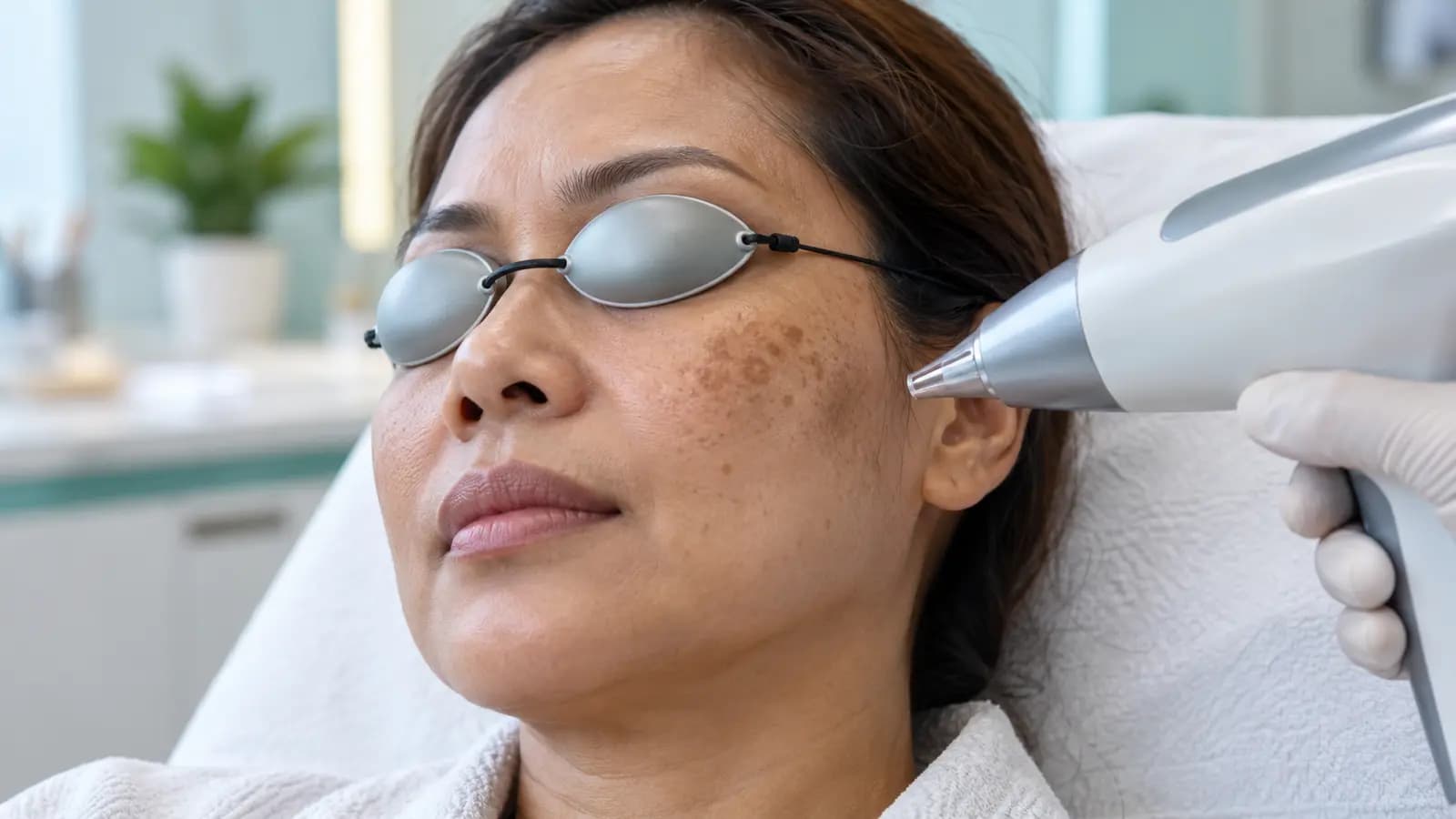

A split face study on Asian patients found that pigments cleared on 85.7 percent of the pico laser sites and 57.2 percent of the Q-switched sites at the six month mark. Said data point is the main reason pico laser has largely been a preferred standard in the local market over the last few years, but it by no means negates the efficacy of Q-switch, which has been used for the same purpose for decades and is justifiably still recommended for some indications. Though related, the two lasers have differing pulse durations which influence their performance on melanin-heavy skin.
1. Same Family, Different Speed
Both lasers achieve their effect through photomechanical disruption of pigment granules, breaking them up into fragments easily cleared by the body's natural processes. The difference lies in the duration of each pulse, Q-switched lasers have nanosecond pulses, while picosecond lasers have pulses which are an order of magnitude shorter. Said discrepancy is significant enough to influence the mechanisms of each, with the longer pulse of the Q-switch relying more on the thermal properties of the laser to achieve its effect, while the pico laser's brief pulse produces a more mechanical disruption with less heat involved.
For skin which typically tans easily and carries higher levels of melanin, which are both characteristics of the local population, lower thermal involvement generally means lesser potential for unwanted side effects.
2. The Actual Table Everyone's Looking For
| Pico Laser | Q-Switch Laser | |
|---|---|---|
| Pulse duration | Picoseconds (trillionths of a second) | Nanoseconds (billionths of a second) |
| Primary mechanism | Photomechanical, pressure-based fragmentation | Photothermal, heat-based fragmentation |
| Heat generated | Minimal | Higher relative to pico |
| Comfort during treatment | Generally less discomfort reported | Can feel more intense due to heat |
| PIH risk on darker skin | Lower, though not zero | Higher, particularly with aggressive settings |
| Cost per session | Typically higher | Often lower |
| Track record | Newer, fast becoming preferred standard | Long established, decades of clinical use |
3. Why Heat Matters More Than People Realise
This is the part people often miss when considering the differences between the two lasers. Heat-based lasers applied to melanin-heavy skin run the risk of stimulating melanocytes to produce additional pigment, as thermal stress can be read as an inflammatory signal by the body. In the same way heat can produce a rebound effect in the case of melasma, causing a flare up after treatment, causing a return of pigment which is now darker than before.
This has been observed to occur frequently enough in cases of heat-based lasers on Asian and darker skin that it contributed to a rapid rise in the popularity of picosecond lasers across Asia, specifically.
That is not to say that post-inflammatory hyperpigmentation will not occur on picosecond laser treatments, especially if incorrect settings or excessive passes are used on inflamed skin, but the device itself is not a guarantee of safety, the settings and the expertise of the person operating it are also important.
4. It Actually Depends On What Kind Of Pigment You Have
Not all pigmentation is equal, nor are the lasers which treat them.
| Pigment type | Where it sits | Generally better suited to |
|---|---|---|
| Sun spots, freckles | Shallows, epidermal | Either laser works, pico often clears faster with less discomfort |
| Melasma | Deeper, hormonally influenced, inflammation-sensitive | Low fluence pico as part of a plan, never as a standalone fix |
| Post-acne dark marks | Shallow to mid dermis | Pico generally preferred for lower PIH risk |
| Deep dermal pigment (e.g. Hori's nevus type marks) | Deep dermal | Requires multiple sessions regardless of laser, depth matters more than device |
Though not a true pigmentation condition, melasma has its own considerations which distinguish it from typical sun spots or freckles. As a condition which is prone to relapses and is linked with hormones, heat and inflammation, neither pico nor Q-switch lasers cure melasma, but are used conservatively, generally at lower settings, alongside sun protection and topical treatments as a long-term management plan rather than a one-time fix.
5. What This Looks Like For Malaysian Skin Specifically
Malaysian skin falls largely in the Fitzpatrick III to V range on the melanin scale, which is the range where the propensity towards post-inflammatory hyperpigmentation is at its highest. It is also the range where the distinction between the heat and pressure-based mechanisms of the two lasers is at its most relevant. It is also the reason year-round exposure to sun and the importance of aftercare are critical in distinguishing between a good outcome and a dark rebound in local patients regardless of the device used, with UV exposure being a common cause of returning pigment.
Nexus Clinic uses pico laser as the primary device to clear pigments due to the aforementioned considerations for sun-exposed local skin, specifically for those with a history of PIH or melasma-prone skin. That is not to say that Q-switch has no relevance in the local market, for a distinct, well-defined pigment spot or freckle in a person without a sensitising history, the outcome difference between the two lasers narrows considerably.
6. What A Proper Consultation Actually Assesses
- What type of pigmentation you actually have, sun-induced, hormonal melasma, post-inflammatory, or a deeper dermal lesion since depth and cause change the entire approach
- Your Fitzpatrick skin type and any history of PIH after previous treatments, including from other clinics or devices
- Whether melasma is part of the picture since this changes the plan from a clearance approach to a long-term management approach
- Current sun exposure habits and whether you're realistically able to commit to strict photoprotection during and after treatment
- Any other active skin concerns, like acne or scarring that might shape whether pico is used alone or alongside something else
If pigmentation and acne related marks are both part of your concern, the clinic's own breakdown of realistic pico laser results for melasma, pigmentation and acne scars in Malaysia is worth reading before your appointment since it sets expectations more honestly than most marketing does. Also a more specific look at how pico laser is used for acne related pigmentation in Malaysia if that's closer to your situation.
A Few Things Worth Knowing
- Neither laser is a single-session fix for melasma. Anyone promising that should be treated with caution.
- Sun spots and freckles tend to respond fastest and most predictably, regardless of which laser is used.
- Strict sun protection after treatment isn't optional in Malaysia's climate, it's one of the biggest factors separating a good result from a rebound.
- Cost shouldn't be the deciding factor on its own. Q-switch being cheaper per session doesn't make it the better long-term choice if your skin type carries higher PIH risk.
- Operator skill and settings matter as much as the device itself. The same laser can produce very different outcomes depending on how conservatively it's used.
Frequently Asked Questions
Is pico laser always better than Q-switch for pigmentation?
Not universally. Pico generally has a lower risk of post-inflammatory hyperpigmentation on melanin-rich skin, but for a well-defined, superficial pigment mark, the outcome difference between the two can be minor.
Can Q-switch laser treat melasma safely?
It can be used, but with caution, since its heat-based mechanism carries a higher rebound risk on melasma-prone skin. Most practitioners lean towards low-fluence pico settings for melasma specifically.
How many sessions of pico laser are usually needed for pigmentation?
This depends heavily on the type and depth of pigment. Superficial spots may respond in a few sessions, while melasma requires an ongoing, more conservative approach rather than a fixed session count.
Does pico laser completely eliminate melasma?
No. Melasma is a chronic, relapse-prone condition. Laser treatment can help manage visible pigment, but it doesn't cure the underlying tendency, which is why sun protection and a long-term plan matter as much as the laser itself.
Is Q-switch laser cheaper than pico laser in Malaysia?
Generally yes, Q-switch tends to cost less per session, though this needs to be weighed against skin type and PIH risk rather than treated as the deciding factor alone.
Which laser is safer for darker Malaysian skin tones?
Pico laser's lower thermal output generally makes it the safer default for Fitzpatrick III to V skin, though settings and practitioner experience still matter more than the device name alone.
Can pico laser and Q-switch be used in the same treatment plan?
It's uncommon but not unheard of, some clinics use Q-switch for specific well-defined targets and pico for broader, more sensitive pigmentation concerns. This should be planned by a doctor based on individual assessment.
Not Sure Which Laser Actually Fits Your Pigmentation?
Pigment type, depth and your own skin's history with inflammation all decide this, not the laser's name. Book a consultation with the team at Nexus Clinic KL for a proper assessment, or message us on WhatsApp if you'd like to ask a few questions first.