
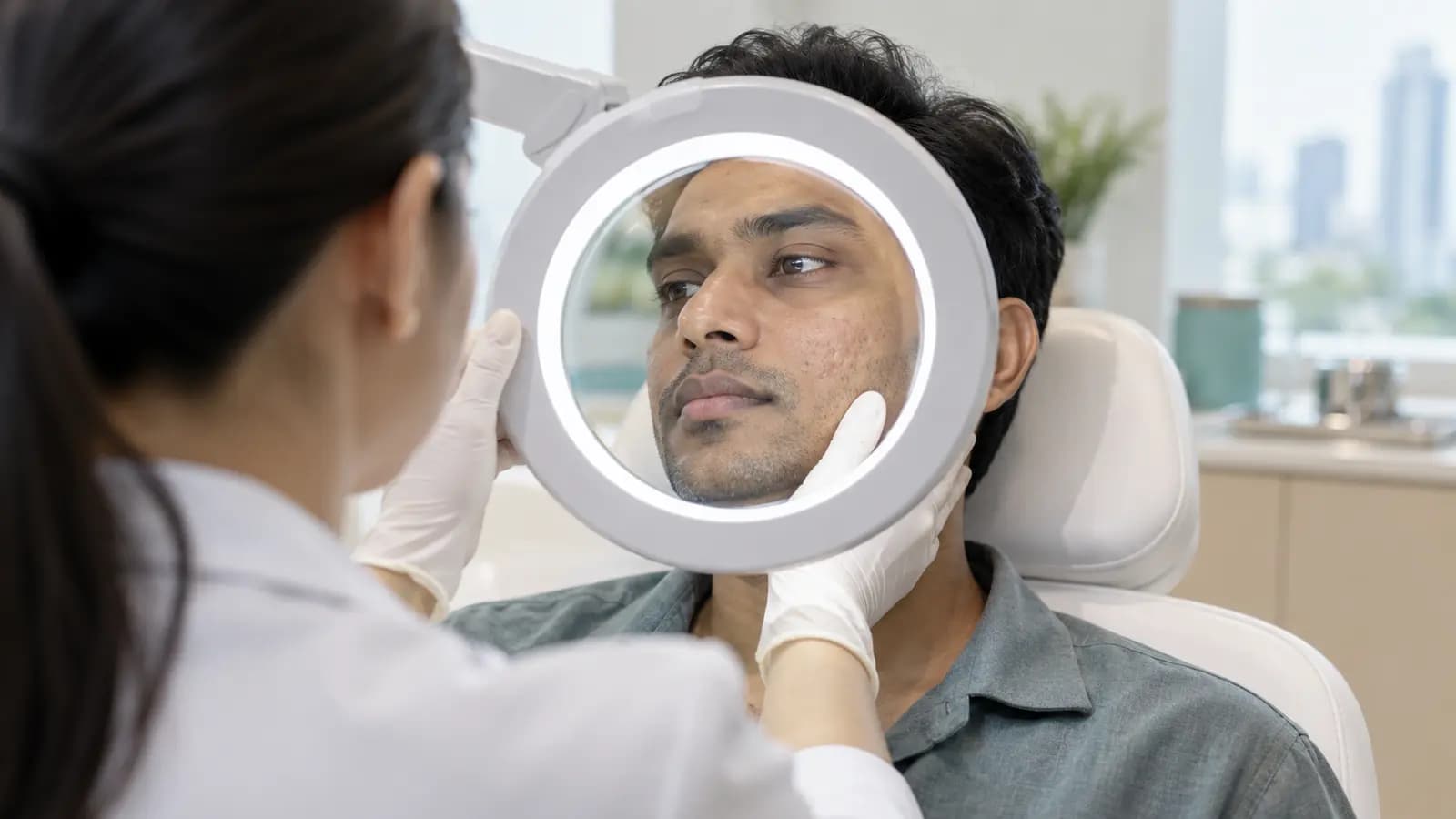

Neither of the two lasers is definitively better in this comparison, and asserting that one is demonstrably superior across the board would ignore the nuance between two quite different technologies. Pico laser fires in picosecond pulses and uses a pressure based mechanism to treat pigment with minimal downtime. Fraxel is a non-ablative fractional laser which produces columns of controlled thermal injury in the dermis, making it more effective than pico in many cases in relation to texture, pores, and more established scarring, but at the cost of more visible recovery. The right solution genuinely depends on which of the three, pigment, pores or scars, is your priority.
The Core Mechanism Differences
Pico laser fires in trillionths of a second and uses a photoacoustic shockwave to fracture pigment particles with minimal heat. Fraxel works on a completely different mechanism, delivering a thermal injury in a grid of microscopic columns which punch through the epidermis into the dermis, leaving surrounding tissue untouched. It's this controlled thermal injury which triggers a stronger collagen rebuilding response than pico typically produces, and is why Fraxel tends to be the stronger pick when it comes to structural, not cosmetic improvements.
| Pico Laser | Fraxel | |
|---|---|---|
| Mechanism | Photoacoustic picosecond pulses, minimal heat | Photothermal fractional columns of controlled thermal injury |
| Best for | Pigment, melasma, sun spots, tattoo removal | Texture, pores, mild to moderate acne scarring, fine lines |
| Downtime | Minimal, redness for hours to a day | Noticeable, redness similar to sunburn for a few days, some flaking |
| Sessions typically needed | 3 to 5 or more for pigment | 3 to 5, spaced roughly 4 weeks apart |
| Collagen stimulation | Present but comparatively modest | Stronger, thanks to deeper thermal injury |
| Risk on darker skin | Lower PIH risk overall | Moderate, needs conservative settings and experienced handling |
Pigment: Pico Generally Takes This One
For genuine pigmentation concerns, brown patches, sun spots, melasma, uneven tone, pico laser is usually the stronger and more predictable choice. Its low heat, high pressure mechanism breaks pigment down efficiently, minimising the thermal stimulation that can worsen pigmentation on melanin rich skin. Fraxel can improve some superficial pigment as a side effect of resurfacing, but it's not specifically built for pigment the way pico is, and its higher thermal load makes it a riskier primary choice for pigment focused concerns on Fitzpatrick III to V skin.
Pores: Fraxel Usually Has the Edge
This is where the mechanism gap really shines. Enlarged pores are responsive to genuine dermal remodelling, and Fraxel's controlled thermal columns do more of that heavy lifting than pico's gentler pressure based approach. Some pico devices do offer a fractional handpiece aimed at pores and mild texture, and can produce real improvement, but it's generally considered a lighter touch than Fraxel's established resurfacing effect. If pore size is your main frustration, and you're comfortable with a few days of visible downtime, Fraxel tends to deliver more noticeable change per session.
Scars: It Depends on Depth and Severity
This is the one where the honest answer is “it depends”, more than the other two categories.
- Mild, shallow textural irregularity or early post-acne with minimal actual depression typically respond reasonably well to pico's fractional handpiece, the advantage of far less downtime.
- Moderate atrophic scarring, rolling or shallow boxcar scarring tends to respond more consistently to Fraxel's deeper thermal injury and stronger collagen remodelling.
- More severe, deep boxcar or icepick scarring generally needs something beyond either of these two on its own, typically a more aggressive ablative option like fractional CO2, sometimes in combination with subcision, since neither pico nor Fraxel alone typically resolves truly deep scarring.
- Red or brown discoloration left behind after acne, as opposed to a textural scar, responds better to pico, since that's fundamentally a pigment problem wearing a scar's disguise.
Clinical comparisons between picosecond technology and other fractional lasers for atrophic scarring in Asian patients have generally found comparable clinical improvement between the two approaches, with picosecond technology generally showing a lower rate of complications like prolonged redness and post-inflammatory hyperpigmentation. This safety margin is important for Malaysian patients specifically, as Fraxel, while achieving marginally stronger textural change in a single session, tends to require more conservative settings and careful aftercare management to be safe on Fitzpatrick III to V skin, which describes the majority of the local population.
In practice, this often defines how a treatment plan is sequenced here rather than which device is picked. If both pigment and textural scarring are involved, using pico laser for pigment refinement while addressing genuine textural concerns via a broader acne scar treatment plan, which may include Fraxel type resurfacing or other modalities depending on the depth of the scars, tends to produce a more complete result than a single device.
What a Consultation Should Actually Cover
A doctor needs to assess whether your primary concern is genuinely pigment, texture, or both, before recommending either device, since these often overlap with each other and need different tools underneath. Scar depth needs a proper hands on assessment rather than guesswork, as rolling, boxcar and icepick scars all respond differently. Your Fitzpatrick skin type and any history of PIH after previous treatments should be directly factored into which settings and which device get used first. Realistically, how much downtime you can accommodate will affect the recommendation too, as Fraxel's recovery window is meaningfully longer than pico's.
If you're wondering what realistic outcomes to expect before committing to either of these lasers, reading through the clinic's own overview of realistic pico laser results for melasma, pigmentation and acne scars in Malaysia will give a more honest take, in general, than most marketing tends to.
A Few Things Worth Knowing Before You Decide
- Pico is the gentler, lower downtime option overall, but isn't the stronger tool for structural texture or pore change.
- Fraxel produces more evident recovery, redness and some flaking for a few days, but delivers stronger textural results per session.
- Neither of these treatments resolve severe, deep scarring alone, with that usually needing a more aggressive approach or a combination plan.
- Multiple sessions are the norm for both, typically 3 to 5, spaced weeks apart.
- Combining the two in a staged plan, pico for pigment and Fraxel or a similar resurfacing option for texture is common practice rather than an either or decision.
Frequently Asked Questions
Is pico laser or Fraxel better for melasma?
Pico laser is generally preferred for melasma due to its lower heat output, which carries less risk of rebound pigmentation on melasma prone skin than Fraxel's thermal mechanism.
Which laser has less downtime, pico or Fraxel?
Pico laser has significantly less downtime, usually just redness for a few hours to a day, while Fraxel typically involves visible redness and some flaking for a few days.
Can Fraxel and pico laser be combined?
Yes, many treatment plans will use both, pico for pigment refinement and Fraxel or similar resurfacing laser for texture and pore concerns, sequenced appropriately by a doctor.
Is Fraxel safe for darker Malaysian skin tones?
It can be, with conservative settings and experienced handling, but Fraxel carries more risk of post-inflammatory hyperpigmentation than pico laser and needs closer aftercare management on melanin rich skin.
How many sessions of Fraxel are usually needed for acne scars?
Typically 3 to 5 sessions, spaced roughly 4 weeks apart, depending on the depth of the scars and how your skin responds.
Does pico laser help with enlarged pores?
Some pico devices offer a fractional handpiece that can improve mild pore size and texture. The effect is generally considered lighter than what Fraxel's deeper thermal injury produces.
Not Sure Which Laser Actually Fits Your Concern?
Pigment, pores and scars are three different problems, and choosing the wrong laser for the wrong one usually means longer treatment and less satisfying results. Book a consultation with the team at Nexus Clinic KL for a proper skin assessment, or message us on WhatsApp if you'd like to ask a few questions first.