
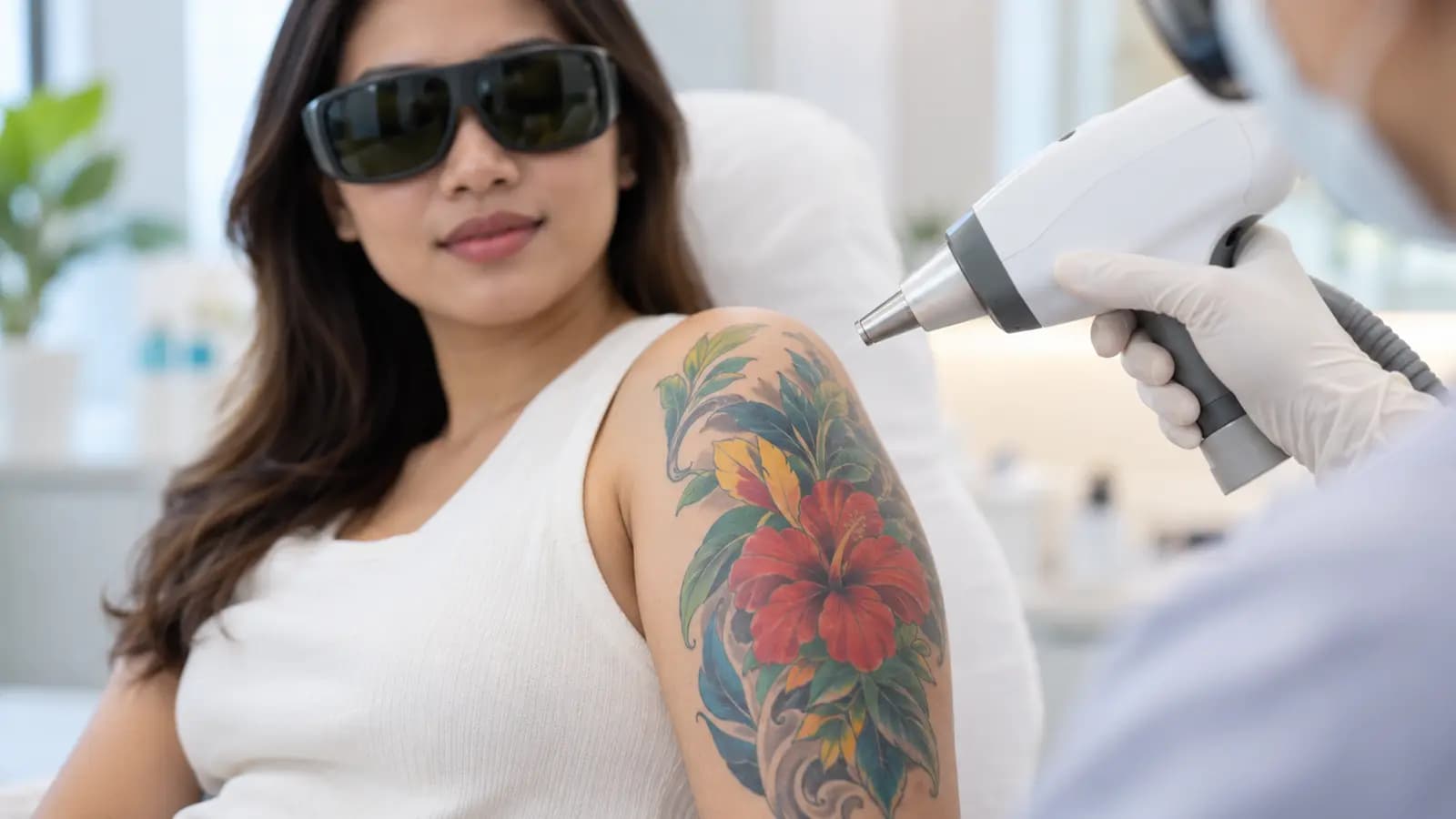

Black ink is the easiest tattoo colour to remove and white ink is arguably the hardest to remove, not because it is the darkest pigment, but because white reflects light rather than absorbs it. The very reason why some tattoo colours are harder than others has the physics of absorption and reflection behind it, since a laser tattoo removal machine targets specific wavelengths of light that various pigments absorb to break them down. This means that the colour of your tattoo directly influences which wavelength is needed to treat it, and how many sessions you may expect to have in total.
Why Colour Changes Everything About Your Treatment Plan
Each wavelength interacts differently with different colour pigments based on what it reflects and absorbs, and a single wavelength machine cannot effectively treat every colour pigments, hence why multi wavelength machines have become the standard of care.
- 1064nm penetrates the deepest and is ideal for black and dark blue ink, since dark colours tend to absorb every colour in the visible spectrum
- 532nm falls in the green spectrum and is strongly absorbed by red, orange, and yellow inks
- 755nm targets green, teal, and blue pigments that reflect most wavelengths
This is why the clinic's own tattoo removal treatment is multi wavelength based as oppose to single wavelength, as a multicoloured tattoo simply cannot be treated effectively with a single wavelength, since each colour interacts differently with the laser based on what it reflects and absorbs.
From Easiest to Hardest: Colour by Colour
| Ink colour | Best wavelength | Relative difficulty | Typical session range |
|---|---|---|---|
| Black | 1064nm (or 755nm) | Easiest, absorbs broadly across wavelengths | Often 4 to 8 |
| Dark blue | 1064nm | Easy to moderate | 6 to 10 |
| Red, orange | 532nm | Moderate | 6 to 10 |
| Brown | 1064nm and 532nm | Moderate, may darken briefly before fading | 6 to 10 |
| Purple, violet | Mixed wavelengths (blue plus red components) | Moderate to difficult | 8 to 12 |
| Green, teal | 755nm | Difficult, reflects most standard wavelengths | 10 to 15, sometimes incomplete |
| Light blue | 755nm | Difficult | 10 to 15 |
| Yellow | 532nm (picosecond) | Difficult, although picosecond technology has improved significantly | 10 to 15 |
| White, UV, neon, pastel, flesh tones | None reliably absorb | Hardest, often doesn't respond at all | Highly variable, may not clear |
Why Some Colours Just Refuse to Fade
Yellow used to be considered completely untreatable with nanosecond lasers, since it reflects a lot of the visible spectrum rather than absorbing it cleanly. Picosecond lasers, which utilise pulses that are 1000 times shorter than nanosecond lasers, have made a world of difference by fragmenting the pigment into smaller particles so that even more difficult colours like yellow begin to fade visibly. It is still not a silver bullet for every yellow tattoo out there, but it is definitely a step up from the nanosecond era.
White ink on the other hand is a different problem altogether, since it does not absorb laser light very well due to reflecting it rather than absorbing it, meaning that it simply does not interact with the laser as easily. White ink can also oxidize upon exposure to laser causing it to turn grey rather than clear. If your tattoo contains white ink, UV reactive ink, or flesh tones, it is important to have realistic expectations before getting your tattoo removed, since complete clearance of these particular ink colours are not always possible with any wavelength.
Mixed Colour Tattoos Bring Their Own Complication
Multicoloured tattoos require all the relevant wavelengths to be applied, and complete clearance is not guaranteed even after all the relevant wavelengths have been done, since tattoo pigments are not strictly regulated.
In some cases, paradoxical darkening can also occur where the tattoo actually gets darker rather than lighter or fades, which is more common with white and flesh tone ink. The exact cause is unclear, but it has to do with the fact that some tattoo pigments behave unexpectedly when being broken down by laser energy.
What This Means for Malaysian Skin Specifically
While wavelength choice has a lot to do with colour interactions, short wavelengths also compete with melanin in the epidermis, and so carry an increased risk of temporary or permanent hypopigmentation on darker skin. The longer 1064nm wavelength is generally less risky for darker skin as it is absorbed less by melanin, although lower energy settings are generally employed to mitigate this risk.
Malaysian skin tends to be darker on average (Fitzpatrick III to V), and so this consideration matters more for darker skin types than it would for a predominantly lighter skinned patient population. A practitioner treating a green or blue tattoo on darker Malaysian skin would have to account for the fact that they have to use lower energy settings to prevent damaging the melanocytes in the epidermis, to clear the tattoo ink. The importance of proper wavelength choice and safe energy settings is why the overall shift towards laser tattoo removal has largely been towards smarter laser systems that can utilise a combination of wavelengths and energy to clear tattoos safely. This goes a bit deeper, which is why how smart laser technology is revolutionising tattoo and scar removal, is a good read if you want to explore what else has changed in the space over recent years.
What a Consultation Should Actually Assess For Coloured Tattoos
Before giving you a session estimate or a treatment plan, a proper consultation should be looking at every colour that is on your tattoo, not just the dominant one in your tattoo. This means identifying which wavelengths will be needed and in what order, and having an honest discussion about which colours, if any, might only be able to achieve partial fading. Your Fitzpatrick skin type is also a factor in how conservatively those wavelengths get applied, in particular the shorter wavelengths that compete with melanin to be broken down by the laser. You can read more about the treatment approach on the clinic's tattoo removal page.
A Few Things Worth Knowing Before You Start
- Multicoloured tattoos typically require more sessions and longer treatment time than single colour black tattoos, irrespective of skin type.
- Brown ink can appear slightly darker immediately after a session before it starts to fade, this is a normal part of the process and not a sign of a problem.
- White and pastel inks have the highest likelihood of incomplete or unexpected clearance, this should be discussed before you commit to a treatment plan.
- A clinic that offers only a single wavelength laser is not capable of treating a multi coloured tattoo, irrespective of their treatment advertising.
- Complete removal of certain colours, such as green, teal, and yellow can be difficult to achieve, but significant fading is typically achievable.
Frequently Asked Questions
Why is black ink the easiest tattoos colour to remove?
Black pigment absorbs almost the entire visible light spectrum, which is why it responds well to multiple wavelengths of light, especially 1064nm.
Can green and blue tattoos be fully removed?
They can fade significantly with the right wavelength and sufficient sessions, but complete clearance is not always guaranteed and may require considerably more sessions.
Why doesn't laser work on white tattoo ink?
White ink reflects light rather than absorbing it, which means the laser has less to target. It can also oxidise and turn grey.
Does picosecond laser work better on yellow ink than older lasers?
Picosecond technology has improved significantly for historically difficult colours like yellow.
Is coloured tattoo removal more risky for darker Malaysian skin?
The shorter wavelengths needed for green, blue, and light colours compete more with melanin, which means more conservative settings for darker skin.
How many sessions does a multicoloured tattoo require compared to black ink?
Multicoloured tattoos generally require more sessions than black ink tattoos, since each colour often requires a different wavelength pass, and difficult colours like green or yellow can extend the total significantly beyond what a black tattoo would normally need.
Curious What Your Own Tattoo's Colours Actually Means for Treatment?
Ink colour changes both the wavelength needed and the realistic timeline, and that's much easier to assess in person rather than from a photo. Book a consultation with the team at Nexus Clinic KL for a proper assessment, or message us on WhatsApp if you'd like to ask a few questions first.