
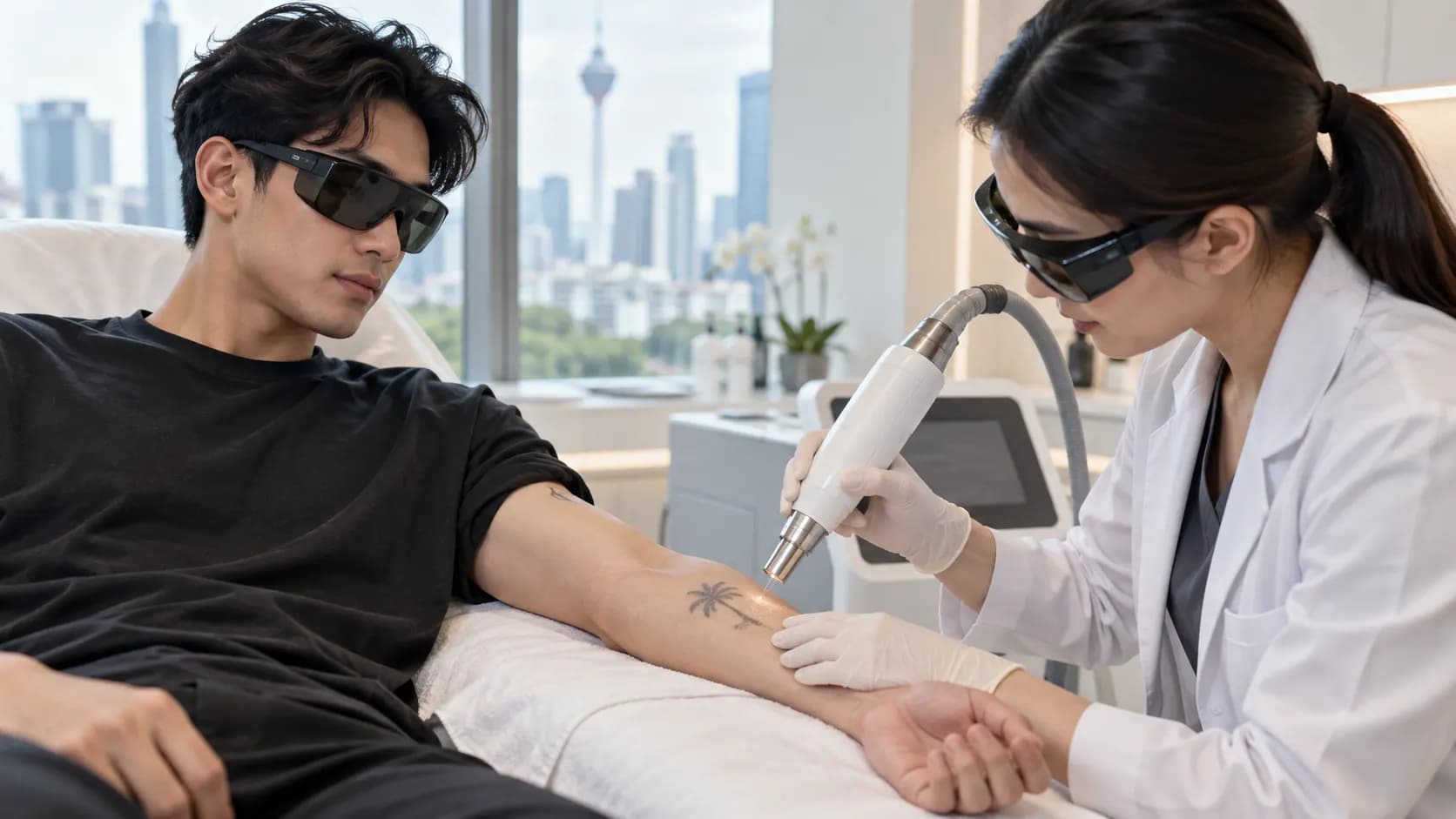

A tattoo that felt like a good idea at 19 can become a real obstacle when a career in uniform is on the table. Applicants to the Royal Malaysia Police, the Malaysian Armed Forces and certain civil service roles sometimes discover that visible ink may affect their eligibility. Tattoo removal for recruitment is a common reason people book a laser consultation, and timing is the single most important factor in getting it right.
This article explains what tattoo policies in Malaysian uniformed services generally involve, why you must confirm the current rules directly with the relevant recruiting body, and how far ahead removal needs to start.
Last checked: September 2026. Requirements may have changed. Candidates are strongly advised to confirm tattoo policies directly with the relevant organisation before applying.
Tattoo Policies by Recruiting Organisation
Uniformed services in Malaysia have appearance standards that include visible tattoos. The requirements differ between agencies, and policies can change over time. The information below reflects general knowledge as of the time of writing, but it is not a substitute for confirming the current position directly with the organisation you are applying to.
PDRM (Royal Malaysia Police)
PDRM has historically applied standards on visible tattoos for new recruits. The specific requirements, including which body locations are assessed and what constitutes an acceptable or unacceptable tattoo, can vary depending on the role and intake. The exact requirements for PDRM should be confirmed directly with the recruiting organisation, as policies can change. Do not rely on second-hand information or older guidance when preparing your application.
Malaysian Armed Forces (ATM)
The Malaysian Armed Forces (Angkatan Tentera Malaysia) also apply appearance requirements that include tattoos. As with PDRM, the details depend on the branch, the role and the specific intake. The exact requirements for ATM should be confirmed directly with the relevant recruiting branch, as policies can change. Candidates are encouraged to raise the matter during pre-enlistment enquiries before committing to a removal plan.
General Civil Service and Government Roles
Some civil service positions, particularly those involving enforcement, security or uniformed public duties, apply similar expectations regarding visible tattoos. Others do not. The requirements vary widely between agencies and roles, and there is no single blanket rule that covers all government employment. For any specific civil service or government role, confirm the current tattoo policy directly with the department or agency you are applying to, as their requirements may differ from those in uniformed services.
Why Tattoo Removal for Recruitment Needs Early Planning
Laser tattoo removal is not a single visit. Ink sits deep in the dermis and the body clears it gradually after each treatment session. Most tattoos require multiple sessions spaced roughly 6 to 8 weeks apart to allow the skin to heal and the immune system to carry away the shattered ink.
A tattoo that needs six sessions will take the better part of a year to treat fully. For this reason, applicants are typically advised to start 6 to 12 months before the intake they are targeting.
Starting late leaves you with a half-faded tattoo on the day of your assessment, which may still be counted as visible. Starting early gives the skin time to heal fully so it looks settled by the time you are inspected.
How Many Sessions Are Typically Needed
The number of sessions depends on several factors, and no guarantees can be given at the outset.
- Ink colour, with black usually clearing fastest and bright colours taking longer
- Depth and density of the ink, often higher in professional tattoos
- Age of the tattoo, since older ink has already started to break down naturally
- Location on the body, as areas with better circulation tend to respond faster
- Skin type and general health
A pico laser is generally the preferred technology for this work. Its ultra-short pulses fragment ink more thoroughly than older laser types, which can reduce the number of sessions required and lowers the risk of scarring or lasting pigmentation. Details on tattoo removal pricing in Malaysia are available at consultation.
Building a Realistic Timeline
First, confirm the tattoo policy with the recruiting body and identify exactly which tattoos are an issue. Second, book a laser consultation as early as possible, bringing your target intake date with you. Third, begin treatment and keep every appointment on schedule, since gaps between sessions add time to the overall programme. Fourth, allow a couple of months after the final session for any residual redness or pigmentation to fully settle before your assessment.
If your intake is less than six months away, be realistic in your expectations. Significant fading is achievable in that window, but complete clearance of a dense tattoo usually is not.
Aftercare That Protects the Result
Sun exposure slows clean healing, and Malaysian sun is strong. Keep treated skin covered or protected with a high SPF sunscreen between sessions to reduce the risk of dark or light patches appearing over the area. Avoid swimming or heavy exercise for a few days after each visit, and plan sessions around your physical preparation for recruitment.
If you need tattoo removal for recruitment, Nexus Clinic in Kuala Lumpur provides pico laser tattoo removal with doctor-led assessment and a treatment plan built around your intake date.
Frequently Asked Questions
How far ahead should I start tattoo removal for recruitment?
Plan for 6 to 12 months before your intake. Multiple sessions spaced 6 to 8 weeks apart are typically needed, plus healing time at the end. Start early to allow the skin to settle fully.
Will the laser leave a mark that is still visible at inspection?
With proper session spacing, aftercare and sun protection, most treated areas heal well. Some skin types are more prone to temporary pigmentation, which the practitioner will discuss with you at consultation.
Do I need to remove every tattoo I have?
Not necessarily. Policies typically focus on tattoos that are visible in uniform or that have specific content. Confirm the current requirement directly with the recruiting body to understand exactly which tattoos may be relevant to your application.
This article is for general information only. Please consult a qualified doctor for advice about your individual health situation.