
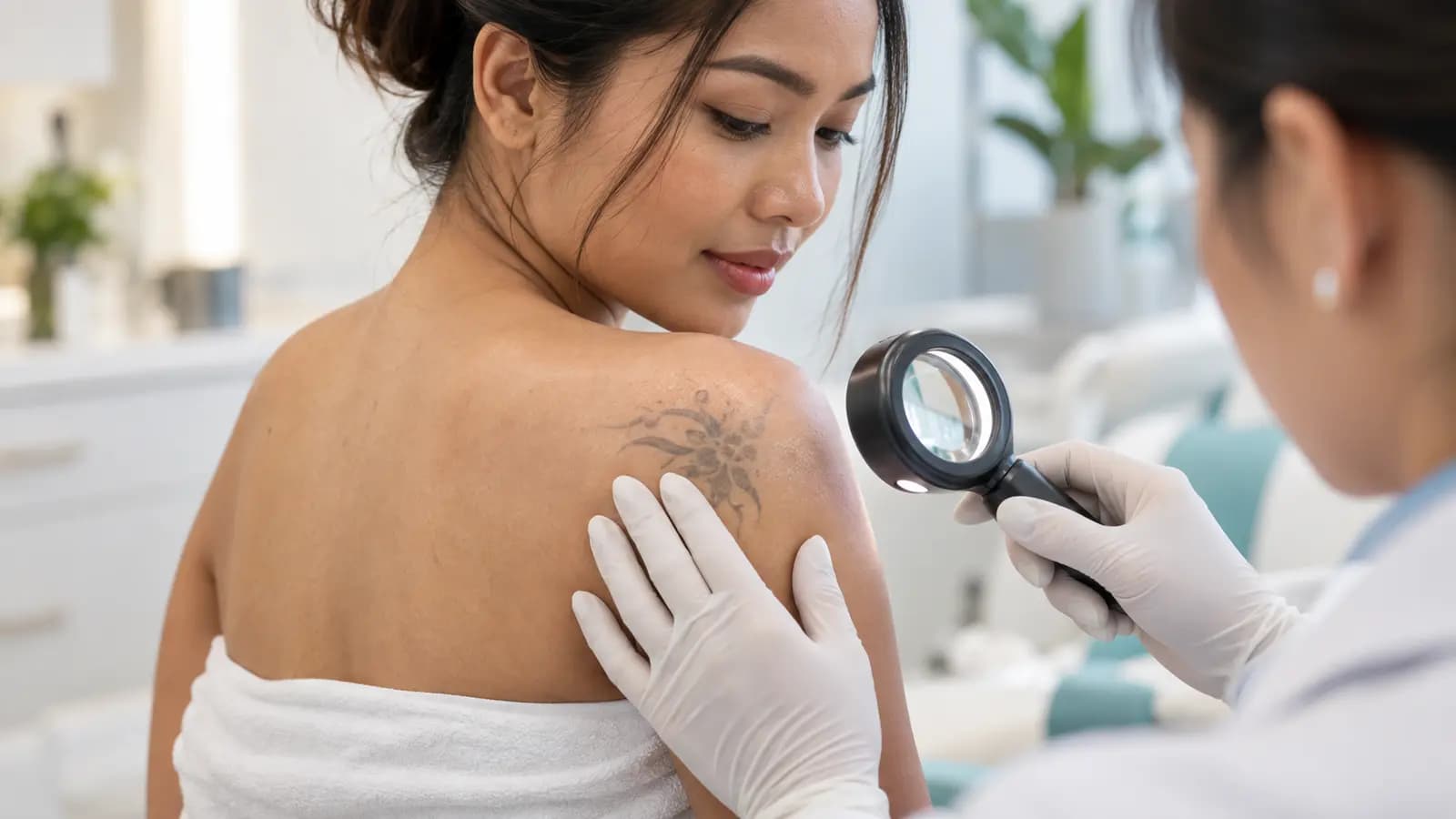

Laser tattoo removal does not cut the skin unlike older methods such as excision or dermabrasion, therefore it has a lower overall scarring risk compared to the methods it replaces. Nevertheless, there is a non-zero risk of scarring for a subset of patients undergoing the procedure, and the factors contributing to it are as follows.
The Four Things That Actually Cause Scarring
The majority of cases of scarring reported either to the clinic or in the literature are related to this particular set of four reasons, which are no different from the causes of scarring in tattoo removal procedures in general.
- Presence of pre-existing scar tissue covered by the tattoo. Scar tissue can form below the epidermis even at the stage of tattoo placement if the procedure was particularly invasive, and it can be revealed as such once the tattoo is removed.
- Laser settings being too aggressive for the skin being treated. Excessive fluence or improper technique can contribute to the formation of scar tissue, and is a matter of operator error.
- Sessions not being spaced out far enough to allow the skin to heal in between. Rushing the process only puts additional pressure on the skin instead of helping it recover faster.
- Aftercare not being taken seriously during the healing period. Scratching at blisters, picking scabs, not protecting the area from the sun, and other mistakes are consistently noted in reviews of tattoo removal complications as contributing factors.
Skin Type and History of Keloid Scarring Plays a Bigger Role Than You Might Think
One's personal history or that of one's relatives with keloid or hypertrophic scarring is one of the key factors influencing likelihood of developing a raised, thick keloid-type scar as a complication of tattoo removal. Simply put, if there is a history of abnormal scarring in one's family, there is a possibility that one might experience the same after an injury such as laser tattoo removal. Such history should be disclosed to your provider before the procedure so that additional precautions can be taken if needed.
Although darker skin tones are not inherently more likely to develop scars after laser tattoo removal, they are more susceptible to adverse effects from imprecise work with the laser, and therefore require extra care from the operator. This is why skin type is a very important consideration when choosing a tattoo removal clinic, and why the choice of devices and techniques becomes even more important for Fitzpatrick III to V skin.
| Risk factor | Controllable? | Why it matters |
|---|---|---|
| Scar tissue formed under tattoo | No, pre-existing | Revealed rather than caused by removal; affects healing pattern |
| Laser fluence and technique | Yes, by the clinic | Excessive energy increases thermal damage to surrounding skin |
| Session spacing | Yes, by the clinic and patient | Rushing prevents full healing between treatments |
| Aftercare compliance | Yes, mostly by the patient | Picking, sun exposure, and poor hygiene are the most common preventable causes |
| Personal keloid or hypertrophic history | No, individual biology | Requires disclosure and a more cautious treatment approach |
| Skin type / Fitzpatrick scale | No, individual biology | Affects safe energy margins, not scarring likelihood on its own |
Why the Practitioner and Device Matters As Much As Anything Else
The single largest controllable factor determining the likelihood of scarring during tattoo removal is the experience level of the practitioner, and the technology they employ. An experienced medical professional will consider the unique characteristics of each patient and tattoo to determine the laser settings most appropriate for the removal of a given tattoo without causing unnecessary damage to the skin. Picosecond technology in particular has seen preferential adoption due to its safety profile: its short pulses allow for faster fragmentation of tattoo ink with less collateral damage to the surrounding skin, and hence a lower risk of complication such as scarring, which is particularly relevant for darker skin tones. The technical differences between pico lasers and the older, QS technology are discussed in more detail in pico laser versus Q-switch for tattoo removal in KL, which further elaborates on the reasons why the newer technology has gained favour for body tattoo removal and the safety it offers over traditional options.
Red Flags To Watch Out For Before You Book Anywhere
- A clinic that does not ask about scarring history, tendency towards keloids, or other reactions before treatment
- Sessions offered closer together than 6-8 week healing window, presented as a faster removal option
- No information on what device is being used or why it is suitable for ones skin type
- Avoidance of specific questions about what happens if things go wrong
- Very low pricing with no mention of medical supervision or practitioner qualifications
Reducing Risk Through Recovery, Not Just The Laser Itself
Preventing complications such as scarring is not limited to the laser session itself. Keeping the treated area clean, and protected from the sun, and not interfering with the peeling and blistering phases of healing are all essential steps to minimise additional trauma to the skin and reduce the risks of additional complications. Some patients also benefit from the inclusion of other treatments alongside laser tattoo removal specifically to aid in the skin's healing and appearance recovery in between sessions, which are discussed in more depth in combining pico laser with other treatments for better skin recovery post tattoo removal, if the goal is to reduce visible signs of tattoo removal and downtime between sessions beyond what laser alone can offer.
What a Proper Consultation Should Cover Before You Undergo Any Procedure
Prior to treatment planning, a qualified medical practitioner must receive honest and full disclosure from the patient concerning a couple of important topics. Has the skin reacted abnormally to any condition prior, such as acne, injury, or the tattoo itself. Keloid or hypertrophic scarring history in the family. What does the tattoo look like up close, and whether there appears to be any textural abnormalities that suggest presence of pre-existing scar tissue underneath. How committed is the patient to following the aftercare instructions between sessions, as it is the most important part of minimising the risk of scarring and is entirely in their control. More information on the actual treatment approach can be found on the clinic's tattoo removal page.
A Few Things Worth Knowing
- Most patients do not scar as a result of tattoo removal. The risk is there, but it is very low when the tattoo removal procedure is done right.
- Larger tattoos requiring more sessions will have a higher cumulative risk due to the number of treatments, although any single session is no more dangerous than another.
- Lightening or darkening of the treated area (hypopigmented or hyperpigmented) tends to be more common and is usually temporary, though it may last longer on darker skin.
- Signs of infection such as prolonged redness, swelling, pus, fever, or other unusual symptoms require immediate medical attention.
- Scarring should not be considered a permanent deformity in the most extreme case, and can often be corrected once the skin has fully healed.
Frequently Asked Questions
Does laser tattoo removal always leave a scar?
Laser tattoo removal is rarely accompanied by scarring if it is performed properly and aftercare is followed. Scarring is a possibility, but it is a rare complication of tattoo removal procedures in general.
Can a tattoo have scar tissue underneath it?
A tattoo can potentially develop scar tissue underneath it if the tattoo placement itself was particularly invasive, which can be revealed once the tattoo is removed.
Is picosecond laser safer than other technology for avoiding scars?
In most cases, yes. Due to the shorter pulse duration, picosecond lasers are less damaging to the skin than QS lasers, which is especially important for darker skin tones.
How long should I wait between sessions for tattoo removal to prevent scarring?
About 6 to 8 weeks is the standard to allow the skin to heal fully between sessions, which helps reduce the risks of complications such as scarring.
If I have a history of keloid scarring, am I at a higher risk of developing scars after tattoo removal?
Yes, history of keloid or hypertrophic scarring places you at a higher risk of experiencing a similar complication after laser tattoo removal, which is why such history should be disclosed to your provider before the procedure.
What is the most common cause of scarring after tattoo removal?
Aftercare following tattoo removal is consistently highlighted across reviews of tattoo removal complications as the most frequent cause of scarring after laser tattoo removal.
Concerned About Scarring Risk With Your Own Tattoo?
A proper assessment is based on ones skin and tattoo history, not a generalized risk percentage. Book a consultation with the team at Nexus Clinic KL to discuss your own risk factors before beginning treatment, or message us on WhatsApp to ask a few questions first.