
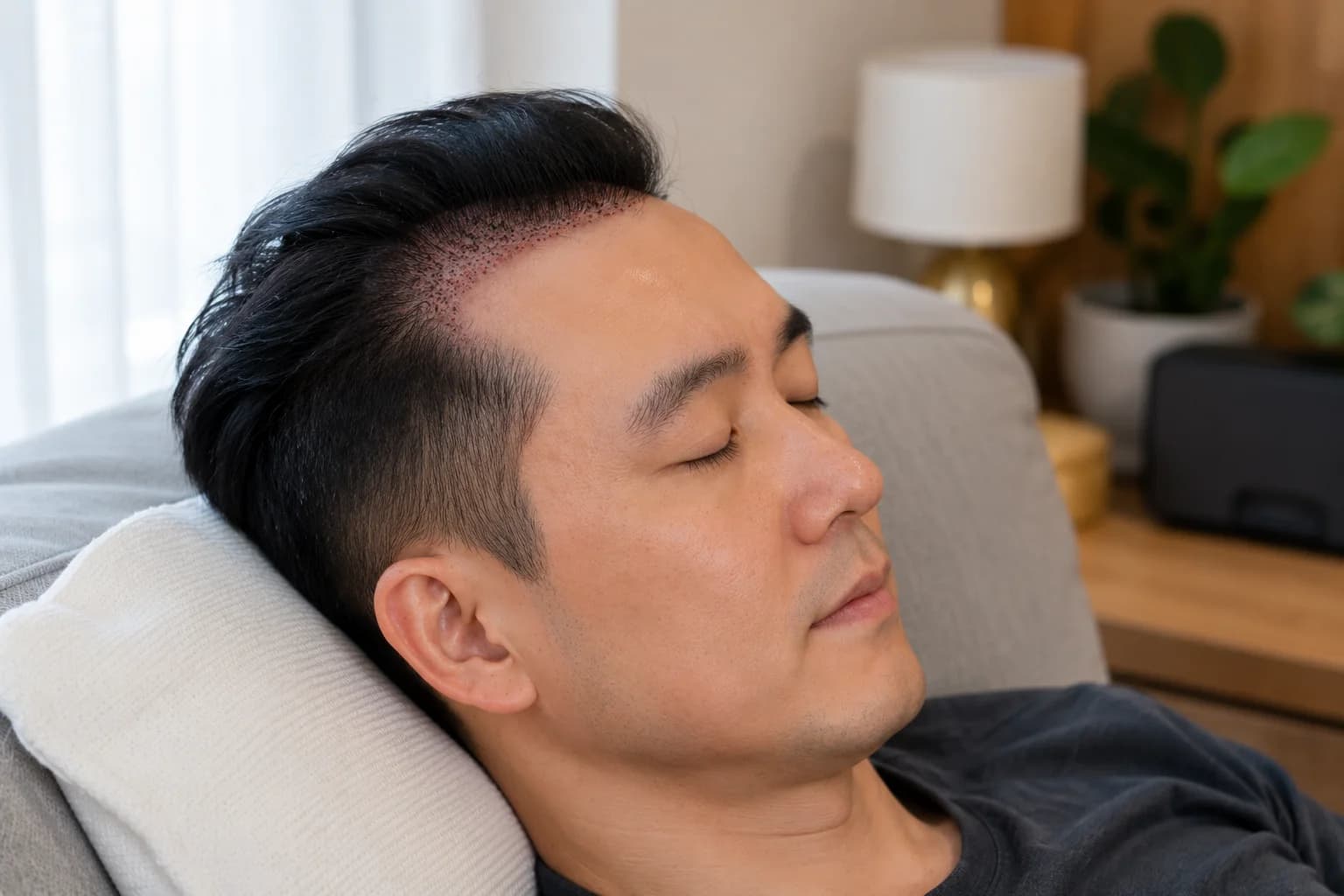

You have done the research. You have had the consultation. You have committed to a hair transplant. Now the real test begins, because the days and weeks after surgery are when most people unknowingly compromise their own results.
Hair transplant surgery is the investment. Aftercare is what determines the return on that investment.
Before we get to the aftercare rules, let us be clear about what procedures cost in Malaysia right now, so you have accurate numbers to work with.
Hair Transplant Cost in Malaysia 2026
| Technique | Cost Per Graft | Typical Total Cost |
|---|---|---|
| Standard FUE | RM 6 to RM 12 | RM 8,000 to RM 30,000 |
| Sapphire FUE | RM 8 to RM 14 | RM 8,000 to RM 30,000 |
| DHI | RM 12 to RM 18 | RM 8,000 to RM 30,000 |
Additional Costs
| Cost Item | Estimated Cost |
|---|---|
| Pre-operative blood tests | RM 150 to RM 300 |
| Post-operative medications and specialist shampoos | RM 200 to RM 500 |
Why Aftercare Is So Critical
When grafts are implanted, they are in a vulnerable state. The follicles need to survive the initial days in their new location, establish blood supply, and integrate with surrounding tissue before they can produce hair reliably.
During the first 7 to 14 days especially, the wrong behaviour can dislodge grafts, cause infection, restrict blood flow, or trigger inflammation that impairs follicle survival. After that initial window, your behaviour still matters for the following weeks and months as growth progresses.
Here are 18 things to avoid.
The 18 Things You Should Never Do After a Hair Transplant
- Do not touch or scratch the grafted area for the first 10 days
The transplanted follicles are held in place by tiny dried blood points, not stitches. Even gentle rubbing can dislodge them.
- Do not let water hit the scalp directly in the first 24 to 48 hours
Your doctor will tell you exactly when you can start washing your hair. Before that, keep the scalp dry.
- Do not wash aggressively
When washing is permitted, use only the prescribed shampoo and very gentle circular motions. No rubbing, no scrubbing, no fingernails on the scalp.
- Do not wear tight headgear or hats that press on the grafted area
Friction from a hat can physically dislodge newly placed grafts. Loose-fitting caps worn brim-forward that do not touch the crown may be acceptable. Ask your doctor specifically.
- Do not sleep flat on your back with your head on a pillow in the first week
The scalp swells after surgery and pressure on the grafts from a pillow can affect their position. Most doctors recommend sleeping at a 45-degree angle using a travel pillow or stacked pillows for the first few days.
- Do not drink alcohol for at least a week post-surgery
Alcohol thins the blood, increases swelling, and slows healing. It can also interact with post-operative medications.
- Do not smoke during the healing period
Smoking restricts blood circulation to the scalp. Blood supply is critical for newly transplanted follicles to establish themselves. Nicotine significantly increases the risk of poor graft survival.
- Do not exercise strenuously for at least two weeks
Sweating and physical activity increase blood flow to the scalp and raise blood pressure, which can cause bleeding at graft sites and dislodge follicles. Light walking is generally fine. Running, weights, and sport are not.
- Do not swim for at least a month
Pool chemicals irritate healing skin. Ocean water carries bacteria. Both create infection risk for the open scalp wound sites in the donor and recipient areas.
- Do not expose your scalp to direct sunlight without protection for the first month
UV exposure can damage healing skin and pigment the scalp unevenly. A loose hat or SPF spray recommended by your doctor is the right approach.
- Do not panic when the transplanted hair falls out
This happens between weeks two and six and it is completely normal. The follicles are entering a resting phase before they produce new permanent hair. Panicking and seeking unnecessary treatment at this stage does more harm than good. Our FUE hair transplant Malaysia guide includes a detailed month-by-month recovery timeline so you know exactly what to expect at each stage.
- Do not stop your prescribed medications early
Antibiotics and anti-inflammatories are prescribed for a reason. Finishing the course matters even if you feel fine.
- Do not use non-prescribed shampoos or hair products on the grafted area
Many shampoos, conditioners, and styling products contain ingredients that can irritate healing follicles. Stick to what your clinic prescribed for the first month at minimum.
- Do not assess your results before 12 months
At months three and four, results often look thin and disappointing. At month six, they look promising. At month twelve, you see the actual final result. Many people give up or seek unnecessary additional treatment because they judge too early.
- Do not expose the scalp to extreme heat sources like saunas or steam rooms for at least a month
Heat and steam increase inflammation and can affect graft integration.
- Do not colour or chemically treat your hair for at least four to six weeks
Chemical processes irritate the scalp and can damage both healing follicles and the surrounding skin.
- Do not ignore post-operative swelling that extends beyond five days or seems to be worsening
Some swelling in the forehead area in the first three days is normal and moves down due to gravity. Worsening or prolonged swelling should prompt a call to your clinic.
- Do not skip your follow-up appointments
Your surgeon scheduled those appointments to monitor graft survival, check for infection, and assess early growth progress. Missing them leaves issues undetected.
What You Should Do Instead
Follow every specific instruction your doctor gives. Ask questions during your consultation about any situation not covered in written aftercare notes. Stay hydrated. Eat well, particularly protein-rich food that supports follicle growth. Sleep properly. And give the process time.
The period between a transplant and the final result involves patience. That is not a nice-to-have. It is part of the treatment.
Many patients also add PRP hair treatment sessions during recovery to protect the native hair around the transplanted area and improve long-term scalp health. For those earlier in the decision process, our hair loss treatment overview covers what non-surgical options are available before and alongside surgery.
If you are still in the planning stage, book a consultation at Nexus Clinic for a full assessment before committing to anything.
Frequently Asked Questions
How long after surgery can I start exercising again?
Light walking is usually fine after three to five days. Moderate cardio can typically resume after two weeks. Heavy weight training, high-intensity exercise, and contact sports should wait four weeks or until your doctor clears you.
What happens if I accidentally scratch the grafted area?
If you disturb the area, contact your clinic and describe what happened. In most cases, if it was a brief, gentle contact, the impact is minimal. The risk is highest in the first seven days.
When can I go back to work after a hair transplant?
For desk jobs, most people return within three to five days. Work involving physical labour, sun exposure, or environments where hygiene is a concern requires a longer wait, typically two to four weeks.
Should I be worried about the donor area healing?
The donor area heals faster than the grafted area in most FUE cases. Small round extraction marks fade significantly within months and are not visible at normal hair lengths. Your doctor will check this at follow-up.
Can I wear a motorcycle helmet after a hair transplant?
Not in the first few weeks. The pressure and friction from a helmet on the grafted area is a genuine risk for graft dislodgement. Consult your doctor about when it is safe to wear one again.
Is it normal to feel itching on the scalp after a transplant?
Mild itching during the healing process is normal. Do not scratch. Gentle scalp sprays or the prescribed shampoo help. If itching is severe or accompanied by unusual redness, contact your clinic.
Will the shock loss affect my existing native hair?
Temporary shock loss of native hair near the grafted area can occur and generally resolves within two to four months. This is a recognised phenomenon and is not permanent in most cases.
Can I colour my transplanted hair after it grows?
Yes, once the hair has fully grown and the scalp has completely healed, usually after six months, you can colour and style transplanted hair like any other hair.
What should I eat to help recovery?
Protein is particularly important for follicle growth. Eggs, lean meat, legumes, and nuts are beneficial. Zinc and biotin-rich foods support hair health generally. Staying well-hydrated aids healing.
When will I know for certain whether my transplant was successful?
The final assessment is made at 12 months post-procedure when all transplanted follicles have had time to establish and enter full growth phase. This is the standard timeline for evaluating the outcome.
✓ Reviewed by Dr. Preetha Nair, Aesthetic Medical Doctor – Nexus Clinic KL