
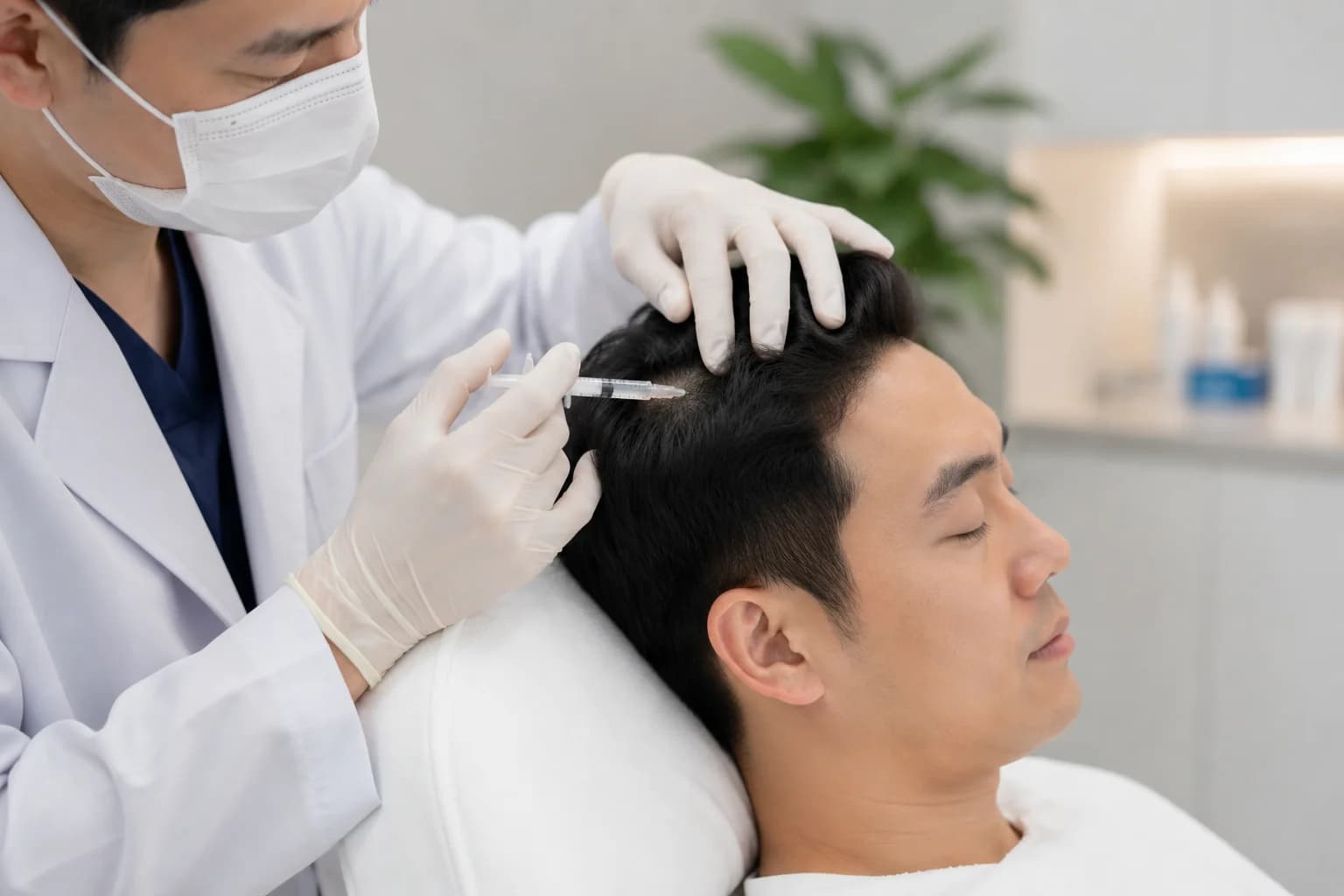

A few years ago, PRP was something you mainly heard about in sports injury recovery. Professional athletes using their own blood to heal faster. It sounded intense and medical and very far from everyday life.
Today it is one of the most commonly requested treatments at aesthetic clinics across Kuala Lumpur and major cities throughout Malaysia. And the people walking through those doors are not just athletes. They are office workers noticing their hair thinning, parents dealing with post-pregnancy shedding, young professionals trying to get ahead of ageing skin.
So what changed? And what does PRP actually do that makes it worth choosing?

The Appeal of Using Your Own Biology
The central reason PRP has found such a broad audience in Malaysia is that it uses something you already have. There are no foreign substances, no synthetic chemicals, no materials that could trigger an allergic reaction. It is your own blood, processed to concentrate the most useful part of it, and put back to work exactly where it is needed. In a market where patients are increasingly cautious about what goes into their bodies, that is genuinely compelling. It also means the safety profile is very strong. The risk profile of PRP is fundamentally different from treatments involving synthesised compounds or materials sourced externally.Malaysia's Climate and Hair Loss
One factor that gets overlooked in most global hair loss discussions is how Malaysia's climate specifically affects scalp health. The combination of year-round heat, high humidity, and urban pollution creates conditions where excess sebum production, follicular inflammation, and scalp stress are significantly more common than in temperate climates. This means Malaysian hair loss patients often deal with a combination of genetic predisposition and environmental scalp stress. PRP addresses both the follicular level (stimulating and strengthening roots) and the scalp environment (increasing blood vessel density and cellular activity in the surrounding tissue). If you want to see what a full non-surgical hair loss programme looks like in this context, our hair loss treatment options at Nexus Clinic gives a complete picture.Hair Loss in Malaysia Is More Common Than People Admit
There is still a degree of social reluctance around openly discussing hair loss in Malaysia. Men particularly tend to frame it as something to accept rather than treat. But attitudes are changing, and the numbers tell their own story. Androgenetic alopecia, the genetic form of hair loss, affects approximately 50 percent of men by age 50 globally, with similar figures observed in Malaysian populations. Among women, diffuse thinning from hormonal shifts, postpartum changes, and stress-related shedding affects a significant proportion of women in their 30s and 40s. The growing willingness to seek clinical help rather than just switching shampoos reflects both better public awareness and the availability of effective non-surgical options like PRP.PRP for Hair: What the Treatment Addresses
At its core, PRP hair treatment addresses two things simultaneously. First, it slows ongoing hair loss by improving the health of the scalp environment and the function of existing follicles. Second, it stimulates thicker, stronger regrowth in follicles that have been producing weak or fine hair. It is particularly effective in the following scenarios: early to moderate androgenetic alopecia in both men and women, post-pregnancy hormonal shedding, hair thinning associated with nutritional deficiency or stress, and maintenance of hair density after a transplant procedure to protect native hair. Our PRP hair treatment at Nexus Clinic is administered by qualified doctors in a fully licensed clinic setting, with a structured session plan tailored to your hair loss pattern.PRP for Skin: The Other Reason People Are Coming In
It is worth noting that many patients who come to Nexus Clinic for PRP hair treatment end up learning about PRP's applications for skin as well, because the mechanism is exactly the same. Growth factors stimulate collagen production, improve tissue healing, and enhance cellular renewal. For skin, PRP is applied differently, typically through micro-injections or combined with microneedling to treat fine lines, acne scarring, uneven texture, and skin lassitude. It is particularly popular among Malaysians dealing with the textural damage that comes from years of sun exposure in a tropical climate.What a PRP Session Actually Feels Like
People imagine the blood draw and the needle and assume it is an ordeal. The reality is considerably more routine than that. A small amount of blood is drawn from your arm, similar to a standard blood test. It goes into the centrifuge for about ten minutes while numbing cream is applied to your scalp. Once the PRP is ready and the area is numb, the injections themselves take around twenty to thirty minutes. Most patients describe a mild pressure sensation. Redness on the scalp or skin usually clears within a few hours. You can go about your day normally afterwards.