
There are more hair transplantation clinics in Kuala Lumpur today than at any point in the past decade. Some are excellent. Some are average. Some should concern you. And from the outside, especially from a website or Instagram page, they can look very similar.
Rather than listing clinics and making claims that date quickly and rely on incomplete information, this guide focuses on something more useful: the five things that actually determine whether a hair transplantation experience in KL goes well or poorly. Get these right and you can evaluate any clinic you encounter with confidence.
1. Who Performs the Extraction and Implantation Matters More Than Anything Else
This is the most important and least discussed factor in choosing a hair transplant clinic.
A hair transplant involves hundreds or thousands of individual decisions made during extraction and implantation. The angle at which each follicle is placed. The depth of each incision. The direction of hair growth replicated. These decisions determine whether your result looks natural and achieves good density, or looks artificial and disappoints you.
The key question to ask every clinic is: who specifically performs the extraction of grafts and who performs the implantation? Is it the doctor for the entire procedure, or are parts of it handed to technicians?
In Malaysia, the law requires that medical procedures including hair transplants be performed by licensed doctors. However, practice varies in how directly and continuously involved the doctor is throughout a long procedure. The best outcomes consistently come from experienced doctors actively performing the full procedure, not supervising technicians at arm’s length.
Ask the question. Evaluate the answer honestly. Our hair transplant in Malaysia page outlines exactly how we handle this at Nexus Clinic and who is involved at each stage of the procedure.
2. Your Donor Zone Has Limits and the Best Clinics Will Tell You That
The back and sides of your scalp contain a finite number of healthy follicles. Most people have a lifetime harvest potential of approximately 5,000 to 8,000 grafts, though this varies by individual.
A good clinic will assess your donor zone carefully and be honest about what is available, how it should be distributed across potential future procedures if needed, and whether your expectations for density are achievable with what you have.
A less scrupulous approach is to harvest aggressively from the donor zone in one session to impress you with graft count, leaving the donor area visibly thin and limiting what can be done in future if your hair loss continues to progress.
Ask your consultant specifically about donor zone management. How are they planning for your future, not just your immediate procedure? The specifics of how FUE graft harvesting works and how donor zones are managed are covered in our FUE hair transplant Malaysia guide.
3. Hairline Design Is an Art That Not Everyone Has Mastered
A technically successful hair transplant can still look wrong if the hairline was designed poorly.
Common mistakes include designing a hairline that is too low and looks artificial as the patient ages, creating a perfectly straight and symmetrical line that does not match natural hair growth patterns, and misjudging the angle of hair growth at the temple area.
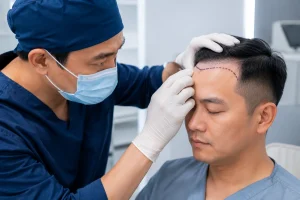
The best surgeons in KL approach hairline design collaboratively, discussing the options with you, explaining what is anatomically appropriate for your face and age, and showing you how the proposed line will look. They use small measurements and markings before the procedure begins and take the time to get this right.
Ask to see a detailed discussion of hairline design during your consultation. If the subject is handled superficially or treated as an afterthought, that is worth noting.
4. Post-Operative Support Is Part of the Procedure
A hair transplant does not end when you leave the operating room. The weeks and months that follow are critical for graft survival and final results. The quality of support your clinic provides during this period is a legitimate part of what you are paying for.
Good clinics in KL provide detailed written aftercare instructions, a clear point of contact for questions and concerns during recovery, scheduled follow-up appointments at appropriate intervals, and honest, reassuring communication when you go through the normal shed phase and worry that something has gone wrong.
A clinic that essentially disappears after the procedure and is hard to reach when you have questions has given you an incomplete service regardless of how the surgery went. Many clinics now also offer PRP hair treatment sessions as part of a post-operative care programme, which is a good sign of a clinic that thinks beyond surgery day.
5. Results at 12 Months Tell a Different Story Than Results at 3 Months
When evaluating before and after photos of any KL clinic, pay attention to when the after photo was taken. Results at three months look very different from results at twelve months. Some clinics show early results that look dramatic primarily because the shed phase is over and early growth is visible, before the final density is established.
Ask for 12-month results. Ask specifically whether the photos are from that clinic’s own patients or sourced from suppliers or other practices. These are legitimate questions that ethical clinics will answer directly. For patients not yet sure whether surgery is the right step, our hair loss treatment overview covers the full non-surgical spectrum so you can see where surgery fits in the bigger picture.
Book a consultation at Nexus Clinic to begin with a thorough, honest scalp assessment.
Frequently Asked Questions
How many hair transplant clinics are there in KL?
There are dozens, ranging from dedicated hair restoration centres to general aesthetic clinics that include hair transplants as part of their service menu. Quality varies significantly across this range.
Is it better to choose a clinic that only does hair transplants?
A specialist clinic focused exclusively on hair restoration often has deeper experience in the specific techniques and aesthetics involved. However, a well-resourced general aesthetic clinic with a dedicated and experienced hair team can be equally good. What matters is the individual surgeon’s case volume and outcomes.
Can I visit a clinic for a consultation without committing to treatment?
Yes. A reputable clinic will offer a consultation as a standalone appointment with no obligation to proceed. Treat any clinic that seems uncomfortable with this as a warning sign.
How do I verify that a doctor is registered with the Malaysian Medical Council?
The MMC maintains a public register accessible online. You can search a doctor’s name to confirm their registration status and whether any restrictions apply.
What if I need a second transplant in the future?
This is entirely possible and many patients do have a second procedure as hair loss progresses over the years. This is why donor zone management in the first procedure matters so much. A good surgeon plans with future procedures in mind.
Is patient privacy maintained at KL hair clinics?
Yes, licensed medical clinics in Malaysia are subject to the Personal Data Protection Act and standard medical confidentiality obligations. Your information and photographs should not be shared without your consent.
Can foreign nationals get hair transplants in KL legally?
Absolutely. Many clinics in KL have established medical tourism infrastructure and accommodate international patients from Singapore, Indonesia, Australia, and beyond.
What is a trichoscopy and should my clinic offer it?
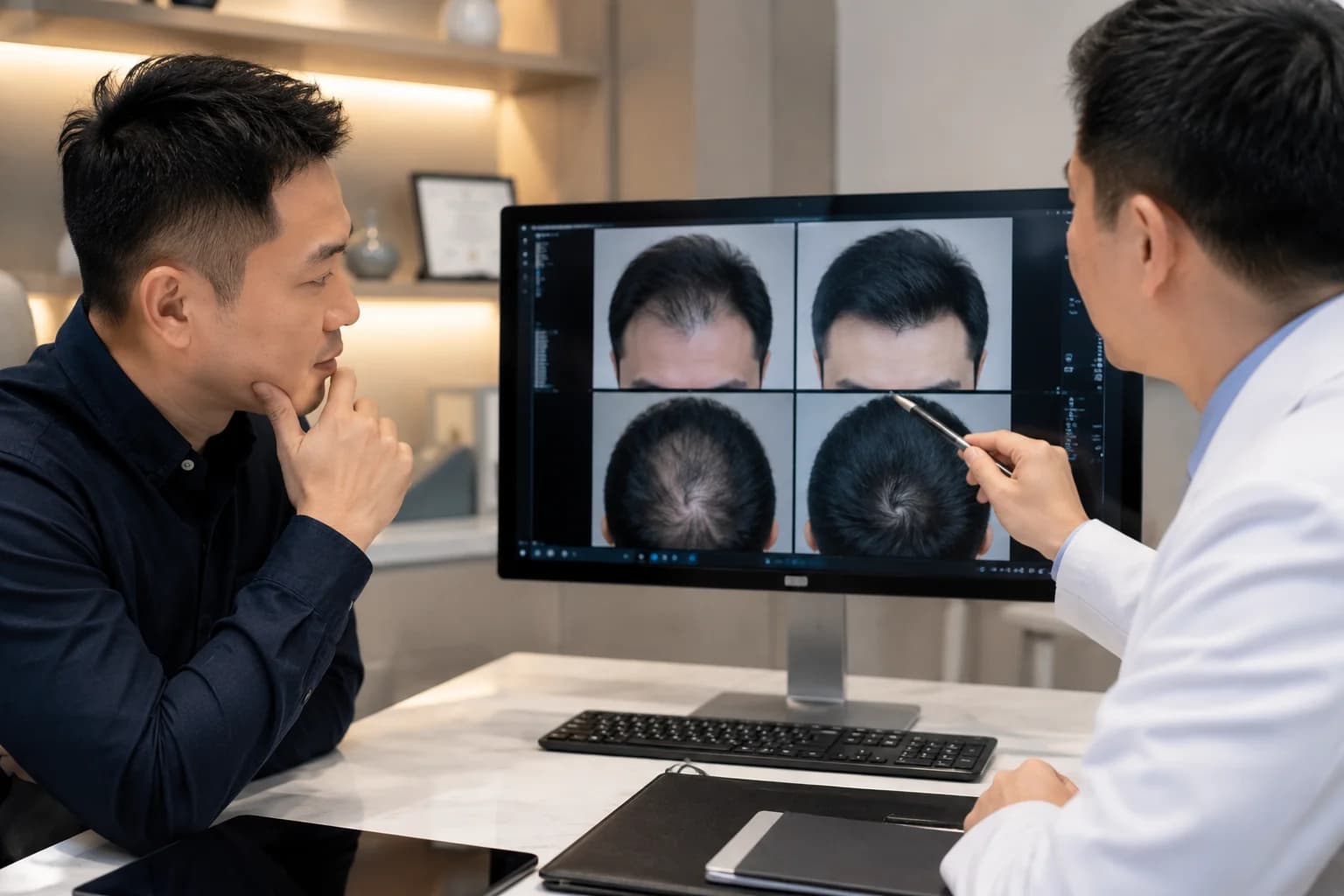
Trichoscopy is a dermatoscopic examination of the scalp that allows detailed assessment of follicle health, miniaturization, and scalp condition. It is a useful diagnostic tool for planning hair restoration and a sign of a thorough clinic.
Is there a KL hair transplant registry or accreditation body?
There is no specific accreditation body for hair transplant clinics in Malaysia. The MOH regulates clinics and the MMC regulates practitioners. ISHRS membership is the most meaningful international quality signal specific to hair restoration.
What questions should I write down before my consultation?
Who performs the full procedure. What technique is recommended for my case and why. How many grafts do I need and what density can I realistically achieve. What does donor zone management mean for my future options. What follow-up support is included. What the 12-month outcome looks like for cases similar to mine.