
Sharper Pico Laser in Kuala Lumpur for Pigmentation, Acne Scars and Lasting Skin Clarity
Skin that has cycled through whitening creams and toning lasers without lasting results needs a different approach. Nexus Clinic KL uses calibrated wavelengths and targeted delivery modes to treat your specific concern precisely.
Pico Laser is not a single treatment. It is a platform with multiple wavelengths, multiple delivery modes and multiple clinical applications. The results you achieve depend on whether the correct wavelength and mode are matched to your specific skin concern.
Important Clinical Note
Over 5,000 Aesthetic Procedures Completed — Our doctors bring more than 15 years of combined clinical experience treating Malaysian Fitzpatrick III to V skin.
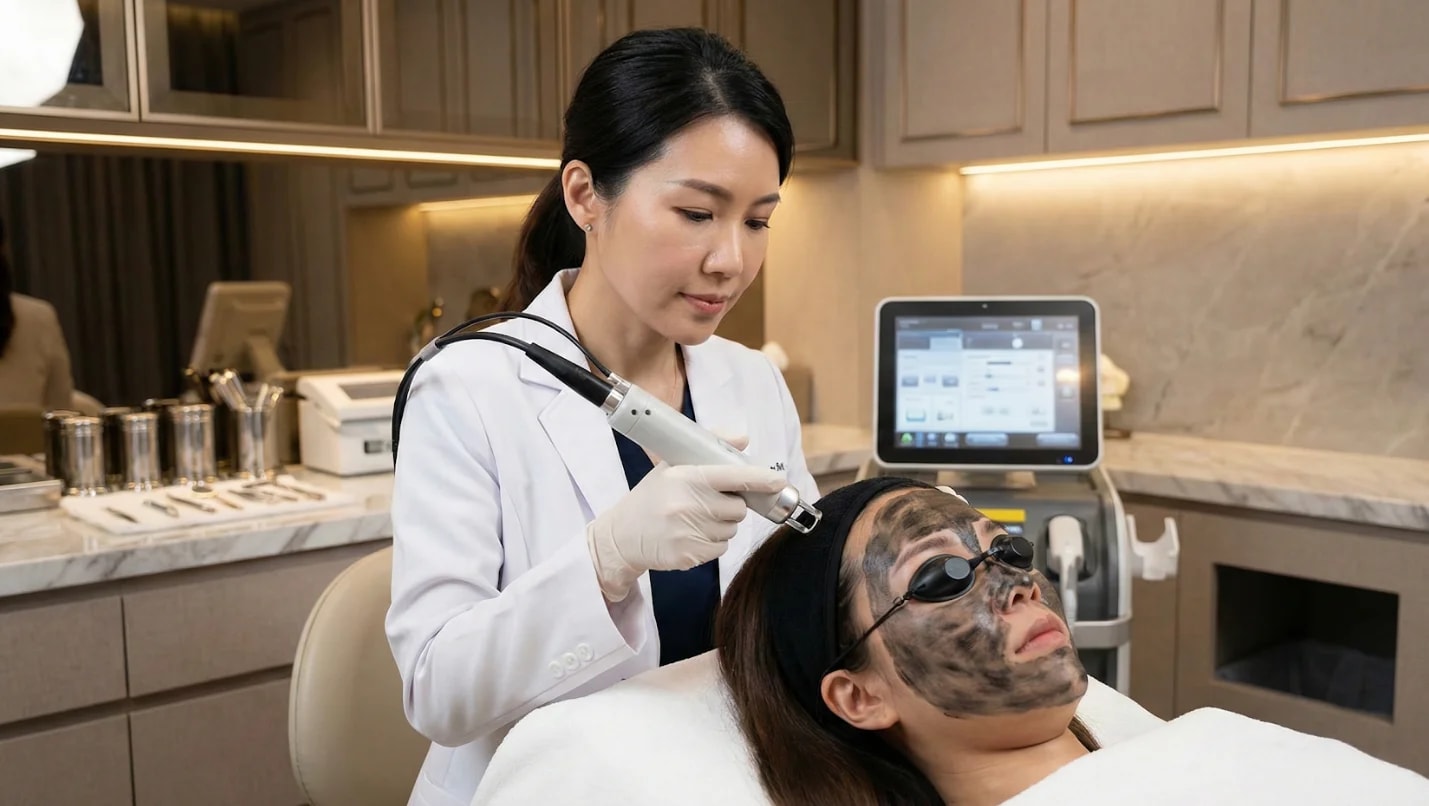
Calibrated Treatment
Wavelength • Mode • Energy • Your Skin Type
Trust at a glance
Nexus Clinic Kuala Lumpur — Excellence in Medical Aesthetics
Established
2001
Over 20 years of excellence
Location
Wisma UOA II, Jalan Pinang
KLCC, 50450 Kuala Lumpur
Opening Hours
Monday - Saturday
9:00am – 6:00pm | Closed Sundays & PH
MOH Registered & Compliant
FDA-cleared picosecond laser device
Licensed Aesthetic Doctors
15+ years combined experience
Wavelength-Calibrated Protocols
532nm • 755nm • 1064nm selected per concern
Pico Laser Treatment at Nexus Clinic KL at a Glance
Everything you need to know
Treatment
Pico Laser: Toning Mode, Fractional LIOB Mode, Spot Mode; wavelengths 532nm, 755nm, 1064nm
Session Time
20 to 45 minutes depending on treatment area, mode and passes
Downtime
Minimal; 24 to 48 hours mild redness; pigment spots may darken for 5 to 7 days
Sessions Required
Pigmentation: 3 to 6 | Acne scars: 4 to 8 | Rejuvenation: 3 to 5 | Tattoo: 4 to 10
Anaesthesia
Topical numbing cream applied 20 to 30 minutes before session
Suitable For
Pigmentation, melasma, PIH, sunspots, freckles, acne scars, enlarged pores, rejuvenation, tattoo removal
Fitzpatrick Types
Types I to V; protocols calibrated for Malaysian skin
The Pico Laser Wavelength Clinical Decision Framework
Used at every initial Pico Laser consultation at Nexus Clinic KL
| Wavelength | Penetration Depth | Primary Target | Skin Concerns Treated | Fitzpatrick Suitability |
|---|---|---|---|---|
| 532nm (Green) | Epidermis only (superficial) | Melanin and haemoglobin (red pigment) | Red and orange pigmentation, vascular lesions, superficial sunspots, red acne marks | Types I to III; higher PIH risk in Types IV to V; used with caution in darker Malaysian skin |
| 755nm (Alexandrite) | Epidermis to superficial dermis | Melanin (high absorption) | Freckles, sunspots, mild melasma (epidermal), uneven skin tone, blue and green tattoo ink | Types I to IV; sweet spot for medium-tone Malaysian skin (Fitzpatrick III to IV) |
| 1064nm (Nd:YAG) | Dermis (deep) | Melanin (low absorption at surface; bypasses epidermis) | Deep melasma, ABNOM, Hori's nevus, dermal pigmentation, acne scars, pores, skin toning | Types I to VI; safest wavelength for dark Malaysian skin (Types IV to V) |
Wavelength
532nm (Green)
Penetration Depth
Epidermis only (superficial)
Primary Target
Melanin and haemoglobin (red pigment)
Skin Concerns Treated
Red and orange pigmentation, vascular lesions, superficial sunspots, red acne marks
Fitzpatrick Suitability
Types I to III; higher PIH risk in Types IV to V; used with caution in darker Malaysian skin
Wavelength
755nm (Alexandrite)
Wavelength
1064nm (Nd:YAG)
Chan HHL et al. Picosecond Laser Treatment of Pigmentation and Scarring in Asian Skin: A Clinical Review of Wavelength Selection and Safety Protocols.Journal of Drugs in Dermatology. 2022;21(2):142-149. This review provides evidence-based protocols for using 532 nm, 755 nm, and 1064 nm picosecond wavelengths in Asian populations, highlighting the use of laser-induced optical breakdown (LIOB) to treat acne scarring and dermal pigment with a significantly reduced risk of post-inflammatory hyperpigmentation.
The Three Pico Laser Delivery Modes Used at Nexus Clinic KL
Different modes for different clinical applications
| Delivery Mode | Mechanism | Best For | Downtime | Sessions Needed |
|---|---|---|---|---|
| Toning Mode (Full-Face Low-Fluence) | Uniform low-energy passes over the full face; breaks surface and mid-dermal pigment particles gradually | Melasma management, PIH, general brightening, skin tone evening, maintenance | Minimal; mild redness for a few hours | 4 to 8 sessions monthly; ongoing maintenance |
| Fractional LIOB Mode (Focus Lens Array) | Focused lens concentrates energy into micro-columns creating Laser-Induced Optical Breakdown; triggers deep collagen remodelling | Acne scars (rolling, boxcar), enlarged pores, skin texture, fine lines, wrinkle reduction | 24 to 48 hours redness; occasional pinpoint marks resolving in 2 to 3 days | 3 to 6 sessions at 4 to 6 week intervals |
| Spot Mode (Targeted High-Fluence) | High-energy pulse concentrated on individual lesion; immediate photoacoustic shattering of target pigment | Sunspots, freckles, age spots, seborrhoeic keratoses, individual moles (benign), tattoo ink | Pigment darkens and sheds over 5 to 7 days; flat scar-free healing | 1 to 3 sessions per lesion depending on depth |
Delivery Mode
Toning Mode (Full-Face Low-Fluence)
Mechanism
Uniform low-energy passes over the full face; breaks surface and mid-dermal pigment particles gradually
Best For
Melasma management, PIH, general brightening, skin tone evening, maintenance
Downtime
Minimal; mild redness for a few hours
Sessions Needed
4 to 8 sessions monthly; ongoing maintenance
Delivery Mode
Fractional LIOB Mode (Focus Lens Array)
Delivery Mode
Spot Mode (Targeted High-Fluence)
Acne scar treatment requires Fractional LIOB mode, not Toning mode. Patients whose acne scar treatment has consisted exclusively of toning mode sessions have been receiving the mode designed for pigmentation maintenance applied to a concern that requires fractional collagen induction.
Our full acne scar treatment approach is described in detail on our acne scar treatment Malaysia page featuring the latest in laser treatment in Malaysia.
Pico Laser vs Q-Switched Laser vs Fractional CO2
Which is right for your concern?
| Factor | Pico Laser | Q-Switched Nd:YAG | Fractional CO2 Laser |
|---|---|---|---|
| Pulse Duration | Picoseconds (trillionths of a second) | Nanoseconds (billionths of a second) | Milliseconds (continuous ablative) |
| Mechanism | Photoacoustic (pressure-based); minimal heat | Photothermal (heat-based); more thermal spread | Ablative (vaporises tissue layers); significant heat |
| Best For | Pigmentation (all types), acne scars, pores, rejuvenation, tattoo removal; all-rounder | Skin toning, mild pigmentation, maintenance; lower cost option | Moderate to deep acne scars, skin resurfacing, significant texture correction |
| PIH Risk for Malaysian Skin | Low; photoacoustic mechanism reduces thermal PIH trigger | Moderate; heat generation increases PIH risk in Types IV to V | Moderate to high; surface ablation carries significant PIH risk |
| Downtime | Minimal; 24 to 48 hours redness; no open wound | Minimal; mild redness for hours | 5 to 7 days; visible healing process; social downtime required |
| Sessions to Visible Result | Fewer; results visible from session 1 to 2 | More; gradual improvement over more sessions | Fewer sessions but longer recovery per session |
| Price Per Session Malaysia | RM 700 to RM 1,500 | RM 200 to RM 500 | RM 1,200 to RM 2,500 |
Factor
Pulse Duration
Pico Laser
Picoseconds (trillionths of a second)
Q-Switched Nd:YAG
Nanoseconds (billionths of a second)
Fractional CO2 Laser
Milliseconds (continuous ablative)
Factor
Mechanism
Factor
Best For
Factor
PIH Risk for Malaysian Skin
Factor
Downtime
Factor
Sessions to Visible Result
Factor
Price Per Session Malaysia
Pico Laser is the most versatile, safest and lowest-downtime option across the broadest range of skin concerns for Fitzpatrick III to V skin. At Nexus Clinic KL, our doctors make recommendations based on your clinical picture rather than defaulting to whichever laser the clinic owns.
For broader context on managing pigmentation alongside Pico Laser, visit our Pigmentation treatment in Malaysia using advanced laser technology, suitable for all skin types page.
What to Realistically Expect Session by Session
From Pico Laser at Nexus Clinic KL
After Session One
Pigmentation patients: treated spots appear mildly darker in first 3 to 7 days before gradually lightening. Acne scar patients: minimal visible change expected; collagen remodelling takes 4 to 6 weeks.
After Sessions Two and Three
Pigmentation patients: meaningful visible lightening and overall skin brightness improvement. Acne scar patients: first noticeable textural improvement as new collagen begins to fill scar floor.
After Sessions Four to Six
After sessions four to six, patients with melasma or deeper pigmentation typically reach the maintenance phase where existing marks are significantly reduced and the focus shifts to preventing reactivation through the management programme described on our Melasma treatment Malaysia with non-invasive techniques page.
What Pico Laser Treats at Nexus Clinic KL
Pigmentation: Melasma, Sunspots, Freckles and PIH
Photoacoustic mechanism shatters melanin clusters without generating surface heat. 1064nm for deep melasma, 755nm for epidermal sunspots, combination for mixed pigmentation. Oral tranexamic acid prescribed alongside for melasma patients.
Acne Scars: Rolling, Boxcar and Ice Pick
Fractional LIOB mode triggers deep dermal collagen remodelling. Rolling scars respond particularly well. Boxcar scars improve meaningfully. Ice pick scars may require combination with TCA CROSS. Session intervals of 4 to 6 weeks allow collagen remodelling to mature.
Skin Rejuvenation, Enlarged Pores and Early Ageing
Fractional LIOB mode's collagen induction extends to general skin texture improvement, pore refinement and fine line reduction. Combination protocols combine Toning mode for brightness with Fractional mode for collagen stimulation.
Tattoo Removal
Photoacoustic shockwave shatters ink particles into finer fragments for more efficient clearance. Black ink responds to 1064nm. Blue and green respond to 755nm. Red and orange respond to 532nm. Session intervals of 6 to 8 weeks allow immune clearance.
The Pico Laser Treatment Process at Nexus Clinic KL
Step by Step
Skin Assessment & Treatment Planning
Doctor reviews skin concern, Fitzpatrick type, previous laser history. Wavelength, delivery mode, energy settings determined. Wood's lamp examination for pigmentation concerns.
Numbing Cream Application
Medical-grade topical anaesthetic applied to treatment area for 20 to 30 minutes. Treatment feels like mild rubber band snaps across the skin surface.
The Laser Session
Doctor applies Pico Laser handpiece in methodical pattern matched to delivery mode. Total treatment time: 20 to 45 minutes depending on mode and area.
Immediate Post-Treatment Care
Cooling mist or soothing serum applied. SPF50 sunscreen applied before leaving. Written aftercare instructions provided. Next session scheduled at appropriate interval.
Before & After
Slide to see the incredible transformations achieved by our clients
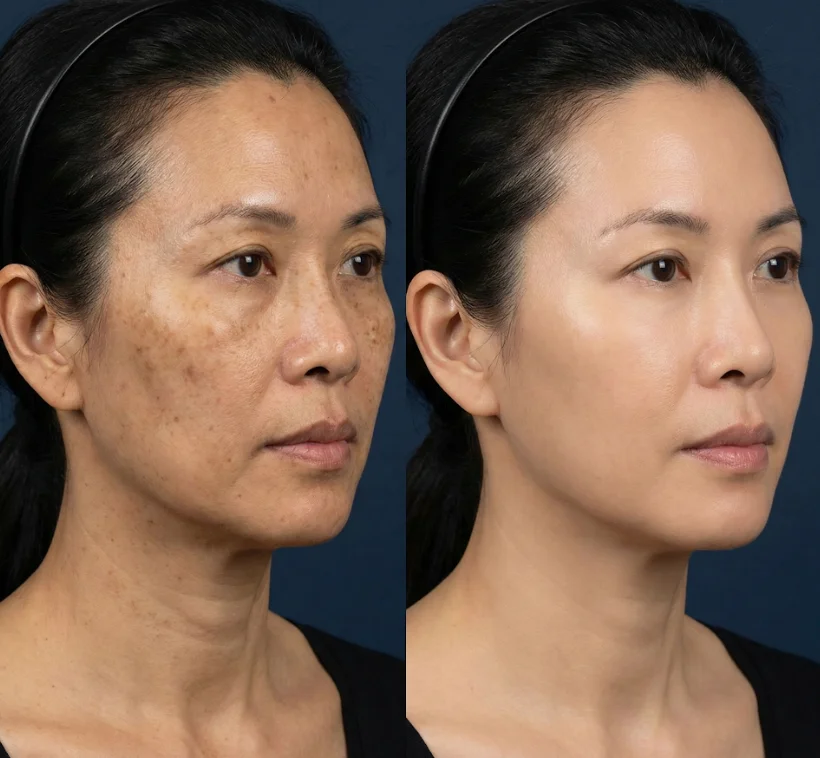
Drag to compare
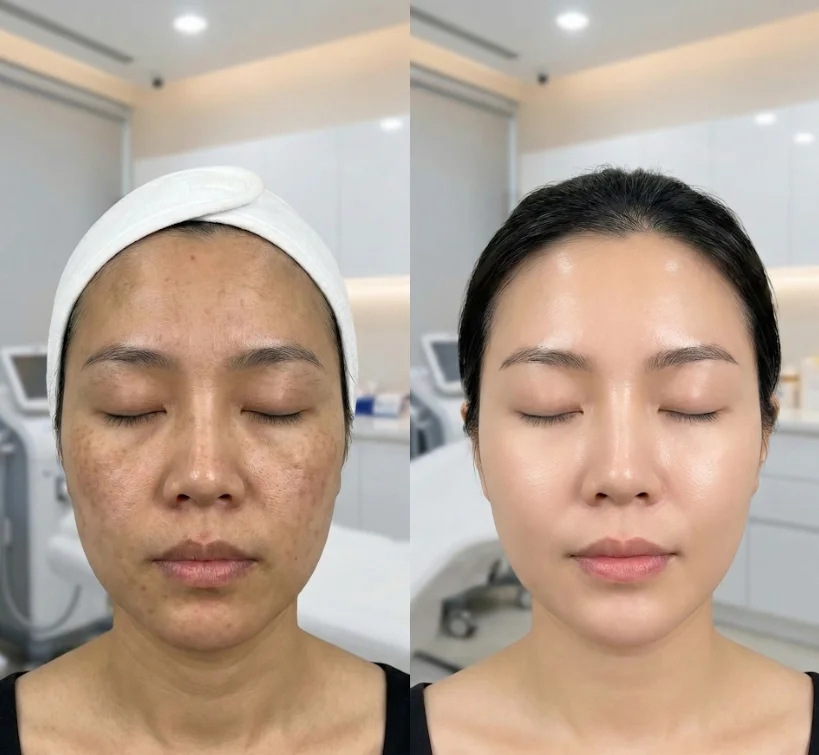
Drag to compare
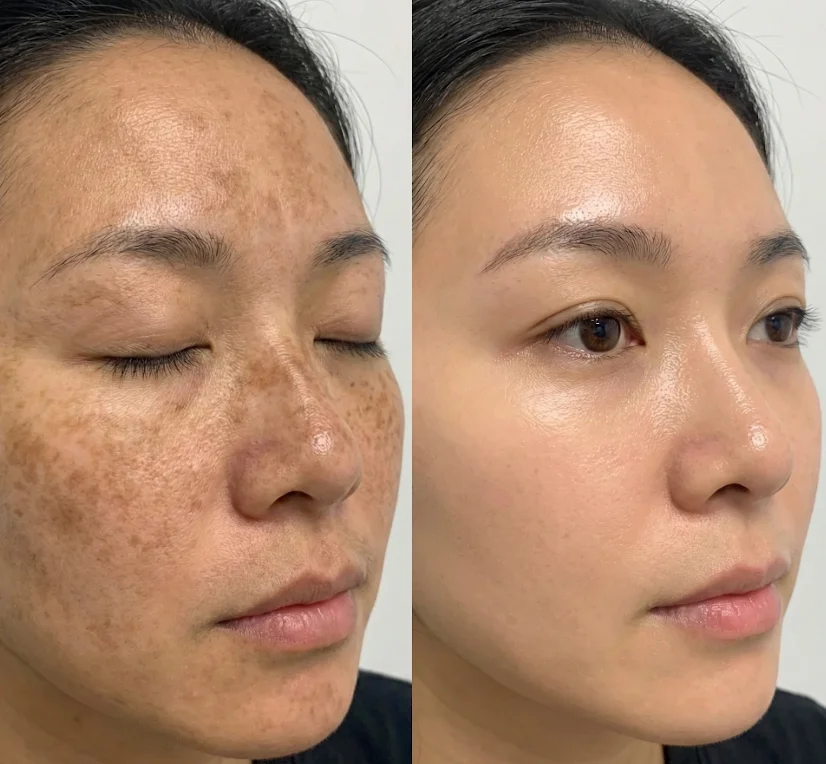
Drag to compare
Results may vary. Individual results depend on various factors.
Start Your TransformationPico Laser Price in Malaysia 2026
Transparent pricing at Nexus Clinic KL
| Sheet Item / Option | Parts / Area | Unit / Duration | Normal Price RM | Selling Price RM | Promo Price RM | Package / Notes |
|---|---|---|---|---|---|---|
| Discovery PICO Rejuvenation | Face / Body | 1 hour 15 minutes including 30 minutes numbing cream | RM1,500 | RM1,200 | NIL | |
| Discovery PICO Resurfacing | Face / Body | 1 hour 15 minutes including 30 minutes numbing cream | RM1,500 | RM1,200 | NIL | |
| Discovery PICO Tattoo Removal | Body | 1 hour 15 minutes including 30 minutes numbing cream | - | - | NIL | |
| Brightening Laser Curas | Face | 1 hour 45 minutes | RM1,398 | RM846 | NIL |
Sheet Item / Option
Discovery PICO Rejuvenation
Parts / Area
Face / Body
Unit / Duration
1 hour 15 minutes including 30 minutes numbing cream
Normal Price RM
RM1,500
Selling Price RM
RM1,200
Promo Price RM
NIL
Package / Notes
Sheet Item / Option
Discovery PICO Resurfacing
Sheet Item / Option
Discovery PICO Tattoo Removal
Sheet Item / Option
Brightening Laser Curas
Side Effects and Aftercare for Pico Laser Treatment
Common Expected Side Effects
- Mild redness and warm sensation for a few hours to 48 hours
- Toning mode: patients return to normal activities same day
- Fractional LIOB mode: small pinpoint redness for 1 to 3 days
- Spot mode: pigment darkens in first 3 to 7 days before shedding
Aftercare Instructions
- SPF50 broad-spectrum sunscreen every morning, reapplied every two hours for minimum 2 weeks
- Pause active exfoliants (retinol, AHA, BHA) for 5 to 7 days after Fractional and Spot mode
- Gentle cleanser and ceramide-rich moisturiser for barrier recovery
- Avoid steam rooms, saunas, heavy exercise for 48 hours post-session
Who Pico Laser Is For (And Who Should Pause)
You are a good candidate if:
- You have stubborn pigmentation, sunspots, freckles, or PIH
- You have acne scars affecting skin texture and confidence
- You want overall skin rejuvenation with minimal downtime
- You have darker skin and want a laser with lower PIH risk
You may need to pause or adjust if:
- You are pregnant or breastfeeding (laser treatments postponed)
- You have active skin infections, open wounds, or severe acne inflammation
- You have taken isotretinoin within the past 6 months
- You have a history of keloid scarring (requires careful planning)
Frequently Asked Questions
Pico Laser delivers energy in picoseconds using photoacoustic pressure to shatter pigment with minimal heat. Q-Switched laser delivers energy in nanoseconds using a photothermal mechanism that generates more heat. For Malaysian patients, Pico Laser requires fewer sessions, carries lower PIH risk, and is effective across a broader range of concerns including deep acne scars.
Surface pigmentation: 3 to 5 Spot mode sessions. PIH and mild melasma: 4 to 8 Toning mode sessions. Acne scars: 4 to 8 Fractional LIOB mode sessions spaced 4 to 6 weeks apart. Tattoo removal: 4 to 10 sessions depending on ink depth and colour. Your doctor will estimate your specific requirement at consultation.
Yes, when the correct wavelength and settings are used. The 1064nm wavelength is designed for darker Fitzpatrick skin types because it bypasses the melanin-rich epidermis. At Nexus Clinic KL, doctors use conservative fluence settings and select 1064nm as the primary wavelength for Fitzpatrick Types IV and V patients.
Sunspots and freckles can recur with continued unprotected sun exposure. Melasma requires ongoing management as triggers remain present. Consistent daily SPF50 use after treatment is the most effective preventive step.
Darkening in the first 3 to 7 days is expected and a sign the laser worked correctly. Fragmented melanin particles rise towards the skin surface before shedding naturally. Do not pick or scratch the darkened spots during this period.
Yes. Pico Laser is used on the neck, chest, shoulders, back, hands and arms for pigmentation, tattoo removal and skin rejuvenation. Body skin is thicker and may require different energy settings.
Yes. Fractional LIOB mode using 1064nm is suited for acne scar treatment in Fitzpatrick Types IV and V. The 1064nm wavelength delivers collagen-inducing energy to the dermis without surface thermal injury that triggers PIH.
Pico Toning refers specifically to low-fluence, full-face Toning mode delivery. It is one of three delivery modes. If your concern is acne scarring, Fractional mode is required. If you have individual lesions, Spot mode is indicated.
With topical numbing cream, the treatment feels like mild rubber band snaps or warm tingling. Most patients find it entirely tolerable. Spot mode sessions produce a slightly more intense sensation at each pulse which passes immediately.
Yes. Your initial consultation is complimentary and includes full skin type assessment, Fitzpatrick classification, identification of your specific concern, selection of appropriate wavelength and delivery mode, realistic session estimate, and transparent pricing.
Precise Pico Laser Treatment at Nexus Clinic KL
Pico Laser delivers its best results when wavelength, mode and energy settings are calibrated to the individual patient's skin concern, Fitzpatrick type and treatment history. The same device used at the wrong wavelength delivers no meaningful result regardless of how many sessions are completed.
Limited slots available this week | Located at Wisma UOA II, Jalan Pinang, KLCC — Serving Malaysia since 2001