
Sculptra Cheeks Malaysia Why This Area Rebuilds Differently Than You'd Expect
Cheeks don't just get less full as you age, they lose structure in a specific direction, and understanding that direction actually explains why Sculptra works so well here compared to some other spots on the face. Most people just assume ageing cheeks are 'less fat,' full stop. It's more layered than that, and that layering is basically why this treatment suits this area so well.
Your midface has several separate fat compartments stacked and layered, not one uniform cushion sitting there. As you get older these don't shrink evenly at all. Some slide downward because of gravity and loosening ligaments, some genuinely lose volume, and mixing those two together is what creates that hollow-under-the-cheekbone look sitting alongside heaviness lower down near the jaw.
Important Clinical Note
Cheek ageing involves multiple layers - upper hollowing and lower heaviness happen simultaneously. Sculptra rebuilds structural support across the whole area.
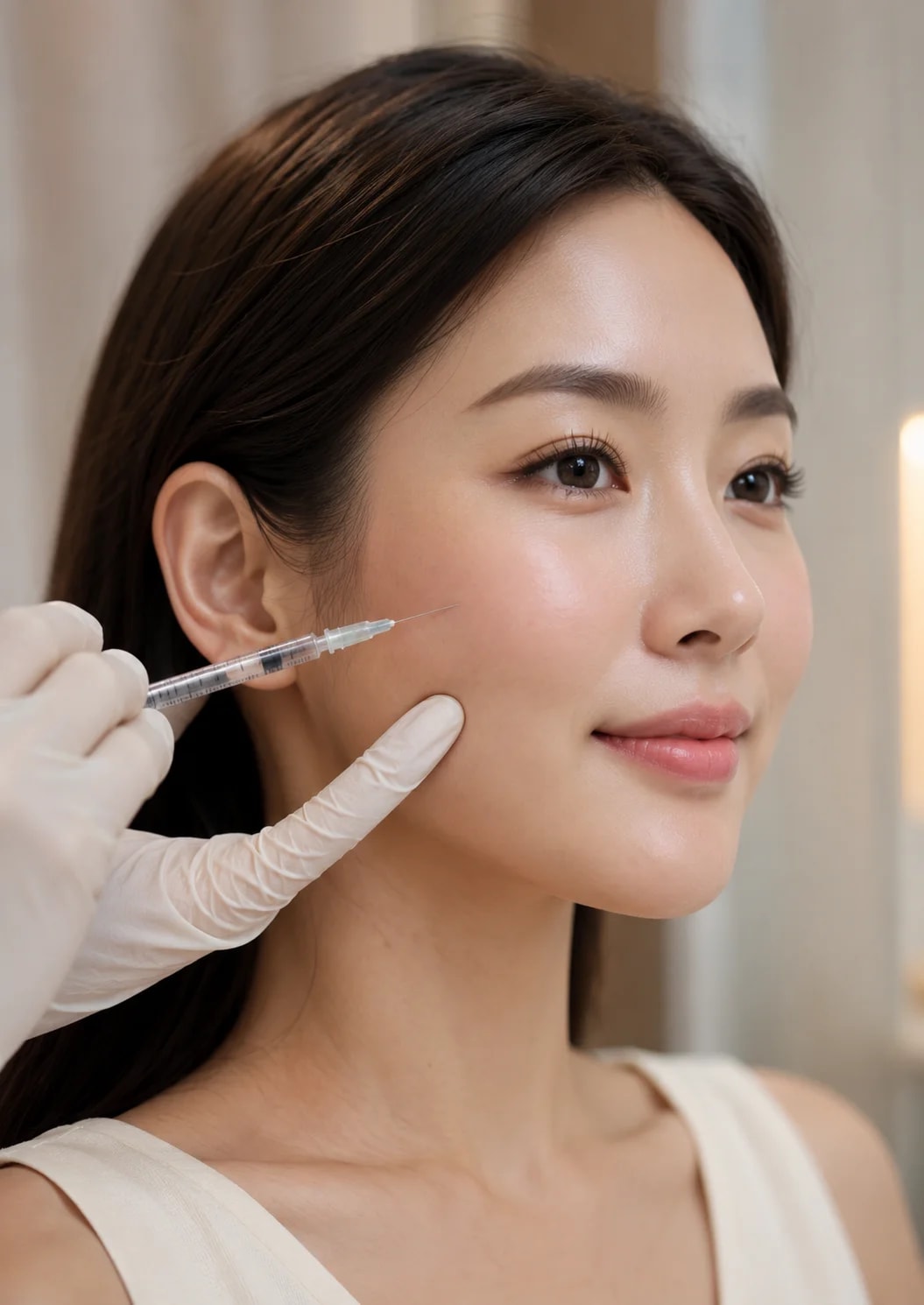
🫨 Sculptra Cheeks
Structural rebuild • Natural lift
What's Actually Going On Under Your Cheek Skin as You Age
Your midface has several separate fat compartments stacked and layered, not one uniform cushion sitting there. As you get older these don't shrink evenly at all. Some slide downward because of gravity and loosening ligaments, some genuinely lose volume, and mixing those two together is what creates that hollow-under-the-cheekbone look sitting alongside heaviness lower down near the jaw.
- Deeper fat pads near the bone tend to shrink first, that's what causes the hollowed look higher on the cheek
- Fat closer to the surface often shifts down instead of disappearing, adding to that lower face heaviness people notice alongside upper hollowing
- Which is why some people look gaunt up top and slightly jowly lower down at the same time. Not a contradiction, just two different layers doing their own thing
- Bone itself remodels a bit with age too, giving less support to everything sitting on top
- Matters because it explains why just 'adding volume' in one spot doesn't always fix the whole picture people expect it to
Why Structural Support Beats Just Filling the Hollow
A lot of people picture cheek treatment like patching a hole, filling in a dent. Sculptra takes a different approach, and that difference actually shows in how natural things end up looking.
Since it stimulates your own collagen instead of just sitting there as added volume, it helps rebuild support across the whole treated area rather than creating one localised bump. Tends to give a more spread out kind of lift, where the entire cheek looks structurally held up again instead of looking like something got placed on top of existing tissue.
- Collagen rebuilding happens across the treated area broadly, not just right at each injection point
- That spread out effect is part of why results tend to look blended in rather than obviously added, since it's your own tissue doing the actual work
- People with wider structural loss across the cheek, not just one small hollow, often get a more natural looking result from this than concentrated filler would give them
The Injection Technique Specific to Cheeks
Cheeks get treated with a fanning or threading technique rather than single point injections, and there's an actual reason for that beyond habit.
Product spreads across a wider area in thin, overlapping lines instead of getting concentrated in one spot per injection. Spreads the effect more evenly across the whole zone, which matters more here than in smaller areas since cheeks cover a lot more surface than something like a single crease or fold.
- Injection depth usually sits close to or right on the periosteum, the layer against bone, since that's where structural support actually needs rebuilding
- Placement has to work with those layered fat compartments mentioned earlier rather than ignore them
- Practitioners plan points around your specific pattern of loss, since two people the same age can have completely different hollowing patterns
Why Treating Cheeks Sometimes Fixes Things You Didn't Even Ask About
Surprises a lot of patients, this one. Structurally treating the cheek can create knock-on improvements elsewhere without touching those areas at all.
Rebuilding support higher up in the midface can soften nasolabial folds a bit, since those folds are partly caused by tissue sagging down from above in the first place. Same idea with under-eye hollows, they can look less pronounced once the cheek below has more presence, not because anyone touched the under-eye area, just because the cheek beneath is providing more visual support than it was.
- Softer smile lines sometimes show up as a side effect of cheek treatment, not always needing separate treatment on the fold itself
- Under-eye shadows can look milder once the cheek below has more structure, purely down to how light and shadow fall differently across a supported versus hollow midface
- This kind of knock-on effect is part of why some patients treating only cheeks say their whole face looks more rested, even though nothing else got directly touched
Genetics and Bone Structure Change How Much You'll Actually Need
Not every cheek needs the same plan, and a lot of it comes down to your bone structure more than just your age.
- Naturally higher, more prominent cheekbones usually mean you need less product for a visible lift, since there's already more structure underneath to build on
- Flatter, wider cheekbone structures sometimes need a broader treatment area to get a comparable result
- Sun exposure over the years speeds up collagen breakdown specifically here, since cheeks catch more direct sun than most other parts of your face day to day
- Genetics around fat compartment size and ligament strength genuinely explain why siblings the same age can show completely different degrees of hollowing
What Results Actually Look Like on This Area Specifically
Cheeks tend to show some of the more satisfying Sculptra results, mainly because there's enough surface area here to actually see the collagen rebuilding clearly once it's underway.
- Early on you'll see mild fullness that's mostly just water content, same as other areas treated with this product
- By month two to three the real structural lift starts showing, cheeks looking genuinely supported instead of just less hollow
- Full results usually settle by month four to six, and that's when the cheek's overall shape and how it sits against the rest of your face becomes the clearest sign of how well it worked
Frequently Asked Questions
Two separate things happening in different fat layers really, upper fat shrinking while lower fat's shifting down. Pretty common pattern, nothing unusual about your face specifically.
Often a bit, yeah, since nasolabial folds are partly caused by tissue sagging down from the cheek area above. Not a direct fix for the fold itself, but plenty of patients notice some softening as a bonus.
Generally yes, more existing bone structure to build on top of, compared to flatter cheekbones needing wider coverage.
Fanning or threading covers a wider surface evenly instead of single point injections, since the area's bigger and the fat compartments underneath are layered.
Often yes, to some extent. More cheek volume gives more visual support under the eye, which can make hollows there look softer even without treating that spot directly.
Rebuild Your Cheek Structure Naturally With Sculptra
Sculptra doesn't just fill hollows - it rebuilds structural support across your entire cheek area for a natural, lifted look. Book a consultation at Nexus Clinic KL to see if this approach suits your specific cheek anatomy.