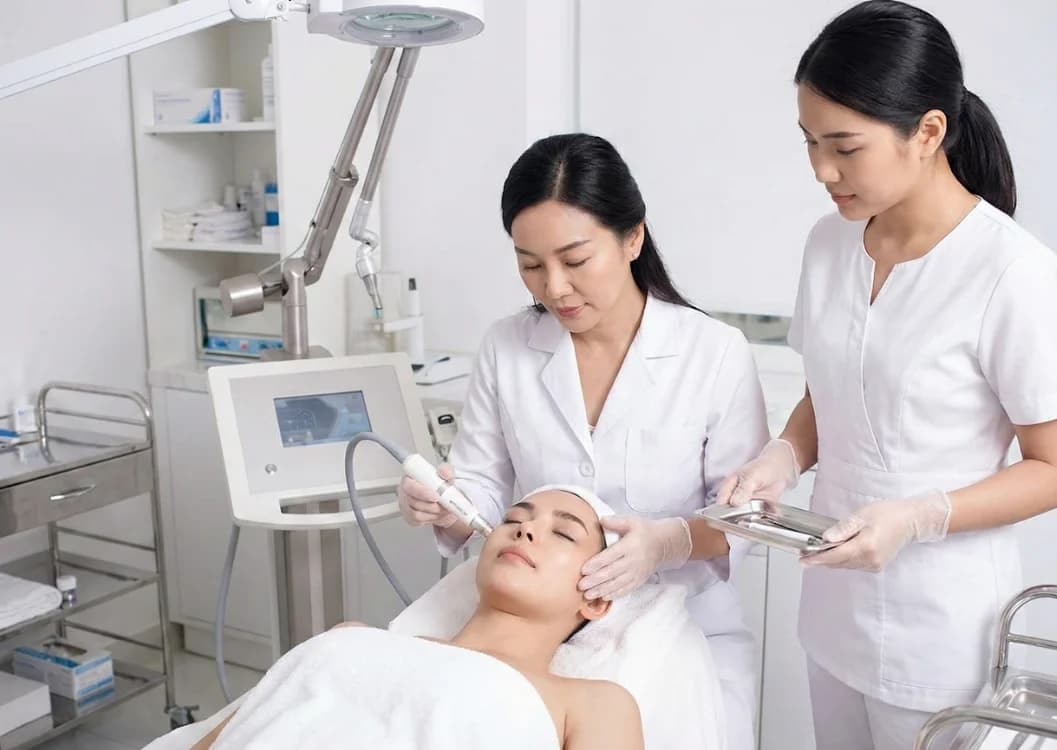
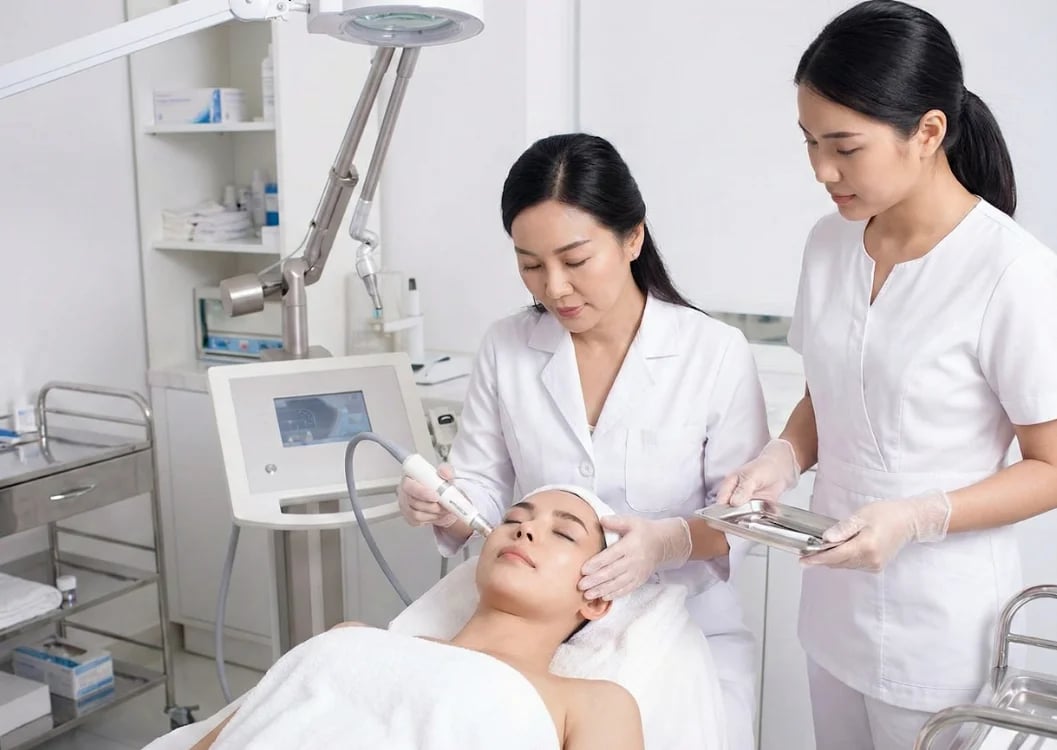
Seven types of skin pigmentation. One wrong treatment can make it worse. Nexus Clinic KL diagnoses your exact pigmentation type and builds a precise, doctor-led plan using Pico Laser, Sylfirm X and proven brightening protocols.
Dark spots, uneven patches, stubborn freckles and melasma that fades then returns. Pigmentation is one of the most searched skin concerns among Malaysians, and also one of the most frequently mistreated. At Nexus Clinic KL, our licensed aesthetic doctors do not treat pigmentation as a single condition but rather as a spectrum requiring tailored approaches.
Precise Diagnosis
Type • Depth • Trigger • Skin Tone
Nexus Clinic Kuala Lumpur — Excellence in Medical Aesthetics
Established
2001
Over 20 years of excellence
Location
Wisma UOA II, Jalan Pinang
KLCC, 50450 Kuala Lumpur
Opening Hours
Monday - Saturday
9:00am – 6:00pm | Closed Sundays & PH
MOH Registered & Compliant
All devices and products MOH-approved
Licensed Aesthetic Doctors
Trained in Southeast Asian skin physiology
Pigmentation-Type-to-Treatment Mapping
No one-size-fits-all approach
Everything you need to know
Treatments Available
Pico Laser, Sylfirm X RF, Dual Yellow Laser, Chemical Peel, Oral Tranexamic Acid, Medical-Grade Topicals, Skin Booster
Session Time
30 to 60 minutes depending on modality and area
Downtime
Pico Laser: minimal (0 to 48 hours); Chemical Peel: 3 to 7 days
First Results
Initial brightening within 1 to 2 weeks; full clearance over 2 to 4 months
Sessions Required
3 to 6 for most pigmentation types; melasma may require ongoing maintenance
Anaesthesia
None required for most treatments; topical numbing cream available
Suitable For
Melasma, sunspots, freckles, PIH, ABNOM, Hori's nevus, uneven skin tone
Pigmentation does not just show up. It builds.
Sun exposure (even short daily exposure)
Hormonal shifts
Skin inflammation (acne, irritation, aggressive skincare)
Genetics and ageing
Pigmentation recurrence is the single most frustrating outcome for Malaysian patients. UV exposure is the dominant trigger. Malaysia has one of the highest year-round UV indices in the world. SPF50 or higher, applied every two hours during outdoor activity, is not optional — it is a clinical requirement.
Used at every initial pigmentation consultation at Nexus Clinic KL
| Pigmentation Type | Key Trigger | Skin Layer | Responds to Self-Care? | Best Treatment at Nexus Clinic KL |
|---|---|---|---|---|
| Melasma | Hormones, UV, heat | Mixed (epidermal and dermal) | Partially only | Sylfirm X + Pico Laser + Oral Tranexamic Acid |
| Sunspots / Solar Lentigines | Cumulative UV exposure | Epidermal | No | Pico Laser (1 to 3 sessions) |
| Freckles | Genetics plus UV | Epidermal | No; returns with sun | Pico Laser + SPF50 maintenance |
| Post-Inflammatory Hyperpigmentation (PIH) | Acne, eczema, injury, inflammation | Epidermal to superficial dermal | Slowly, over months | Pico Laser + Chemical Peel + Brightening Topicals |
| ABNOM / Hori's Nevus | Genetic, hormone influence | Deep dermal | No | Pico Laser (multiple sessions, low-fluence protocol) |
| Age Spots / Liver Spots | Ageing plus UV accumulation | Epidermal | No | Pico Laser or Dual Yellow Laser |
Pigmentation Type
Melasma
Key Trigger
Hormones, UV, heat
Skin Layer
Mixed (epidermal and dermal)
Responds to Self-Care?
Partially only
Best Treatment at Nexus Clinic KL
Sylfirm X + Pico Laser + Oral Tranexamic Acid
Pigmentation Type
Sunspots / Solar Lentigines
Pigmentation Type
Freckles
Pigmentation Type
Post-Inflammatory Hyperpigmentation (PIH)
Pigmentation Type
ABNOM / Hori's Nevus
Pigmentation Type
Age Spots / Liver Spots
Melasma sits in both epidermal and dermal layers and is driven by hormonal activity and heat. Applying an aggressive ablative laser without addressing the hormonal trigger and vascular component is the most common reason patients report their melasma worsening.
Not all "dark spots" are the same. Most patients have more than one type.
Usually looks like brown or greyish patches on cheeks, forehead, or upper lip. It often comes and goes, and it can be triggered by sun and hormones.
More common as we age or after years of UV exposure. They can appear as small, defined brown spots.
Often genetic and more visible after sun exposure. They can be treated, but they may return if you do not protect from sun.
Dark marks after acne, rash, scratching, or harsh products. PIH is very common in Asian skin and can worsen if skin is irritated again.
"Is it pigmentation or something else?" If a spot is changing fast, bleeding, ulcerating, or looks very different from other spots, do not treat it like cosmetic pigmentation. Get it assessed medically first.
MOH-approved devices and prescription products
Delivers ultra-short pulses of laser energy in picoseconds, shattering melanin particles through photoacoustic pressure rather than heat. This significantly reduces the risk of post-laser PIH for Fitzpatrick III to V skin. Effective for sunspots, freckles, PIH and ABNOM. Downtime: mild redness for 24 to 48 hours.
The only device with dual wave radiofrequency technology targeting both abnormal blood vessels and the basement membrane. For melasma patients, this is a significant advantage as it suppresses vascular inflammation and stabilises melanocytes responsible for recurrence.
Combines 577nm yellow and 511nm green wavelengths absorbed by melanin and oxyhaemoglobin. Effective for pigmentation with redness or flushing component, including vascular melasma. Minimal heat transfer makes it safe for sensitive skin.
Glycolic acid, lactic acid or TCA at medical concentrations accelerate epidermal cell turnover. Most effective for epidermal pigmentation including mild melasma, PIH and general dullness. Prescribed at specific concentrations based on skin type.
Prescription medication that blocks the pathway through which UV and hormonal signals trigger melanocyte activation. Particularly effective for melasma. Prescribed as part of a managed programme with monthly reviews.
Integrated into pigmentation protocols to support post-laser skin recovery, strengthen the dermal matrix and reduce inflammatory response that can trigger rebound pigmentation.
Every pigmentation plan incorporates all three layers
Pico Laser, Sylfirm X, Dual Yellow Laser and chemical peels address existing pigment deposits. These modalities produce the visible improvements patients are seeking.
Oral tranexamic acid suppresses melanocyte activation. Medical-grade topical brighteners containing tranexamic acid, azelaic acid, kojic acid, niacinamide maintain skin-clearing effect.
Broad-spectrum SPF50 sunscreen applied every morning and reapplied every two hours during outdoor exposure is the foundational maintenance step that determines how long any pigmentation result lasts.
Doctor examines skin under standard and Wood's lamp lighting to determine type, depth and distribution. Medical history, hormonal status, medication use documented.
Doctor explains which pigmentation types you have, which layers they are in, which modalities recommended, and realistic improvement timeline.
Doctor applies laser, RF device or chemical peel to mapped pigmentation zones. Sessions typically take 30 to 60 minutes.
Soothing serums applied. Written aftercare instructions provided. Next session scheduled at appropriate interval, typically 3 to 4 weeks.
Slide to see the incredible transformations achieved by our clients
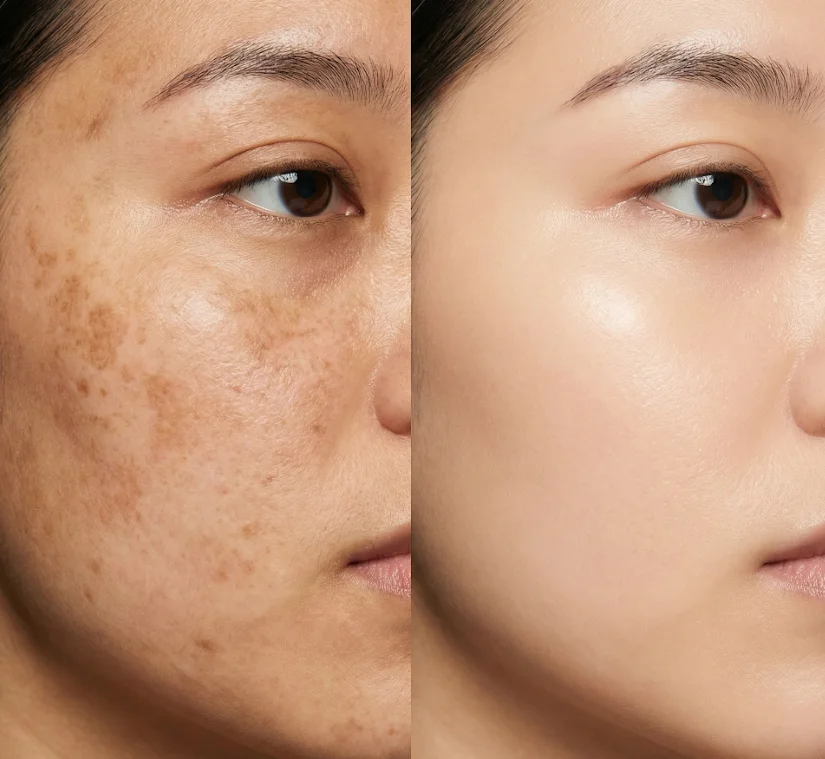
Drag to compare
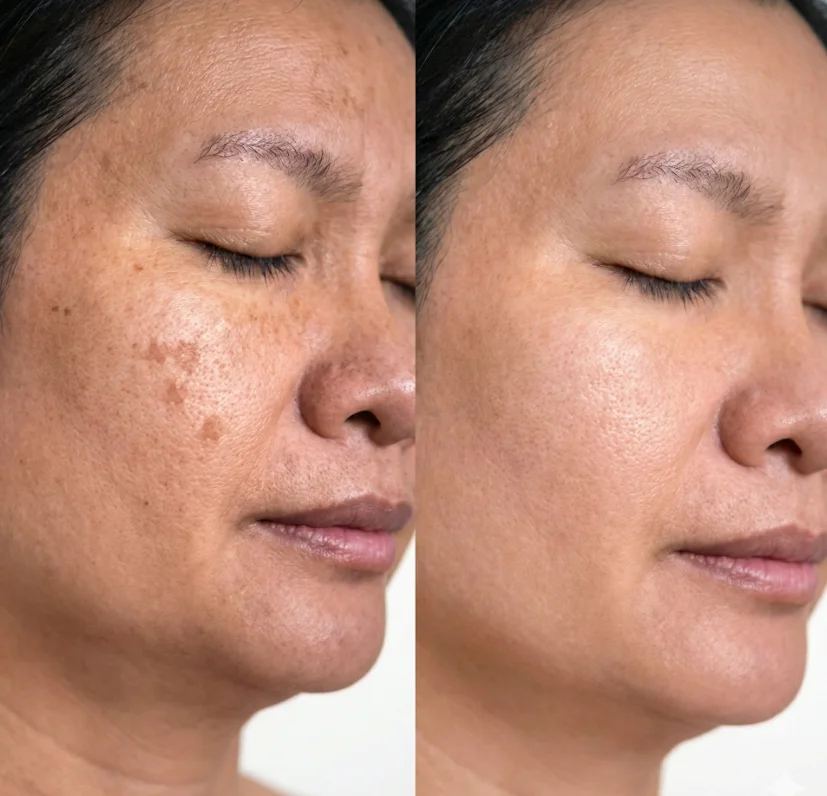
Drag to compare
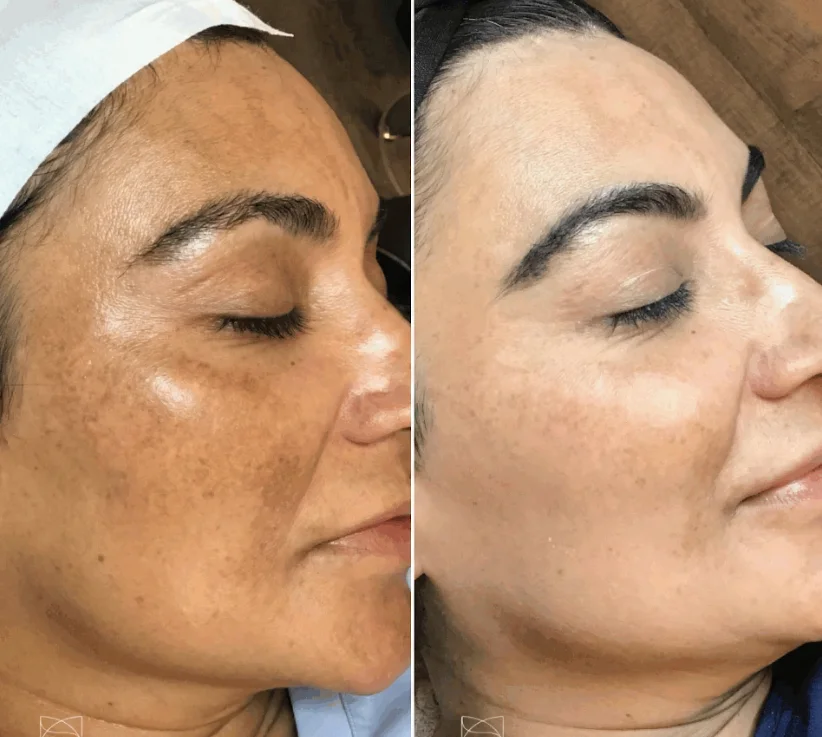
Drag to compare
Results may vary. Individual results depend on various factors.
Start Your TransformationBeyond the type of pigmentation, its depth within the skin layers is the second most important factor
| Depth Classification | Location in Skin | How to Identify | Treatment Approach |
|---|---|---|---|
| Epidermal Pigmentation | Outer layer (epidermis) only | Appears clearly defined, flat, and darkens under Wood's lamp | Pico Laser or Chemical Peel; responds fastest |
| Dermal Pigmentation | Mid to deep dermis | Blue-grey tone, less defined borders, does not darken under Wood's lamp | Low-fluence Pico Laser over multiple sessions; longer timeline |
| Mixed Pigmentation | Both epidermal and dermal layers | Irregular colour (brown and grey zones in same patch) | Combination of Sylfirm X and Pico Laser; most complex |
| Vascular Pigmentation | Blood vessel involvement in dermis | Reddish-brown tone, flush-like appearance, worsens with heat | Dual Yellow Laser or Sylfirm X to address vascular component |
Depth Classification
Epidermal Pigmentation
Depth Classification
Dermal Pigmentation
Depth Classification
Mixed Pigmentation
Depth Classification
Vascular Pigmentation
Wood's lamp examination is a standard assessment tool at Nexus Clinic KL. Epidermal pigmentation shows strongly enhanced contrast under Wood's lamp. Dermal pigmentation shows little to no enhancement. This single diagnostic step prevents treating deep dermal pigmentation with surface-only protocols.
Pigmentation can come from sun exposure, hormonal changes, genetics, ageing, and skin injury or inflammation. In Malaysia, sun exposure and inflammation from acne or irritation are common triggers. The key is identifying your pigment pattern first, because melasma behaves differently from sunspots or post-acne marks. Once we know the trigger, treatment becomes easier to choose and safer to plan.
Some pigmentation can fade for a long time, but 'permanent' is tricky, especially if the trigger is still present. Many clinics note that relying only on topical products can be limiting, while treatments like laser and chemical peels can improve the chance of longer-lasting results. Maintenance is the difference-maker. Without sun protection and the right homecare, pigment can return.
It depends on the type and depth of pigment. Malaysian clinics commonly discuss options like pico laser, Q-switched laser, IPL, and chemical peels for hyperpigmentation concerns. A plan is 'best' when it improves pigment without triggering rebound or irritation, especially for Asian skin tones. That is why assessment matters before choosing a device.
Laser can be safe when performed by trained doctors using appropriate technology and settings, but melasma needs extra care. Some clinics specifically note that aggressive laser approaches can worsen pigmentation if not used carefully. If your melasma is hormonal and reactive, the plan often includes strict sun protection and maintenance, not only laser sessions.
Melasma may fade slightly over time in some cases, especially if it was triggered by pregnancy, but many people find it persists without treatment. The more sun exposure and heat exposure you get, the more it tends to linger. A proper melasma plan usually focuses on control and long-term management, not a quick 'one time' fix.
Most pigmentation treatments are safe when performed by experienced medical professionals using suitable techniques for your skin type. Clinics commonly emphasise tailored treatment selection and appropriate aftercare to reduce unwanted side effects. The biggest risk usually comes from over-treating or mixing too many harsh steps at the same time.
There is no single number. Some people see visible improvement after a few sessions, while deeper or recurring pigment patterns take more time. Many KL clinics mention that multiple sessions are typical for pico laser style pigment programs, often in a multi-session plan depending on severity. Your lifestyle also matters. Sun exposure can slow progress.
Costs vary by clinic, device, and area size. Some KL clinics list laser pigmentation costs around RM500 to RM1,000 depending on sessions and treatment area, while other Malaysia price guides estimate pico laser pigment sessions around RM400 to RM900. Treat these as ranges only. A proper quote depends on your pigment map.
Hyperpigmentation is a broad term for darkening of skin. Melasma is a specific type that often appears as patches and is commonly linked with hormonal triggers and sun sensitivity. Many educational resources explain that different pigment conditions need different strategies, and that is why diagnosis matters before treatment.
Many Malaysian clinics describe pico laser as effective for pigment concerns because it uses ultra-short pulses to break down melanin particles, often with minimal downtime when used appropriately. That said, your pigment type still matters. A good outcome comes from matching the right laser approach to your pigment pattern and your skin tone.
Pigmentation does not have to be permanent. The right diagnosis, the right combination of treatments and a consistent maintenance plan can produce visible, lasting improvement.
Limited slots available this week | Located at Wisma UOA II, Jalan Pinang, KLCC — Serving Malaysia since 2001