 Nexus Clinic
Pico Laser Before and After: What Realistic Results Look Like for Melasma, Pigmentation, and Acne Scars in Malaysia
10 min read


Medically reviewed by Dr. Ashvinia Bala, MBBS (AIMST University), MMC Registration No. 82489 | Last reviewed:
Treatment of acne with laser may sound counter intuitive to many, since lasers are more often associated with hair removal than with resolving outbreaks of pimples and spots. However, specific wavelengths of laser light can target the causes of acne, namely bacteria and oil production, so laser treatment is now considered an effective strategy in managing acne.
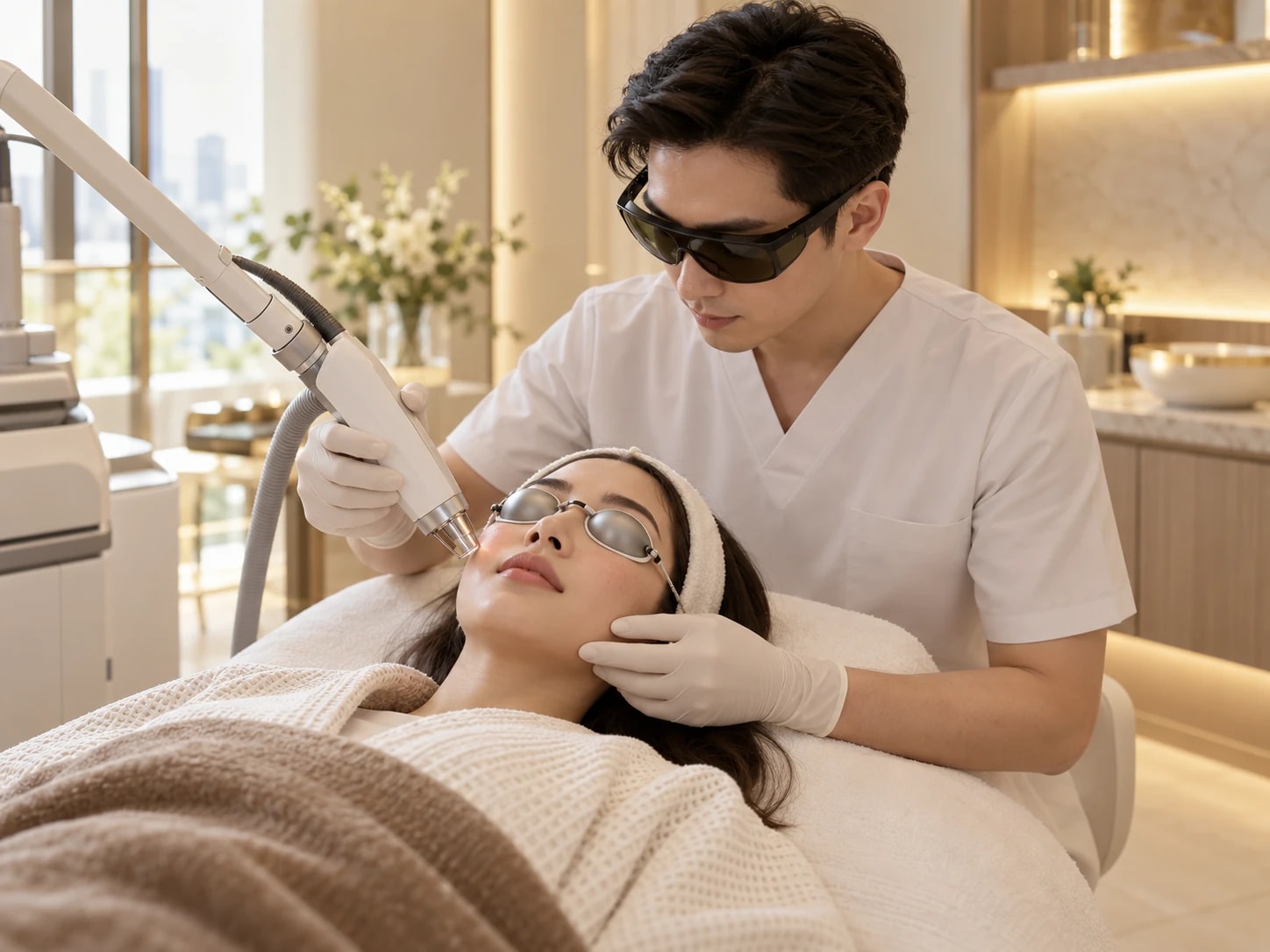
Laser for active acne
Dual Yellow Laser
A laser acne treatment course of therapy is generally combined with topical or prescription medication as they target different mechanisms in the development of acne. Having an understanding of the mechanism by which laser works can help set realistic expectations about its role in acne treatment.
Clinical Note
Certain lasers in the wavelength range of 577 to 595nm (yellow light), target haemoglobin in small blood vessels in the skin that feed inflamed acne lesions and reduce the redness and swelling of active inflamed acne.
Unlike a topical cream or medication which acts on the surface of the skin, laser light will target certain structures in the skin. Below are a few ways in which laser targets acne lesions:
The main type of laser employed for the treatment of active acne at Nexus Clinic is the Dual Yellow Laser which works specifically on inflammation and vasculature in acne.
| Detail | Information |
|---|---|
| Duration | 1 hour to 1 hour 15 minutes |
| Numbing | With or without numbing cream, depending on sensitivity |
| Areas treated | Face, or body for acne affecting chest or back |
| Typical protocol | Part of a broader multi-session acne treatment course |
| Downtime | Mild redness, warmth, or slight swelling, usually settling within 24 to 48 hours |
Detail
Duration
Information
1 hour to 1 hour 15 minutes
Detail
Numbing
Detail
Areas treated
Detail
Typical protocol
Detail
Downtime
Dual Yellow Laser is usually used as an adjunct to topical or prescription medication to treat active acne. It would not normally be used as a standalone treatment.
It is important to understand what laser treatment can do, and what it cannot do, in the context of treating acne.
| Treatment | Mechanism | Best Suited For |
|---|---|---|
| Dual Yellow Laser | Targets inflammation and vascular component of lesions | Active inflammatory acne, ongoing redness |
| Chemical Peel | Chemical exfoliation, unclogs pores | Comedonal acne, blackheads, textural improvement |
| Corticosteroid Injection | Direct anti-inflammatory action on cysts | Deep, painful cystic or nodular lesions |
| Topical Retinoids | Regulates cell turnover, prevents clogged pores | Ongoing maintenance, prevention |
| Prescription Antibiotics | Reduces bacterial load systemically | Moderate to severe inflammatory acne |
Treatment
Dual Yellow Laser
Mechanism
Targets inflammation and vascular component of lesions
Best Suited For
Active inflammatory acne, ongoing redness
Treatment
Chemical Peel
Treatment
Corticosteroid Injection
Treatment
Topical Retinoids
Treatment
Prescription Antibiotics
A typical acne treatment course will involve two or more of these different types of treatment, as each one is better at targeting a different part of the acne problem.
A common area of confusion is to assume that the laser used to treat active acne is used in the same way to treat acne scars. This is not the case, as a different laser (usually pico laser) is needed as part of a dedicated acne scar treatment protocol. The two conditions require different mechanisms of action.
It is also important to leave enough time between these two different treatments since the laser used for scars is usually not recommended for use on inflamed acne.
Acne in Malaysia, especially among darker skin types, tends to lead to pigmentation issues. Lasers have a role to play in both sides of this problem. On the one hand, laser treatment of active acne may reduce the chance of pigmentation developing. On the other hand, a course of pigmentation treatment can also be designed to target pigmentation in the aftermath of a breakout.
The sensation is generally described as being a bit uncomfortable, rather than painful. There is an option of having numbing cream if the discomfort is troublesome.
This depends on the type and severity of acne and is best determined as part of a treatment course of laser and other topical or prescription medication.
The two treatments target different parts of the acne problem, so both have a role to play.
Laser treatment is more effective on the inflammation, but cystic acne will also require a treatment modality such as cortisone injection.
Not on its own. Laser treatment for active acne targets inflammation, while existing scarring generally requires a separate treatment method.
Generally, there is minimal downtime. There may be slight redness, warmth or swelling that lasts for 24 to 48 hours.
Laser treatment for acne is most useful as part of a carefully-designed combination treatment plan, rather than as a standalone procedure. A thorough assessment by an acne specialist can determine whether it is a suitable treatment option for a specific person’s acne. Book a consultation, or message us on WhatsApp to find out whether laser treatment fits into your acne plan.
✓ Reviewed by Dr. Preetha Nair, Aesthetic Medical Doctor at Nexus Clinic KL
Real Google reviews from patients who came to Nexus Clinic for acne treatment.
Guides and answers from our doctors on this treatment.
Nexus Clinic Nexus Clinic
 Nexus Clinic