
Pico Laser for Acne Scars Malaysia Collagen Remodelling for Rolling, Boxcar and Ice Pick Scars
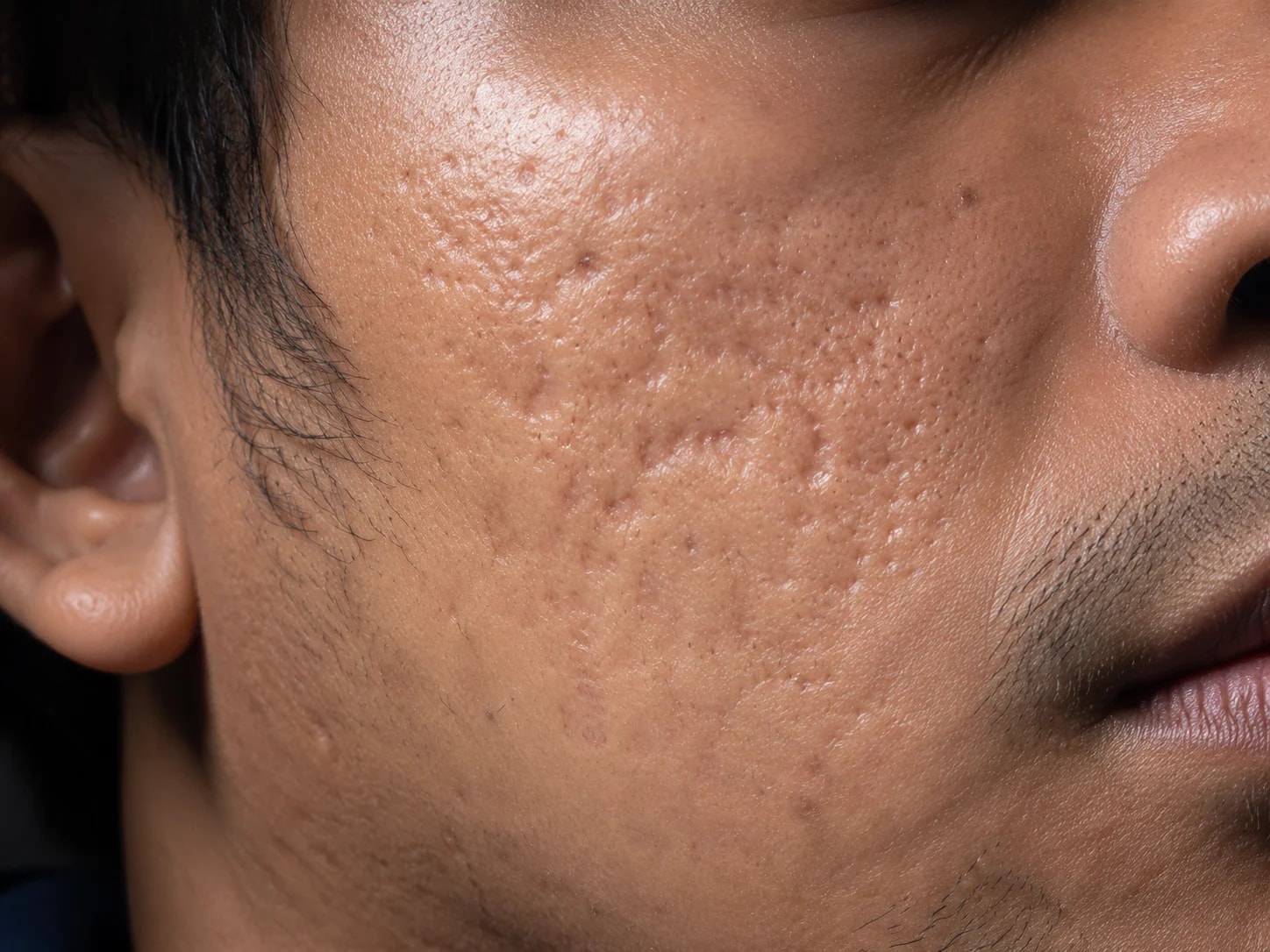
The acne cleared. The scars did not. You kept up the skincare, managed the breakouts, did what you were supposed to do, and the skin still has that rough uneven texture that catches light the wrong way and makes you rethink photos. Acne scars are not a skincare problem. They are a structural problem inside the skin.
Pico laser treats acne scars by triggering new collagen production deep in the dermis, and it does this without breaking the skin surface. No open wounds. No week of hiding at home. But there is one critical thing that determines whether pico laser works for your scars or does nothing at all. It is not the machine. It is the delivery mode.
Important Clinical Note
Over 5,000 Aesthetic Procedures Completed. LCP-certified doctors evaluating scar morphology before choosing energy density, depth and combination protocol.
Fractional LIOB Mode
Dermal Collagen Remodelling • No Surface Wound
Pico Laser Acne Scar Treatment at Nexus Clinic KL at a Glance
Everything you need to know before booking
Treatment
Fractional LIOB Mode at 1064nm. TCA CROSS combined for ice pick scars
Session Time
30 to 50 minutes including topical numbing
Downtime
24 to 72 hours mild redness; pinpoint marks 1 to 3 days
Sessions Required
Rolling: 4-6 | Boxcar: 5-8 | Ice pick + TCA CROSS: 4-6
Fractional LIOB mode triggers new collagen formation in the dermis without ablating the skin surface. Visible textural improvement starts at sessions two to three. 50 to 80 percent improvement is realistic across 4 to 6 sessions for rolling and boxcar scars.
The Three Acne Scar Types and How Each Responds
Rolling scars are broad shallow depressions with gradual, sloping edges. Fibrous bands beneath the skin pull the epidermis downward. Rolling scars respond best to pico laser because the collagen induction across the scar floor progressively lifts the depression with each session. Patients with predominantly rolling scars tend to see the most visible improvement per session.
Boxcar scars have sharply defined vertical edges and flat bases, like small punch-outs in the skin. The sharp definition makes them more resistant than rolling scars. They respond well to pico laser but need more sessions for equivalent improvement. The vertical walls require deep collagen induction to soften and fill over time.
Ice pick scars are narrow, deep channels that go straight down into the dermis. They are the most difficult to treat. Pico laser meaningfully improves ice pick scars but rarely resolves them as a standalone treatment. The best outcomes come from combining pico laser with TCA CROSS, a precise chemical application directly into each scar channel. Combined, the results are significantly better than either approach alone.
Fractional LIOB Mode Is the Reason Pico Laser Works on Acne Scars
Mode matters more than machine
This is the most important thing to understand about pico laser for acne scars, and most patients are never told it. Toning mode delivers uniform low-fluence passes across the face. It is designed for pigmentation management and overall brightening. It does not create the deep collagen response required for structural scar remodelling. Patients who have had multiple pico laser sessions targeting acne scars and seen minimal change have almost always received toning mode. That is the wrong mode for scars.
Fractional LIOB mode (Laser-Induced Optical Breakdown) uses a focused lens array that concentrates laser energy into thousands of micro-columns deep within the dermis. Each micro-column creates a controlled zone of optical breakdown at the precise depth where scar remodelling needs to happen. The body responds by flooding each zone with new collagen and elastin.
Over four to six weeks, this new tissue gradually fills and lifts the scar floor. At Nexus Clinic KL, Fractional LIOB mode is used exclusively for acne scar treatment.
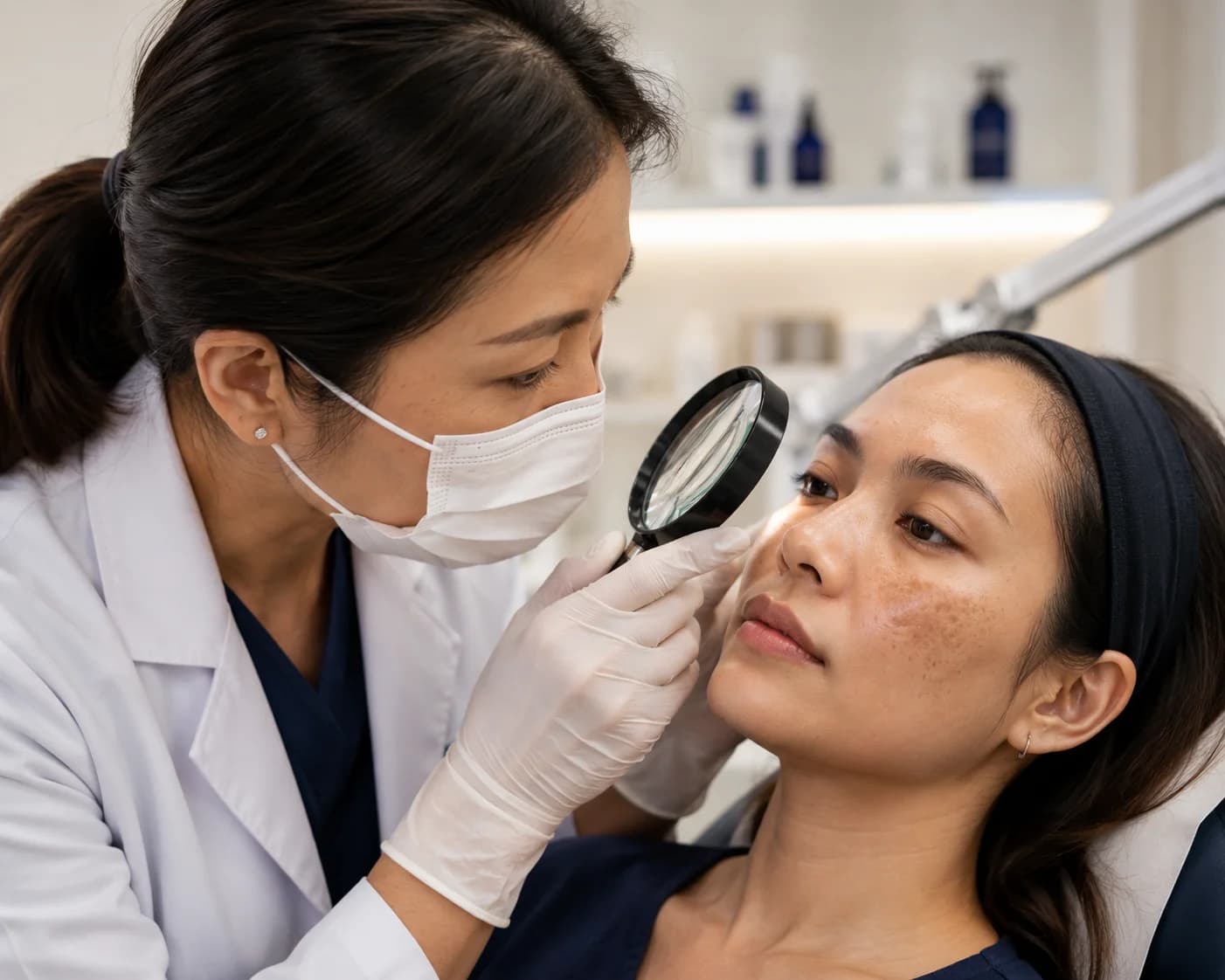
The full explanation of why delivery mode selection determines results, along with the clinical difference between each mode, is available in our pico laser treatment guide.
Realistic Results: What Pico Laser Actually Does to Acne Scars
Sessions One to Two
Mild redness and warm sensation for 24 to 72 hours. Pinpoint marks that resolve in 1 to 3 days. Visible textural change is rare after a single session,collagen remodelling takes weeks.
Sessions Three to Four
First visible softening of scar floors. Rolling scars typically show the earliest improvement. Skin texture appears smoother under angled light. Make-up sits more evenly.
Sessions Four to Six (Standard Course)
Rolling and boxcar scars treated with Fractional LIOB mode consistently show 50 to 80 percent improvement in texture across a full treatment course. Scars that previously caught harsh light clearly become significantly less visible. Ice pick scars improve 30 to 50 percent with pico alone; combined with TCA CROSS, this improves considerably.
After the Final Session
Improvement continues for 3 to 6 months after the final session as the last round of collagen fully matures. Maintenance is typically 1 to 2 sessions per year to preserve and continue improving gains.
Pico Laser Acne Scar Treatment Price at Nexus Clinic KL
Transparent per-session pricing
| Treatment / Option | Area | Unit / Duration | Normal Price RM | Selling Price RM | Promo Price RM | Package / Notes |
|---|---|---|---|---|---|---|
| Discovery PICO Resurfacing (Fractional LIOB) | Face | Per session (1h 15m inc. numbing) | RM1,500 | RM1,200 | NIL | Standard acne scar treatment |
| TCA CROSS for Ice Pick Scars | Targeted scars | Per session | RM500 | RM350 | NIL | Combined with Fractional LIOB |
| Free Consultation | Scar assessment with angled lighting | Single visit | RM0 | RM0 | NIL | Required before first session |
Treatment / Option
Discovery PICO Resurfacing (Fractional LIOB)
Area
Face
Unit / Duration
Per session (1h 15m inc. numbing)
Normal Price RM
RM1,500
Selling Price RM
RM1,200
Promo Price RM
NIL
Package / Notes
Standard acne scar treatment
Treatment / Option
TCA CROSS for Ice Pick Scars
Treatment / Option
Free Consultation
Pico Laser Acne Scar Side Effects and Aftercare
Common Expected Side Effects
- Redness and warm sensation for 24 to 72 hours
- Pinpoint marks across treatment area for 1 to 3 days
- Possible mild swelling for the first evening
- Skin sensitivity to heat and sun for 5 to 7 days
Aftercare Instructions
- SPF50 every morning, reapplied every 2 hours for minimum 2 weeks
- Pause retinoids, AHAs and BHAs for 7 full days after each session
- Use a gentle ceramide-rich moisturiser twice daily
- Avoid saunas, steam rooms and intense exercise for 48 to 72 hours
- Continue prescribed acne medication,uncontrolled acne worsens scarring
Who Pico Laser for Acne Scars Is For (And Who Should Pause)
You are a good candidate if:
- Rolling, boxcar or mixed acne scars affecting skin texture
- Active acne is well-controlled (no significant inflammatory lesions)
- Want significant scar improvement with minimal downtime
- Fitzpatrick III to V skin needing a low-PIH option
You may need to pause or adjust if:
- Active moderate to severe inflammatory acne,treat that first
- Isotretinoin within the past 6 months
- Pregnant or breastfeeding
- History of keloid scarring (requires careful planning)
Frequently Asked Questions
Rolling scars: 4 to 6 sessions. Boxcar scars: 5 to 8 sessions. Ice pick scars with TCA CROSS: 4 to 6 pico sessions alongside TCA procedures. All sessions are spaced 4 to 6 weeks apart to allow collagen maturation between treatments.
Pico laser significantly improves acne scars, typically by 50 to 80 percent for rolling and boxcar scars over a full treatment course. Complete removal is not a realistic expectation. The goal is scars that are significantly less visible in normal lighting and no longer require heavy coverage. Most patients find this a major practical improvement.
The most common reason is that toning mode was used instead of Fractional LIOB mode. Toning mode is for pigmentation and brightening. It does not create the deep collagen induction required for structural scar remodelling. If your previous sessions used toning mode for your scars, you have not yet received the right treatment for the concern.
Both work but the trade-off is different. CO2 laser produces strong collagen remodelling but requires 5 to 7 days of significant downtime and carries higher PIH risk for Malaysian Fitzpatrick III to V skin. Pico laser Fractional LIOB produces deep collagen induction with 1 to 3 days of mild downtime and lower PIH risk. For most Malaysian patients, pico laser is the preferred first-line option.
Collagen matures over 4 to 6 weeks after each session. Most patients begin seeing meaningful texture improvement after sessions 3 to 4. Full results appear 3 to 6 months after the final session as the last round of new collagen completes its maturation.
Yes. Fractional LIOB mode creates deep collagen induction with minimal surface impact, which significantly reduces PIH risk compared to ablative options. The 1064nm wavelength is the primary wavelength for Fitzpatrick IV to V skin. Conservative settings and appropriate session spacing are standard for darker skin tones.
Numbing cream is applied for 20 to 30 minutes before every Fractional LIOB session. Most patients describe the treatment as mild pressure with occasional brief sharper sensations at higher-energy sites. It is well tolerated and significantly more comfortable than ablative CO2 laser treatment.
Active inflamed acne should be controlled before starting scar treatment. New breakouts create new scar tissue and sensitise the skin, reducing tolerance for laser energy. Your doctor will assess your current breakout status and may recommend a skin stabilisation phase before beginning scar sessions.
Pico laser Fractional LIOB reaches deeper into the dermis with more controlled energy delivery than microneedling. It produces more consistent collagen induction and is safer for darker skin types. Microneedling can be effective for mild to moderate scarring but generally underperforms compared to Fractional LIOB for moderate to severe acne scars.
Fractional LIOB produces 24 to 72 hours of redness with small pinpoint marks at treatment sites. Most patients return to normal activities the next day with the redness appearing as mild flushing. The pinpoint marks fade within 1 to 3 days. Social downtime is minimal compared to ablative laser alternatives.
Acne Scars Respond to the Right Treatment
Book a free consultation at Nexus Clinic KL. Our doctors will assess your scar types under proper lighting, map the severity of each type, and build a treatment plan around the structural changes your specific scars need.
Limited slots available this week | Located at Wisma UOA II, Jalan Pinang, KLCC — Serving Malaysia since 2001