 Nexus Clinic
Mounjaro Side Effects Week by Week and How Doctors Manage Them
9 min read


Medically reviewed by Dr. Preetha Nair, MD (Universitas Udayana), MMC Registration No. 50328 | Last reviewed:
There will certainly be many concerns regarding foods and diets to consider once starting Mounjaro, such as what to eat, what to avoid, and whether or not one's regular diet consisting of nasi lemak and roti canai will have to be abandoned altogether.
Fortunately, no strict dietary regime has to be followed, nor will one have to abandon Malaysian cuisine. Instead, the crucial factor is the understanding of how the drug works regarding hunger and digestion, as well as adjustments that one needs to make in their life to facilitate this process.
Important Clinical Note
There is no standardised diet regimen associated with Mounjaro therapy. The guidance below supports tolerability, not restriction.

🍽️ Mounjaro Diet Plan
Protein • Fibre • Portions
No, there is no standardized diet regimen associated with the Mounjaro therapy. Instead, nutritional guidelines are advised that are expected to aid the effectiveness of the drug as well as address some of its adverse effects such as loss of appetite and nausea. Therefore, you are not restricted to any standard diet, but rather are encouraged to customize your diet to your taste and tolerance levels.
One of the side effects of Mounjaro is a marked decrease in appetite and an earlier sensation of feeling full. This is normal and how the medicine works; however, this means that there is a need for a change in your diet plan as follows:
In order not to resist this phenomenon, the best option is to adapt to it.
If the appetite has decreased substantially and there has been weight loss, there may be a tendency to lose muscle mass, along with fat, without focusing on adequate protein consumption.
Strategies to focus on protein intake in the context of reduced appetite:
Examples of Malaysian food choices which are inherently high protein include grilled fish, telur dadar (omelette), and ikan bakar. As appetite is low, consuming protein should be one of the priorities in the diet.
Constipation is a common issue for patients on Mounjaro, partly due to slower digestion and partly due to simply eating less overall. Two things help meaningfully here:
Fibre. Vegetables, fruits, and wholegrains support digestive regularity. Malaysian options like ulam (local herbs and greens), stir-fried vegetables, and fruits such as papaya and guava are practical, familiar ways to include fibre without needing unfamiliar foods.
Staying well hydrated is especially important, both for digestion and because reduced appetite sometimes means people forget to drink enough water too. Keeping a water bottle nearby and sipping throughout the day, rather than relying on feeling thirsty, can help.
Because Mounjaro slows down stomach emptying, eating too quickly or too much in one sitting can worsen nausea or discomfort. Practical adjustments include:
Certain types of food are more commonly reported to worsen digestive side effects, though tolerance varies significantly between individuals:
This doesn't mean these foods are completely off-limits forever, but noticing your own pattern and adjusting portion size or frequency, particularly during the early weeks of treatment, tends to make a real difference in comfort.
Breakfast
Lunch
Dinner
Snacks (if appetite allows)
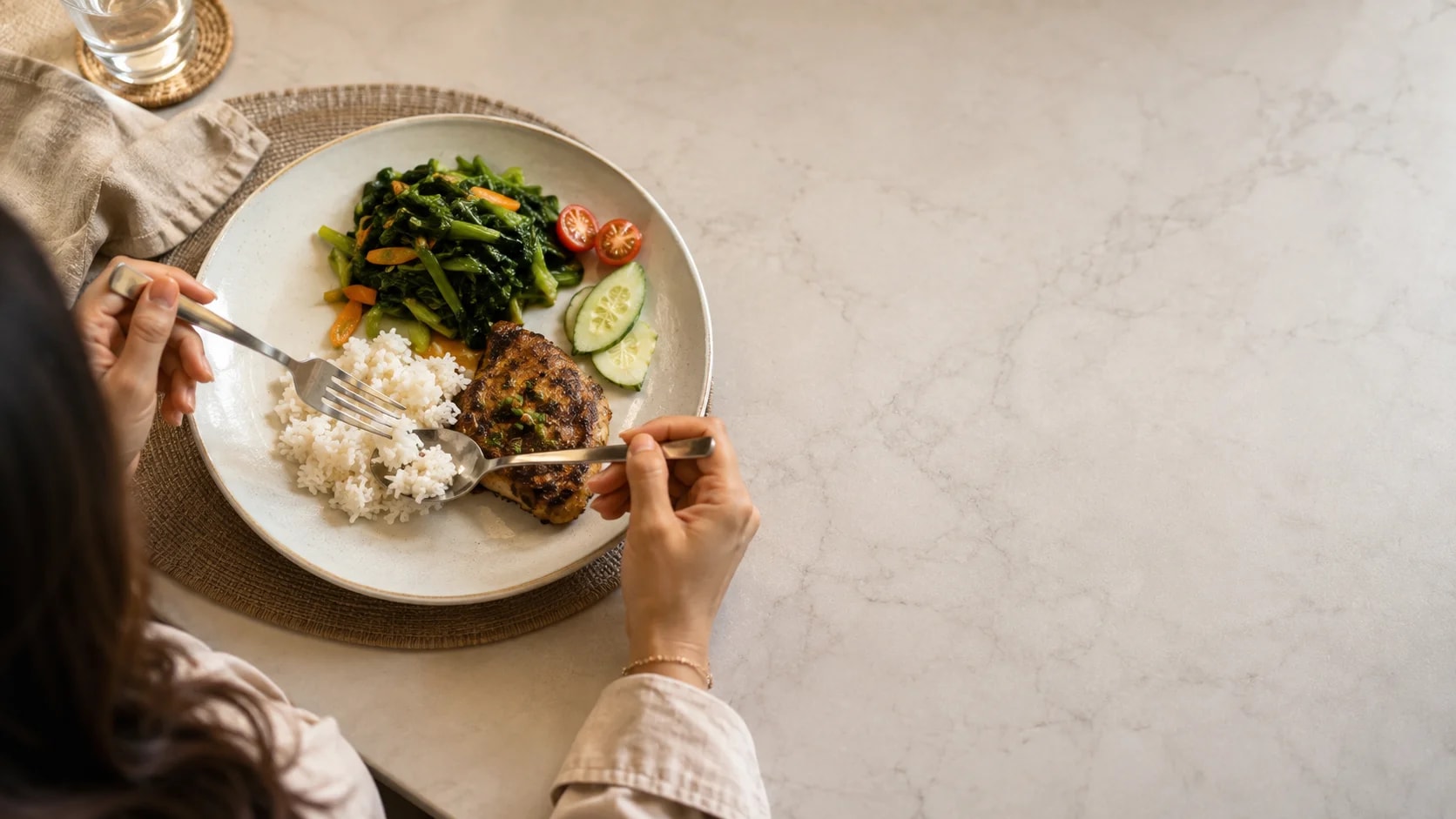
It is not necessary for you to cut out rice, noodles, or roti from your diet. This is simply because it is more about changing the portion sizes rather than avoiding these foods altogether:
Eating out doesn't need to stop, but a few practical habits help:
While general guidance can help, certain situations call for professional input rather than self-managing:
Should you find yourself in a situation where you are planning for Mounjaro therapy during Ramadan or if you have started the medication and Ramadan comes along, the need for personalized medical advice will come into play. The matter is quite sensitive and you should seek personalized medical advice as opposed to generalized information.
Healthy eating on Mounjaro doesn't involve stopping yourself from enjoying your local cuisine or making you follow a new and strange regime of eating. All it involves is being mindful about how much you eat, focusing on proteins, staying hydrated, and adapting slowly according to your changing appetite. In case you are finding it hard to combine eating well and taking treatment, a dietician or your treating doctor could be of assistance.
This page provides general dietary guidance for people using Mounjaro, based on standard weight-management principles and available clinical guidance. Individual dietary needs can vary, so any significant changes to your diet should be discussed with your doctor or a qualified healthcare professional.
✓ Reviewed by Dr. Preetha Nair, Aesthetic Medical Doctor, Nexus Clinic KL
Eat protein-based food along with fiber from fruits and vegetables and proper hydration in small and slow meal portions. The usual Malaysian food is okay in controlled amounts; no special diet change is needed at all.
Though there isn't any specific avoid list, very oily, fried, spicy or heavy meals tend to increase the chances of developing nausea and discomfort among patients especially in the initial weeks of the treatment.
Yes, rice doesn't need to be eliminated. A smaller portion alongside protein and vegetables is generally well tolerated.
The exact amount depends on the individual, but putting an emphasis on protein intake with every meal is a feasible solution rather than a particular set number of grams. A dietitian will assist you in determining that number if necessary.
Small and mild meals are preferable when one suffers from nausea; rice, crackers, and clear soups might be easier to tolerate than greasy foods. Should nausea be prolonged or severe, consult your physician.
This should be discussed directly with your doctor, since fasting alongside this medication involves individual factors that need personalised medical guidance, particularly relevant for patients considering treatment during Ramadan.
If you are finding it hard to combine eating well and taking treatment, a dietitian or your treating doctor could be of assistance. Book a consultation at Nexus Clinic KL for doctor-led guidance alongside your treatment.
Real Google reviews from patients who came to Nexus Clinic for medical weight loss.
Guides and answers from our doctors on this treatment.