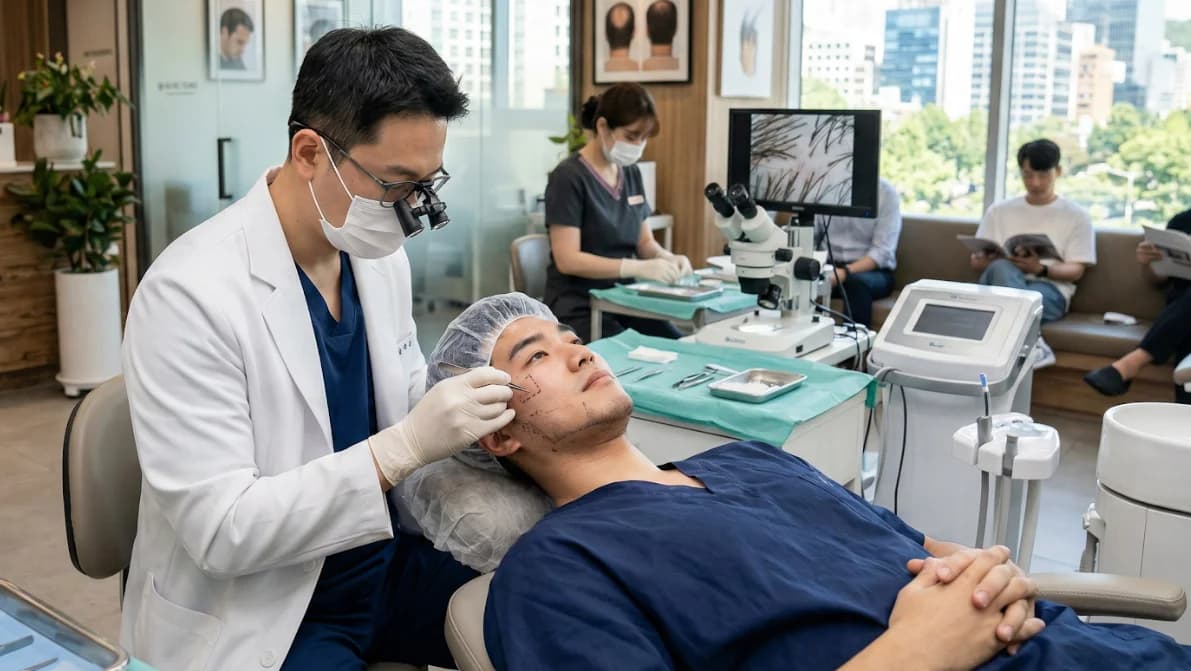
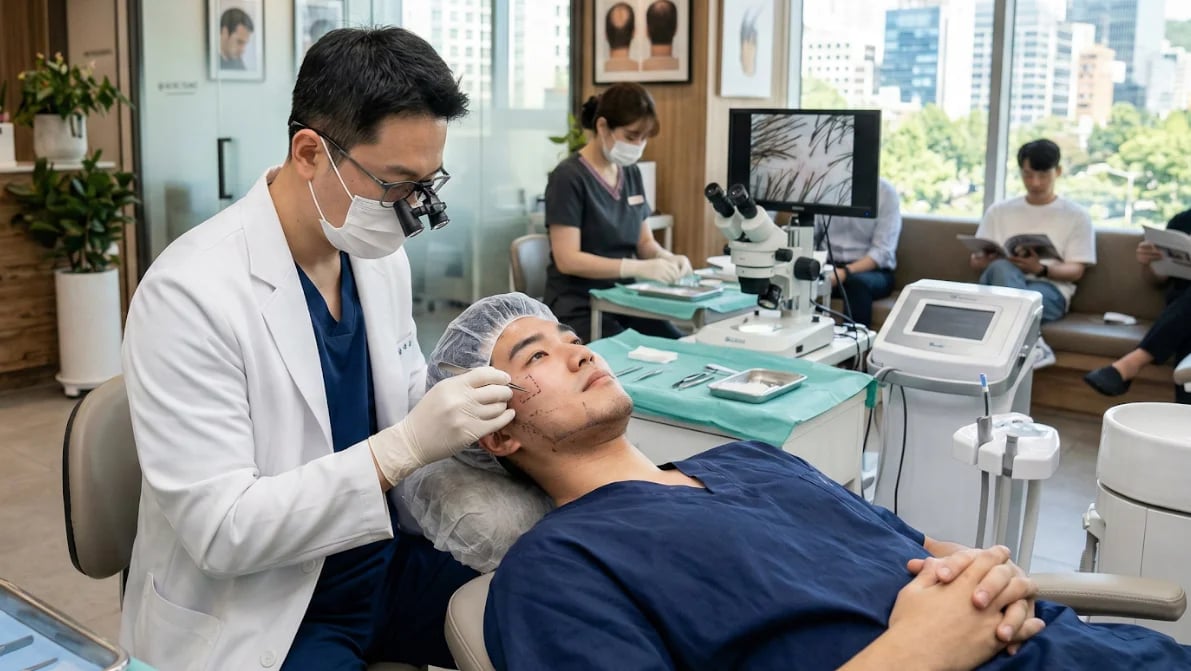
Not every man can grow a beard. Genetics, hormonal factors, or scarring can leave the face with patchy or sparse facial hair that no supplement, oil, or dermaroller will ever fully address.
The only solution that produces permanent, natural-looking results is a beard transplant: moving individual hair follicles from the back of the scalp to the beard area where growth is absent or insufficient. Nexus Clinic KL is a trusted hair transplant clinic in Malaysia offering beard transplant procedures using FUE and DHI techniques.
FUE • DHI
90-99% Graft Survival
Nexus Clinic Kuala Lumpur — Excellence in Aesthetic Medicine
Experience
Over 15 Years
Combined clinical experience
Location
Wisma UOA II, Jalan Pinang
KLCC, 50450 Kuala Lumpur
Opening Hours
Monday - Saturday
9:00am – 6:00pm | Closed Sundays & PH
MOH Licensed
Ministry of Health Malaysia licensed clinic
Doctor-Performed
Qualified hair transplant surgeon
5,000+ Procedures
Extensive experience in facial hair restoration
FUE and DHI facial hair restoration by licensed doctors
Session Duration
4 to 8 hours depending on graft count
Anaesthesia
Local anaesthesia. Patient remains awake.
Graft Survival
90 to 99% depending on technique
Full Results
Month 9 to 12 post-procedure
Procedure
Beard Transplant (FUE and DHI)
Graft Count Range
500 to 3,000 grafts depending on design
Recovery
Return to work within 3 to 5 days
Consultation
Complimentary at Nexus Clinic KL
Graft estimates by beard area
| Beard Zone | Coverage Area | Typical Grafts Needed | Key Design Considerations |
|---|---|---|---|
| Full Beard | Cheeks, jawline, chin, upper lip, sideburns | 1,500 to 3,000 grafts | Angle and direction must follow natural downward-and-outward growth pattern. Density gradation from border to centre. |
| Goatee | Chin and lower lip area only | 500 to 1,000 grafts | Precise border definition critical. Downward angle at chin tip. Subtle density graduation at edges. |
| Moustache | Upper lip area | 300 to 600 grafts | Very fine calibre hairs preferred. Lateral hair must angle outward and slightly downward to follow philtrum. |
| Cheek Beard | Lateral cheek region above jawline | 500 to 1,200 grafts | Growth is thin in this area naturally. Single-hair grafts for natural sparse coverage pattern at upper border. |
| Sideburns | Pre-auricular area connecting scalp and beard | 300 to 800 grafts | Must blend seamlessly with existing scalp hair at top and beard hair at bottom. Transition density essential. |
| Jawline Definition | Lower jaw outline enhancement | 400 to 900 grafts | Sharpens jaw profile without unnatural hard edges. Outward horizontal angle at jaw boundary. |
Beard Zone
Full Beard
Coverage Area
Cheeks, jawline, chin, upper lip, sideburns
Typical Grafts Needed
1,500 to 3,000 grafts
Key Design Considerations
Angle and direction must follow natural downward-and-outward growth pattern. Density gradation from border to centre.
Beard Zone
Goatee
Beard Zone
Moustache
Beard Zone
Cheek Beard
Beard Zone
Sideburns
Beard Zone
Jawline Definition
Choosing the right source for natural results
| Donor Source | Hair Characteristics | Beard Match Quality | Best Used For |
|---|---|---|---|
| Back of Scalp (Occipital) | Single to multi-hair grafts, medium calibre, straight to slightly wavy | Excellent. Most similar to natural beard hair texture. | Primary donor source for most beard transplant cases. Sufficient for 500 to 2,500 grafts. |
| Side of Scalp (Temporal) | Finer calibre, naturally single hairs at periphery | Very Good for moustache and sideburn areas. | Supplementary source for fine-calibre zones like moustache or upper border of sideburns. |
| Chest Hair | Coarser, curlier growth cycle, different calibre | Moderate. Can look unnatural in high-visibility areas. | Last resort supplement when scalp donor is exhausted. Used for interior beard density only. |
| Existing Beard Hair | Identical texture and growth cycle to recipient area | Perfect match for hair loss within existing beard due to scarring. | Scar camouflage within existing beard where adjacent facial hair is available. |
Donor Source
Back of Scalp (Occipital)
Hair Characteristics
Single to multi-hair grafts, medium calibre, straight to slightly wavy
Beard Match Quality
Excellent. Most similar to natural beard hair texture.
Best Used For
Primary donor source for most beard transplant cases. Sufficient for 500 to 2,500 grafts.
Donor Source
Side of Scalp (Temporal)
Donor Source
Chest Hair
Donor Source
Existing Beard Hair
Which is better for your beard goals?
| Factor | FUE for Beard Transplant | DHI Technique for Beard Transplant |
|---|---|---|
| Extraction Method | Individual hair follicles extracted one by one from scalp donor area using punch tool | Individual follicles extracted and immediately implanted using patented DHI implanter pen |
| Angle and Direction Control | Good. Surgeon creates incisions first then places grafts. | Superior. Implanter controls angle and direction simultaneously at implantation. |
| Graft Survival Rate | 90 to 95% for beard applications | 95 to 99% due to minimal out-of-body time |
| Best For | Larger sessions, full beard coverage, cost-effective approach | Precision zones: moustache, sideburn borders, goatee definition |
| Recovery | 5 to 7 days visible healing | 4 to 6 days. Fastest of all beard techniques. |
| Cost in Malaysia (per graft) | RM 8 to RM 12 per hair | RM 10 to RM 15 per hair |
Factor
Extraction Method
FUE for Beard Transplant
Individual hair follicles extracted one by one from scalp donor area using punch tool
DHI Technique for Beard Transplant
Individual follicles extracted and immediately implanted using patented DHI implanter pen
Factor
Angle and Direction Control
Factor
Graft Survival Rate
Factor
Best For
Factor
Recovery
Factor
Cost in Malaysia (per graft)
What to expect after your procedure
The most important session in any beard transplant journey is not the surgery. It is the beard design consultation that precedes it.
Transplanted hair shafts fall out. Follicle roots remain intact.
Fine, short hairs become visible. Early beard formation begins.
Meaningful coverage visible. Beard can be shaped and styled.
Hair thickens and matures in texture.
Natural-looking beard fully established. Can be shaved, trimmed, and styled.
Full results are not visible until month 9 to 12. Patience during the growth phase is essential for optimal outcomes.
✨ The final appearance of a beard transplant is determined at the design stage: the outline of the beard, the density distribution across different zones, and the angle and direction of growth in each area.
Step by step
Surgeon draws planned beard outline on face, confirms final design. Graft count confirmed based on agreed coverage area and density goals.
Donor area at back of scalp trimmed. Local anaesthetic administered. Patient feels no pain during extraction.
Hair follicles extracted one by one from donor area using FUE punch or DHI extraction pen. Grafts placed in holding solution.
For FUE, recipient sites created then grafts placed. For DHI, implanter inserts each follicle directly at planned angle and direction.
FUE • DHI — Expert facial hair restoration at Nexus Clinic KL
Facial hair restoration beyond the beard
The same FUE technique used for beard transplant is the standard approach for eyebrow transplant, making it the most technically demanding of all facial hair restoration procedures. Eyebrow hair grows at an almost horizontal angle and lies flat against the skin, which means every individual hair follicle must be implanted at an extremely shallow acute angle.
Transparent pricing at Nexus Clinic KL
| Beard Transplant Package | Graft / Hair Count | Estimated Total Price (RM) 2026 |
|---|---|---|
| Moustache Transplant (FUE) | 300 to 600 hairs | RM 3,000 to RM 7,200 |
| Goatee Transplant (FUE) | 500 to 1,000 grafts | RM 5,000 to RM 12,000 |
| Sideburn Transplant (FUE) | 300 to 800 grafts | RM 3,000 to RM 9,600 |
| Partial Beard (FUE) | 800 to 1,500 grafts | RM 8,000 to RM 18,000 |
| Full Beard Transplant (FUE) | 1,500 to 3,000 grafts | RM 15,000 to RM 36,000 |
| Full Beard Transplant (DHI) | 1,500 to 3,000 hairs | RM 18,000 to RM 45,000 |
| Eyebrow Transplant (FUE) | 200 to 500 grafts per brow | RM 4,000 to RM 12,000 |
Beard Transplant Package
Moustache Transplant (FUE)
Beard Transplant Package
Goatee Transplant (FUE)
Beard Transplant Package
Sideburn Transplant (FUE)
Beard Transplant Package
Partial Beard (FUE)
Beard Transplant Package
Full Beard Transplant (FUE)
Beard Transplant Package
Full Beard Transplant (DHI)
Beard Transplant Package
Eyebrow Transplant (FUE)
Slide to see the incredible transformations achieved by our clients
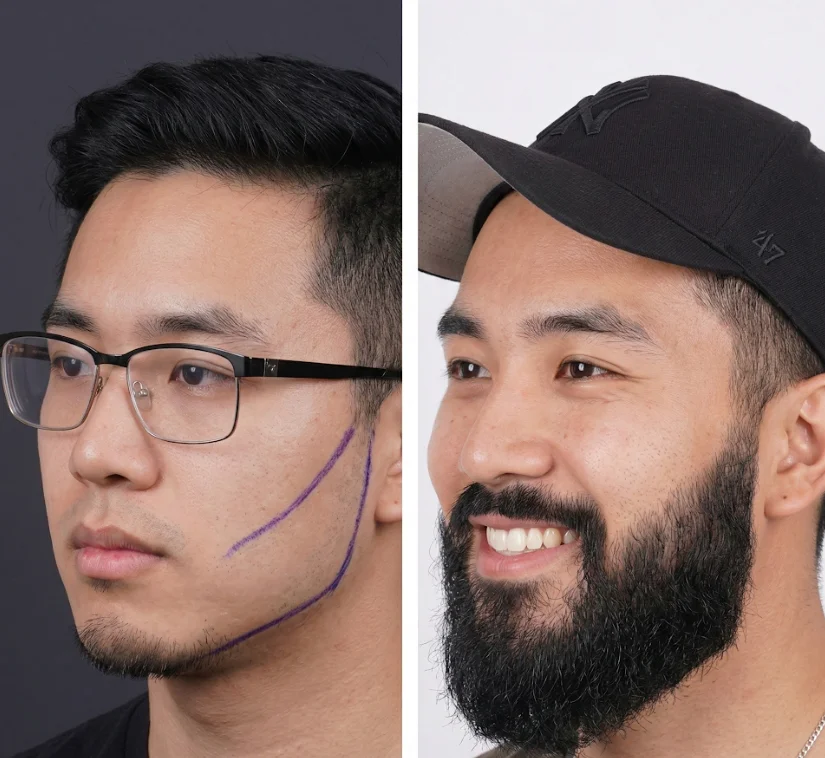
Drag to compare
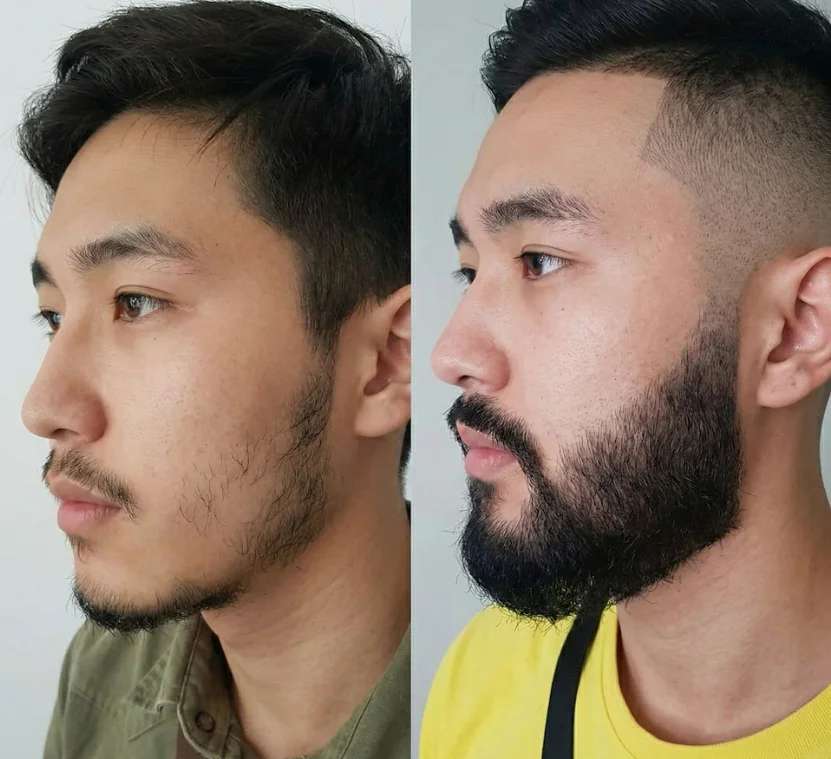
Drag to compare
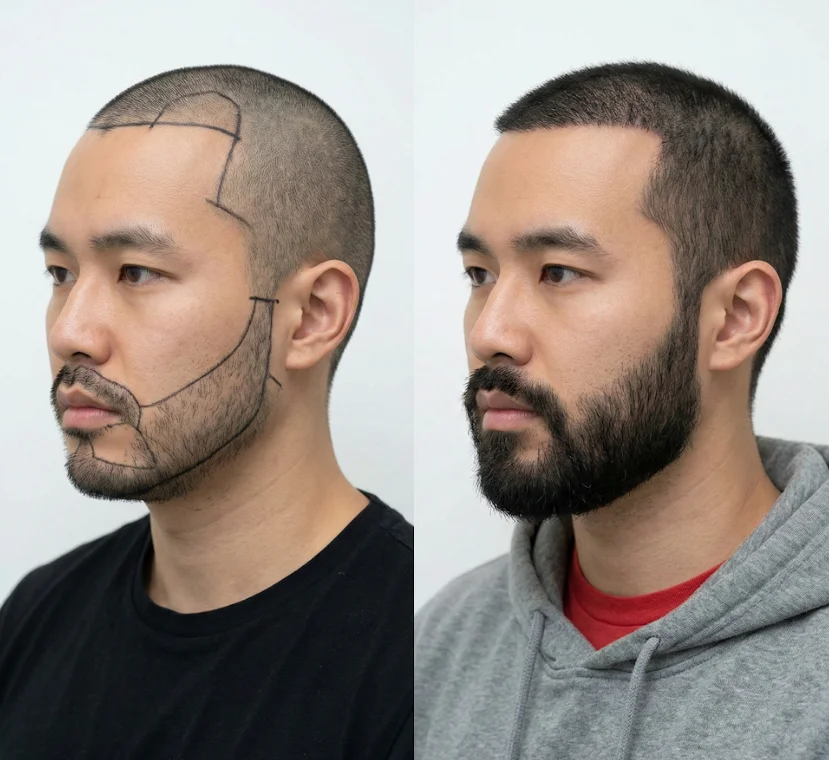
Drag to compare
Results may vary. Individual results depend on various factors.
Start Your TransformationYes. The transplanted hair follicles come from the DHT-resistant donor area at the back of the scalp and are genetically programmed to continue growing for the patient's lifetime. Once the transplanted follicles are established in the beard area, the hair continues to grow naturally and is not subject to the hormonal miniaturisation that causes pattern hair loss. The transplanted hair can be shaved, shaped, and groomed exactly like natural beard hair, and it will regrow at the normal rate after shaving.
A full beard covering the cheeks, chin, jawline, and moustache area typically requires 1,500 to 3,000 grafts depending on the existing facial hair density and the desired final density of the transplanted beard. Patients with sparse but existing facial hair require fewer grafts because the transplant supplements rather than creates from scratch. Patients with no facial hair across the full beard area need more grafts to create the complete coverage. The doctor will calculate the number of grafts needed at the beard design consultation after assessing the coverage area and density goals.
Yes, and this is one of the most common beard goals among patients at Nexus Clinic KL. Men with some existing facial hair but uneven or patchy areas can receive a targeted beard transplant that fills in the sparse zones to match the density of the surrounding natural facial hair. This approach requires fewer grafts than a full beard transplant and produces a result that blends seamlessly with the existing facial hair. The design consultation maps the specific patchy areas and plans implantation density to match the surrounding beard texture and direction.
Using the FUE technique, the donor area at the back of the scalp develops only tiny circular dot scars at each extraction site. These are not visible under normal hair length and require very close shaving to become noticeable. There are no stitches, no linear scar, and no visible evidence of the donor harvest under everyday hair length. At the beard recipient area, tiny scabs form at each implant site and fall away naturally within seven to ten days, leaving no visible trace of the procedure once healing is complete.
After the initial shock loss of transplanted hair shafts at two to four weeks, the hair follicles enter a dormant phase before new growth begins. New beard hair begins to grow from the transplanted follicles from month three to four, initially appearing as fine, short hairs that gradually thicken. By month six, meaningful coverage is visible. The full result with natural density and length potential is established at month nine to twelve. This timeline mirrors the scalp hair transplant growth timeline and is the same regardless of whether FUE or DHI technique is used.
Yes, and combining beard and eyebrow transplant in a single session is possible when the total graft count is manageable within one session's duration. Both procedures use the same scalp donor area and the same FUE extraction technique. Combined sessions are cost-efficient and reduce total recovery time. However, the implantation of eyebrow grafts requires the most precise angle control of any facial hair transplant zone, so the surgeon must be experienced in eyebrow-specific technique. At Nexus Clinic KL, the clinical team advises on the feasibility of a combined session at the consultation based on the total grafts needed for both areas.
FUE extracts individual hair follicles and implants them into pre-made recipient sites, giving the surgeon good control over direction. DHI uses a patented implanter pen that simultaneously extracts and implants each follicle in a single step, providing superior control over the angle and direction of each hair at the moment of implantation. For beard transplant, the DHI technique is particularly valuable in precision zones like the moustache and sideburn borders where natural growth direction is critical to a natural-looking outcome. FUE is appropriate for larger coverage areas where efficiency and graft count are the primary priorities.
Yes, when the procedure is performed by an experienced transplant surgeon who controls the angle and direction of implantation to match the natural growth pattern of the beard zone being treated. The transplanted hair is the patient's own scalp hair relocated to the face, so the texture and growth characteristics are essentially equivalent to any natural hair follicle. The key variable determining whether the result looks natural is the precision of implantation angle, which is why choosing a surgeon with specific beard transplant experience matters significantly more than the technique used.
A moustache or goatee transplant requiring 300 to 800 grafts takes approximately three to five hours including design, anaesthesia, extraction, and implantation. A full beard transplant requiring 1,500 to 3,000 grafts takes six to eight hours. Both are performed as day sessions under local anaesthesia with no hospital admission required. Recovery involves mild facial swelling and redness for two to three days, scabbing at the implant sites for seven to ten days, and a return to work within three to five days for most patients. Strenuous exercise and direct sun exposure to the face should be avoided for the first two weeks.
Nexus Clinic KL is a licensed hair transplant clinic in Malaysia offering beard transplant procedures performed by qualified surgeons under full Ministry of Health Malaysia-compliant clinical standards. Over 5,000 facial filler and hair restoration procedures have been completed at the clinic, with a team that combines medical expertise with the aesthetic sensibility required to produce natural-looking beard results for patients across KL, Petaling Jaya, Bangsar, and throughout Malaysia. The clinic offers a complimentary first consultation, full beard design session before any surgery, transparent graft-count and pricing breakdown, and structured aftercare.
If you want a beard that looks even, natural, and confident, start with a proper assessment. We will help you understand the cause, then choose the right path, from beard growth plans to facial hair transplant discussions.
Our licensed doctors bring over 15 years of combined experience, perform every procedure personally, and use only MOH-approved techniques. Nexus Clinic KL serves patients from across Malaysia seeking beard transplant clinics with clinical standards and aesthetic sensibility.
Limited slots available | Wisma UOA II, Jalan Pinang, KLCC — Serving Malaysia since 2001