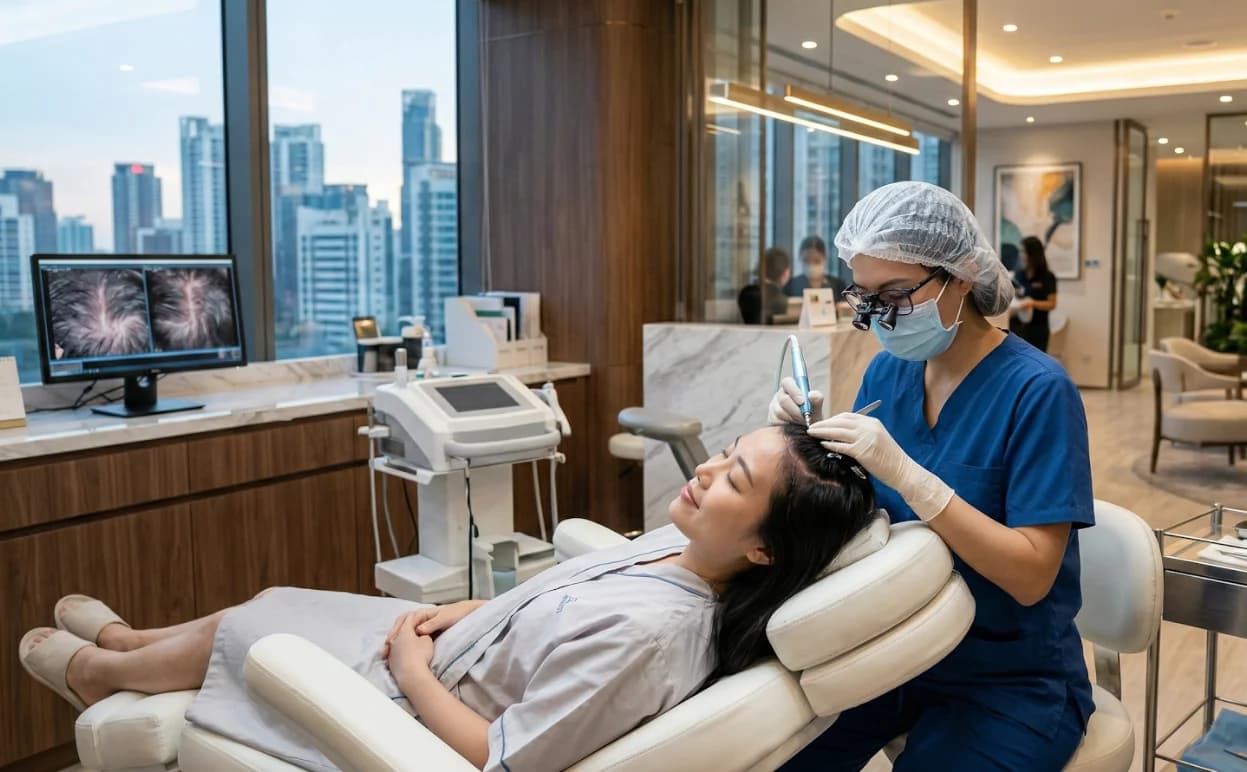
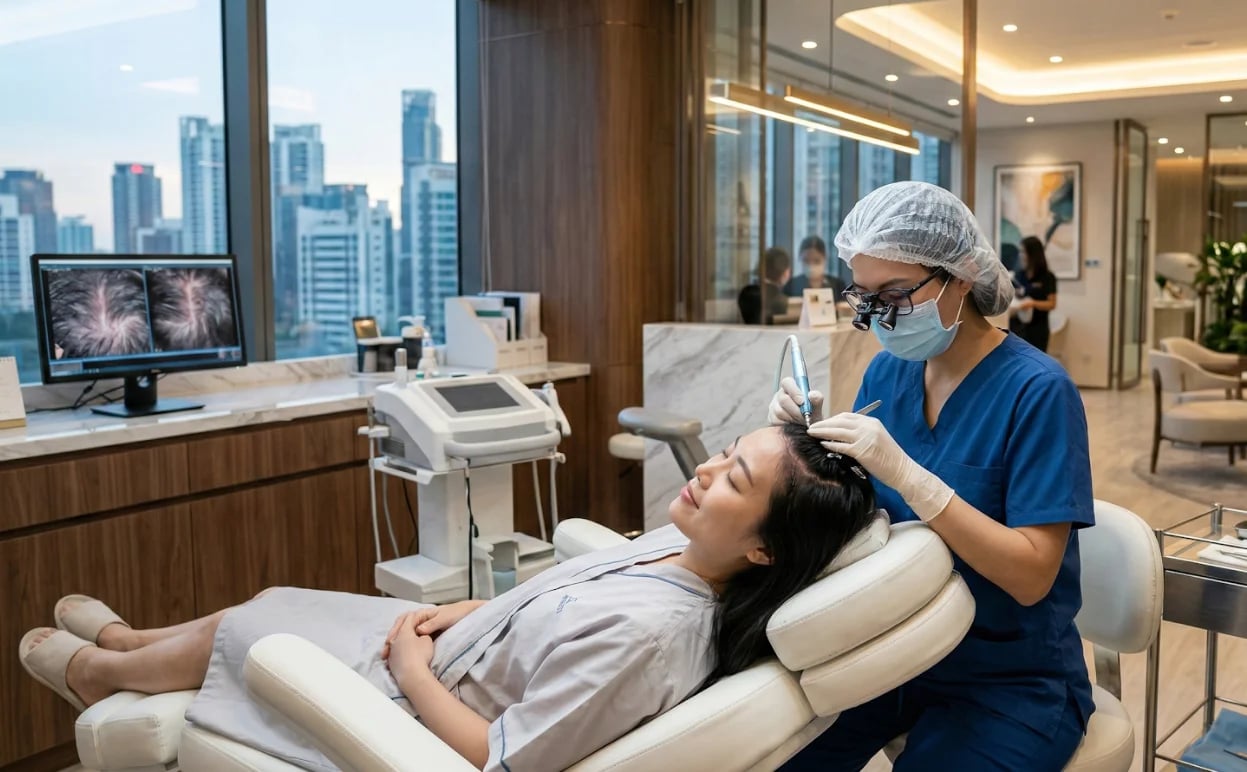
Hair loss is not vanity. When pattern hair loss progresses from a receding hairline to visible thinning or bald patches, it changes how people see themselves.
A hair transplant at Nexus Clinic KL offers a medically grounded, permanent solution: moving healthy hair follicles from the donor area at the back of the scalp to the areas where hair loss has occurred, creating new growth that is indistinguishable from natural hair and lasts for life.
FUE • DHI • FUT
Graft survival 90-99%
Nexus Clinic Kuala Lumpur — Excellence in Aesthetic Medicine
Experience
Over 15 Years
Combined clinical experience
Location
Wisma UOA II, Jalan Pinang
KLCC, 50450 Kuala Lumpur
Opening Hours
Monday - Saturday
9:00am – 6:00pm | Closed Sundays & PH
MOH Licensed
Ministry of Health Malaysia licensed clinic
Doctor-Performed
Qualified hair transplant surgeon
5,000+ Procedures
Extensive experience in hair restoration
FUE, DHI, and FUT hair restoration by licensed doctors
Session Duration
4 to 8 hours depending on graft count
Anaesthesia
Local anaesthesia. Patient remains awake.
Graft Survival Rate
90 to 99% depending on technique
Results Timeline
Full density at 12 to 15 months
Procedure Type
Hair Transplant Surgery (FUE, DHI, FUT)
Permanence
Transplanted hair is permanent and DHT-resistant
Suitable For
Pattern hair loss, receding hairline, crown thinning, facial hair
Consultation
Complimentary at Nexus Clinic KL
Hair transplant method comparison for Malaysian patients
| Factor | FUE (Follicular Unit Extraction) | DHI (Direct Hair Implantation) | FUT (Follicular Unit Transplantation) |
|---|---|---|---|
| Extraction Method | Individual hair follicles extracted one by one using punch tool | Individual follicles extracted using DHI implanter pen in single motion | Strip of skin removed from back of scalp, dissected into grafts |
| Scarring | Tiny circular dot scars. Not visible with normal hair length. | Minimal. Similar to FUE but fewer incisions at recipient site. | Linear scar at donor area. Visible with very short hair. |
| Graft Survival Rate | 90 to 95% | 95 to 99% (less out-of-body time) | 95 to 98% |
| Max Grafts Per Session | Up to 4,000 grafts | Up to 4,000 grafts (time dependent) | Up to 4,500+ grafts |
| Recovery Time | 7 to 10 days | Fastest. 5 to 7 days | 10 to 14 days |
| Best For | Most patients. Excellent natural results for hairline and crown. | Dense packing, hairline precision, no full shave required. | Large sessions, extensive loss, or where maximum graft count is priority. |
| Cost in Malaysia (per graft) | RM 8 to RM 12 | RM 10 to RM 15 | RM 5 to RM 10 |
Factor
Extraction Method
FUE (Follicular Unit Extraction)
Individual hair follicles extracted one by one using punch tool
DHI (Direct Hair Implantation)
Individual follicles extracted using DHI implanter pen in single motion
FUT (Follicular Unit Transplantation)
Strip of skin removed from back of scalp, dissected into grafts
Factor
Scarring
Factor
Graft Survival Rate
Factor
Max Grafts Per Session
Factor
Recovery Time
Factor
Best For
Factor
Cost in Malaysia (per graft)
The right hair transplant method is never a single universal answer. It is determined by a scalp assessment, donor area density, hair type, and the specific areas being treated. Nexus Clinic KL performs all three methods and selects the approach that best serves the individual patient's needs.
Understanding your hair loss stage and graft requirements
| Norwood Stage | Hair Loss Pattern | Estimated Grafts Needed | Sessions Typically Needed | Best Method |
|---|---|---|---|---|
| Stage 1 to 2 | Minimal recession at temples. Early hairline movement. | 800 to 1,500 | 1 session | FUE or DHI |
| Stage 3 | Visible recession at temples. Hairline clearly moving back. | 1,500 to 2,500 | 1 session | FUE or DHI |
| Stage 3 Vertex | Recession at temples plus early crown thinning. | 2,000 to 2,800 | 1 to 2 sessions | FUE or DHI |
| Stage 4 | Significant recession and crown loss. Band of hair between zones. | 2,500 to 3,200 | 1 to 2 sessions | FUE or FUT |
| Stage 5 | Recession and crown merging. Extensive balding area. | 3,000 to 4,000 | 2 sessions | FUE or FUT |
| Stage 6 to 7 | Near total hair loss. Only side and rear band remaining. | 3,500 to 4,500+ | 2 to 3 sessions | FUT or multiple FUE |
Norwood Stage
Stage 1 to 2
Hair Loss Pattern
Minimal recession at temples. Early hairline movement.
Estimated Grafts Needed
800 to 1,500
Sessions Typically Needed
1 session
Best Method
FUE or DHI
Norwood Stage
Stage 3
Norwood Stage
Stage 3 Vertex
Norwood Stage
Stage 4
Norwood Stage
Stage 5
Norwood Stage
Stage 6 to 7
Month-by-month what to expect after your procedure
The most common source of anxiety after a hair transplant is shock loss. Most transplanted hair shafts fall out within two to three weeks. This is normal and expected. New growth begins from month three.
Transplanted hair shafts fall out. Follicle roots remain intact.
Fine baby hairs become visible. Early hairline formation.
Meaningful cosmetic improvement visible. Styling possible.
60 to 80% of final density achieved.
Final result. Natural-looking, permanent hair.
Full results are not visible until month 12 to 15. Patience during the growth phase is essential for optimal outcomes.
✨ Understanding the timeline from day one eliminates the most common source of post-procedure distress and helps patients trust the process during the months when change is happening invisibly beneath the scalp surface.
What happens to transplanted hair and what the patient experiences
| Timeframe | What Happens to Transplanted Hair | What the Patient Experiences |
|---|---|---|
| Days 1 to 7 | Grafts anchor in recipient site. Early healing begins. Scabs form around implanted follicles. | Mild swelling and redness. Scabs visible. Rest and gentle washing as instructed. |
| Weeks 2 to 3 | Shock loss begins. Transplanted hair shafts fall out. Follicle roots remain intact. | Most transplanted hair appears to fall out. This is normal and expected. |
| Month 1 to 2 | Follicles in dormant telogen phase. No visible hair growth at surface. | Scalp appears similar to pre-surgery. Patience required. |
| Month 3 to 4 | New hair shafts begin emerging from transplanted follicles. Initial growth phase. | Fine baby hairs become visible. Early signs of hairline forming. |
| Month 5 to 6 | Hair thickens progressively. Density continues building. Texture normalising. | Meaningful cosmetic improvement visible. Most patients begin styling transplanted area. |
| Month 8 to 10 | Approximately 60 to 80% of final density achieved. Hair maturing. | Significant change in appearance. Confidence returning. Results clearly visible. |
| Month 12 to 15 | Full density reached. Hair grows permanently at normal rate. | Final result. Natural-looking, full, permanent hair requiring normal grooming only. |
Timeframe
Days 1 to 7
What Happens to Transplanted Hair
Grafts anchor in recipient site. Early healing begins. Scabs form around implanted follicles.
What the Patient Experiences
Mild swelling and redness. Scabs visible. Rest and gentle washing as instructed.
Timeframe
Weeks 2 to 3
Timeframe
Month 1 to 2
Timeframe
Month 3 to 4
Timeframe
Month 5 to 6
Timeframe
Month 8 to 10
Timeframe
Month 12 to 15
What makes our hair type different
Asian hair, including the hair of Malaysian, Chinese, Indian, and Malay patients, has distinct physical characteristics that affect graft harvesting, density planning, and natural-looking result creation.
Step by step
Doctor discusses hair loss story, checks donor area density and scalp health, reviews lifestyle, job, and downtime needs.
Hairline designed to fit age and features. Graft count determined based on Norwood stage and donor density.
Local anaesthesia administered. FUE, DHI, or FUT performed. Patient remains awake and comfortable for 4 to 8 hours.
Written aftercare instructions provided. Activity limits and washing guidance given. Follow-up at 1 week, 1 month, 3 months, 6 months, and 12 months.
FUE • DHI • FUT — Expert hair restoration at Nexus Clinic KL
Transparent pricing at Nexus Clinic KL
| Package | Graft Range | Estimated Total Price (RM) 2026 |
|---|---|---|
| Hairline Restoration (FUE) | 1,000 to 1,500 grafts | RM 8,000 to RM 18,000 |
| Crown Restoration (FUE) | 1,500 to 2,500 grafts | RM 12,000 to RM 30,000 |
| Moderate Hair Loss (FUE) | 2,500 to 3,500 grafts | RM 20,000 to RM 42,000 |
| Extensive Hair Loss (FUT) | 3,000 to 4,500 grafts | RM 15,000 to RM 45,000 |
| DHI Programme | 1,000 to 3,000 grafts | RM 10,000 to RM 45,000 |
| Beard / Eyebrow / Facial Hair | 500 to 1,500 grafts | RM 6,000 to RM 22,500 |
Package
Hairline Restoration (FUE)
Package
Crown Restoration (FUE)
Package
Moderate Hair Loss (FUE)
Package
Extensive Hair Loss (FUT)
Package
DHI Programme
Package
Beard / Eyebrow / Facial Hair
Hair transplant cost in Malaysia is calculated per graft rather than as a flat fee. All consultations are complimentary at Nexus Clinic KL. Final pricing confirmed after scalp assessment.
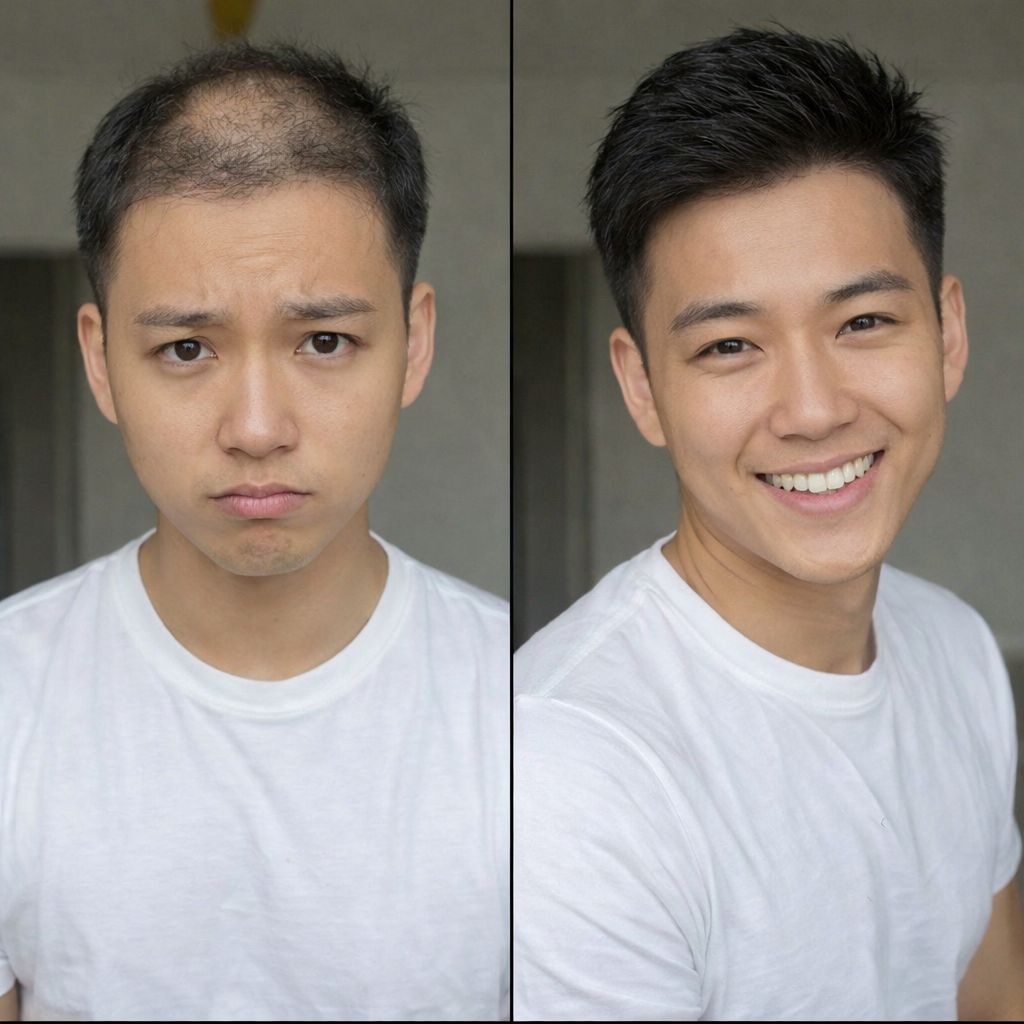
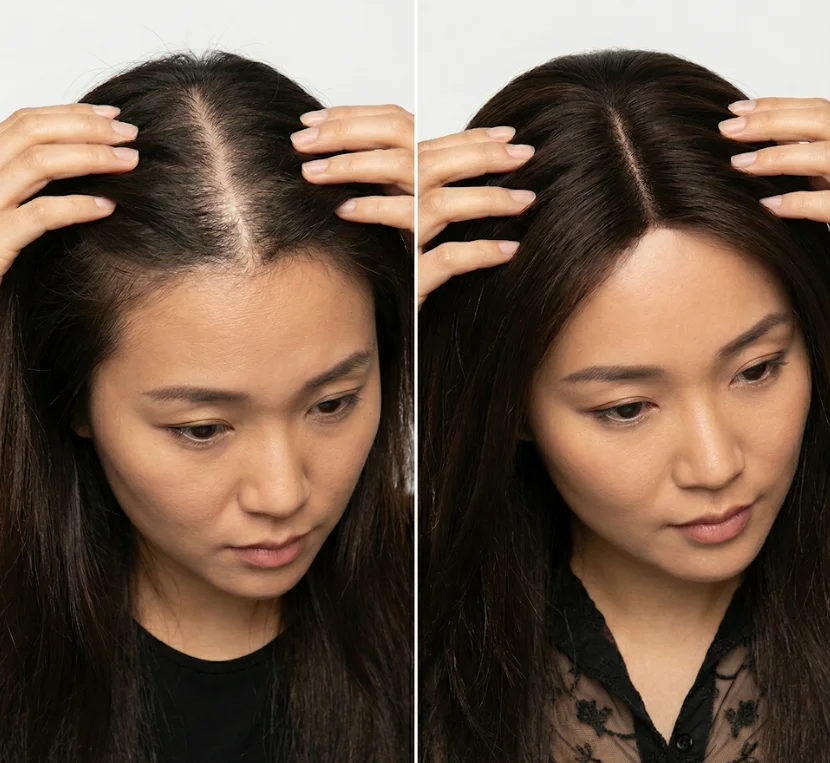
Slide to see the incredible transformations achieved by our clients
Drag to compare
Drag to compare
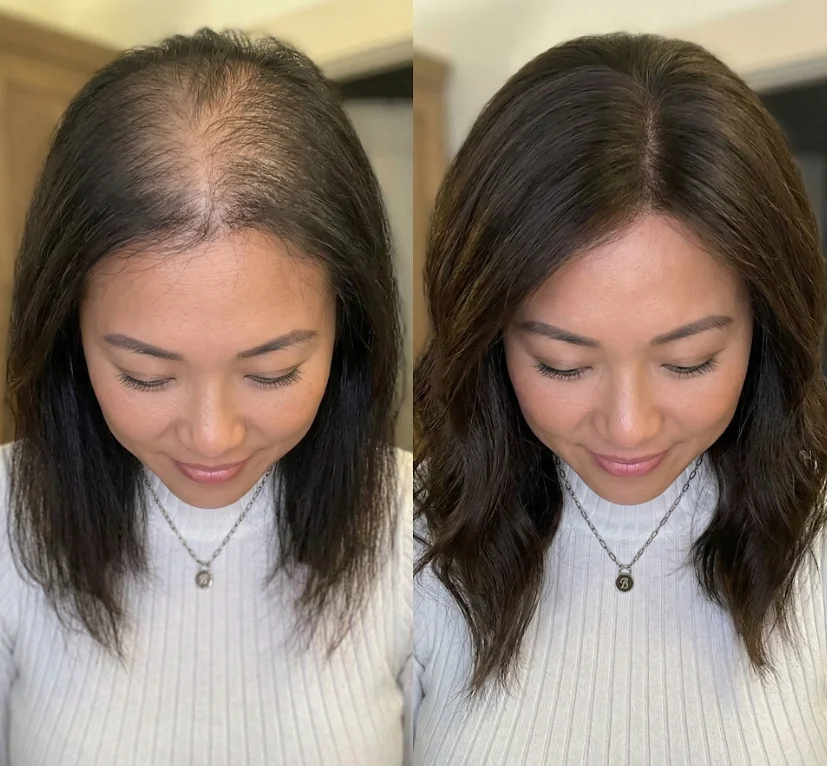
Drag to compare
Results may vary. Individual results depend on various factors.
Start Your TransformationYes. The transplanted hair is permanent because the hair follicles from the donor area are genetically DHT-resistant. Pattern hair loss (androgenetic alopecia) is caused by dihydrotestosterone (DHT) destroying follicles in the front and crown of the scalp. The follicles at the back and sides of the scalp, which form the donor area, are not sensitive to DHT and continue growing throughout the patient's lifetime even when relocated to the recipient site. This is the biological principle of donor dominance and it is why hair transplant results are permanent while the surrounding existing hair may continue to thin over time without additional medication.
Graft count depends on the extent of your hair loss, the density of your donor area, and the density you want to achieve at the recipient site. As a guide, hairline restoration typically requires 1,000 to 2,000 grafts, crown area restoration needs 1,500 to 3,000 grafts, and more extensive pattern hair loss may require 3,000 to 4,500 grafts. These are estimates. The definitive number is determined at a scalp assessment by the hair transplant specialist at Nexus Clinic KL, who evaluates donor density under magnification and plans the procedure based on your specific anatomy and goals.
FUE (Follicular Unit Extraction) extracts individual hair follicles from the donor area and implants them into pre-made recipient sites. DHI (Direct Hair Implantation) uses a specialised Choi pen to extract and immediately implant each follicle in a single step without pre-made incisions. DHI achieves higher graft survival rates due to reduced time outside the body, allows greater control over angle and depth at the recipient site, and requires no full head shave for most patients. FUE is appropriate for most cases and is faster for large graft counts. DHI is preferred for hairline precision and dense packing where control of each individual hair follicle is the priority.
The first two to three days involve mild swelling, redness, and scabbing at both the donor and recipient areas. Most patients return to desk work within three to five days. Strenuous physical activity should be avoided for two to three weeks. The transplanted hair shafts fall out within two to three weeks due to shock loss. This is expected and the follicle roots remain intact. New hair begins emerging from month three. Most patients achieve 60 to 80 percent of their final density by month eight to ten, with full results visible at month twelve to fifteen. Nexus Clinic KL provides written aftercare instructions and a direct contact line for any concerns during the recovery period.
Yes. Female hair transplant is an increasingly common procedure in Malaysia, particularly for women with traction alopecia, localised thinning along the part, or hairline recession at the temples. Women with diffuse hair loss across the entire scalp require individual assessment because diffuse patterns may not have a stable donor area free from miniaturisation. A scalp assessment at Nexus Clinic KL determines donor area suitability for female patients and ensures that hair transplant treatment is appropriate rather than inappropriate for the specific pattern of hair loss. The FUE and DHI techniques are the preferred approaches for female patients as they do not require a large shaved area.
The right hair transplant clinic is one where every surgical step is performed by a qualified hair transplant surgeon, not by nurses or technicians. Verify that the operating doctor is registered with the Malaysian Medical Council and holds relevant training in hair restoration surgery. Ask to see patient reviews and before-and-after photographs of real patients treated at the clinic, ideally patients with similar hair types and loss stages to your own. A reputable clinic will assess your scalp thoroughly before any recommendation, provide a transparent graft-count and cost breakdown, and offer a structured aftercare programme. Clinics that promise guaranteed results or instant transformations without proper assessment should be avoided.
The procedure is performed under local anaesthesia, which means patients remain awake but do not feel pain during the transplant. The administration of the anaesthetic injections involves brief discomfort, comparable to a dental injection, after which the scalp is completely numb for the duration of the procedure. Most patients spend the session watching content on their phone or resting. Post-procedure soreness at both the donor and recipient sites typically resolves within three to five days and is managed with standard pain relief. Patients consistently report that the procedure was more comfortable than they anticipated.
Hair transplant cost in Malaysia is significantly lower than equivalent procedures in Western markets. A typical FUE session of 2,000 to 3,000 grafts costs approximately RM 16,000 to RM 36,000 at a quality clinic in Malaysia, compared to equivalent procedures costing RM 50,000 to RM 120,000 in Australia or the UK. This cost advantage does not reflect lower standards. Malaysia offers internationally trained surgeons, modern facilities, and Ministry of Health-regulated clinical environments at a fraction of Western overhead costs. Malaysia has become a leading destination for hair transplant medical tourism from across Asia, the Middle East, and beyond for exactly this reason.
Patients at earlier stages of hair loss or those who want to preserve existing hair before surgery should discuss non-surgical options with their doctor. Minoxidil treatment and finasteride treatment are the two most clinically proven medications for slowing pattern hair loss and may stabilise the existing hair before transplant planning. PRP hair treatment can strengthen hair follicles and improve scalp health. These are not substitutes for a hair transplant where significant balding has already occurred, but they are important parts of a comprehensive hair treatment strategy.
The transplanted hair continues to grow permanently because it comes from DHT-resistant follicles. It will not fall out due to androgenetic alopecia. However, the existing natural hair around the transplanted area may continue to thin over time if the underlying pattern hair loss is not managed with medication. This is why many hair transplant surgeons recommend concurrent use of finasteride or minoxidil to protect the non-transplanted hair and preserve the overall density of the result over the long term. At Nexus Clinic KL, a comprehensive hair treatment plan including both surgical and medical management of hair loss is discussed at consultation to give patients the clearest picture of their long-term outcomes.
A hair transplant can be life-changing, but only when it is planned well. If you want a natural hairline and a realistic timeline, start with a proper assessment at Nexus Clinic KL.
Our licensed doctors bring over 15 years of combined experience, perform every procedure personally, and use only MOH-approved techniques. Malaysia has become a leading destination for hair transplant medical tourism for exactly this reason.
Limited slots available | Wisma UOA II, Jalan Pinang, KLCC — Serving Malaysia since 2001