 Ozempic Treatment for Weight Loss
Can Semaglutide Be Linked to Hair Loss? Causes and What May Help
5 min read


Medically reviewed by Dr. Ashvinia Bala, MBBS (AIMST University), MMC Registration No. 82489 | Last reviewed:
The approach to female hair loss rarely follows a clear-cut pathway, unlike in the case of male pattern baldness. A man walking into a clinic will be assessed for one or two possible causes and then treated accordingly with a particular medication or surgery. A woman however, could have anywhere from three to five separate underlying contributors to her thinning or shedding hair, and the wrong initial assumption runs the risk of wasting time and effort.

Diagnosis first
Thyroid, iron and hormones checked
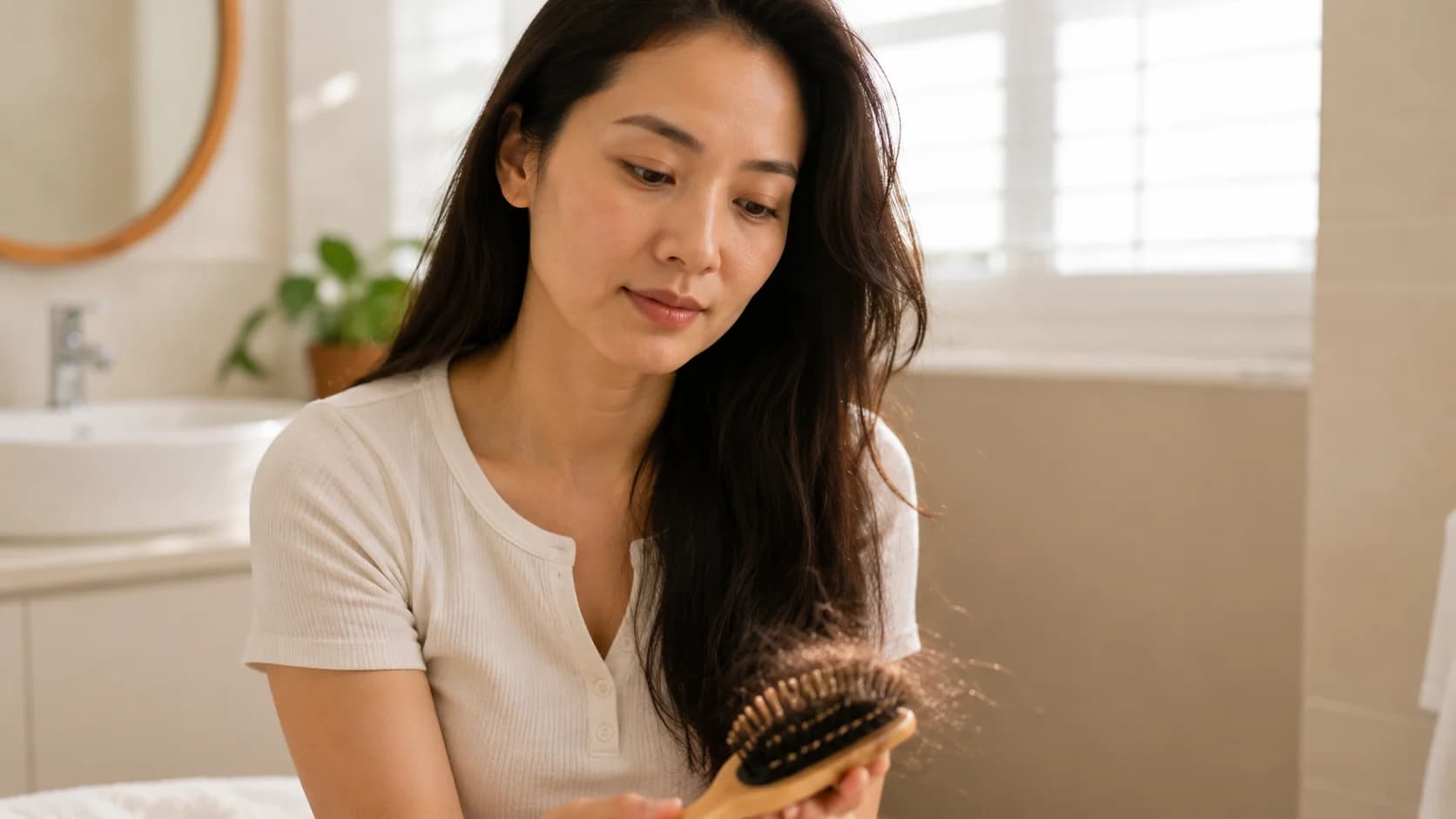
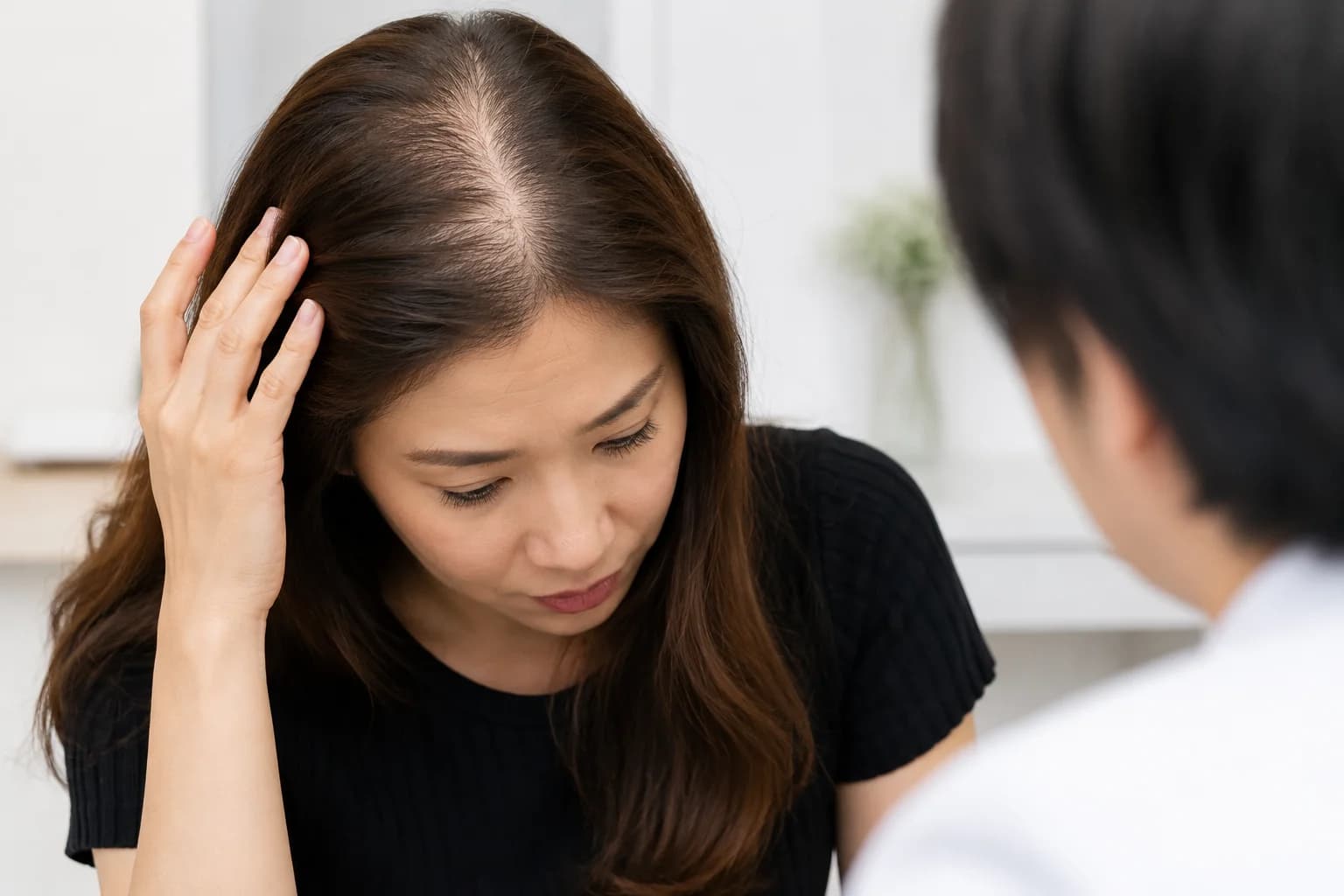
Women also tend to see a different pattern of hair loss than men. The latter typically worry about their receding hairline, but for women, this is less of a concern than overall thinning of the hair on the crown region. Clinically speaking, it is crucial to look past the aesthetic appearance of the loss and assess the patient for any possible underlying medical contributors.
Clinical Note
In women, hair loss investigation typically includes checking for underlying medical causes before assuming genetic pattern loss. Thyroid function, iron levels, and hormonal balance all need ruling out, since treating the wrong cause wastes time and rarely produces results.
There are several distinct causes for hair loss that are more prevalent amongst women in Malaysia:
Telogen effluvium is also common, particularly in women as a stress response. This form of shedding generally appears between 2-3 months following a triggering event and subsequently resolves once this has passed.
Whereas a man’s loss can usually be narrowed down to one or two possible causes, a woman’s loss can be compounded by multiple different factors. Thus, the importance of a proper diagnostic work-up is far greater for women than for men.
Once a woman has undergone a trichoscopy examination to assess the scalp and follicles, the doctor will request a battery of tests to narrow down the potential contributors to her loss. Women who suspect PCOS to be the cause for their concerns generally benefit from a broader hormonal workup rather than treating the hair loss in isolation, as the underlying condition should be addressed to improve the cosmetic outcome. The same applies to women whose blood tests suggest a wider hormonal picture worth investigating before pursuing any form of therapy.
There are a number of different treatment options available for women which have been proven to yield positive results. The exact combination will depend on the woman’s particular condition:
| Treatment | Mode of Action | Typical Treatment Length |
|---|---|---|
| Minoxidil | Improves blood flow to follicles, prolongs anagen phase | 3 – 6 months |
| PRP Hair Treatment | Growth factors stimulate follicles into action | 3 – 6 months, course of treatment |
| Scalp Mesotherapy | Delivery of nutrients, minerals, and hyaluronic acid to the scalp | 3 – 6 months, often in conjunction with PRP |
| Low-Level Laser Therapy | Increases cellular energy within follicles | Ongoing treatment |
| Nutritional Correction | Targets any deficiencies that may contribute to loss | Varies |
Treatment
Minoxidil
Mode of Action
Improves blood flow to follicles, prolongs anagen phase
Typical Treatment Length
3 – 6 months
Treatment
PRP Hair Treatment
Treatment
Scalp Mesotherapy
Treatment
Low-Level Laser Therapy
Treatment
Nutritional Correction
Minoxidil stands as the only medication with conclusive evidence in the treatment of female hair loss, making it the preferred first-line therapy once other potential contributors to loss have been ruled out. PRP hair treatment is often utilised as an adjunct to minoxidil or, if the patient shows insufficient response to the medication, as a replacement, as its mode of action is significantly different and it provides additional growth factors.
Scalp mesotherapy generally comes into play when a woman’s scalp requires further nourishment beyond what regular topical treatment can provide.
Finasteride is the go-to prescription medication for men presenting with male pattern baldness, but it is generally not recommended for women. This is due to the drug’s mechanism of action which inhibits the conversion of testosterone into DHT – a potent androgen which contributes to pattern loss. In women who are pregnant or could potentially become pregnant, exposure to finasteride poses a significant risk to foetal development. As such, it is contraindicated in women of childbearing age and only considered on a case-by-case basis in postmenopausal women.
Hair loss treatment in women is inherently a longer process than men’s, primarily due to the fact that female pattern loss cannot be resolved with medication alone. Thus, patience is key in pursuing this type of treatment:
Women who experience loss as a result of a hormonal shift (e.g. postpartum loss) can expect quicker and more dramatic improvement once the trigger has been eliminated. This type of loss also tends to resolve spontaneously in most cases, whereas genetic loss requires an ongoing maintenance protocol.
Sometimes, hair loss in women can be a telltale sign of another condition which ought to be investigated:
Women who experience loss in conjunction with weight loss medication also represent a distinct category which warrants particular consideration. If this applies to you, it is recommended that you familiarise yourself with how hair loss connected to Mounjaro and similar treatments actually develops, as the patterns and appropriate course of action differ significantly for this type of loss.
| Underlying Cause | First-Line Investigation | Additional Hair-Specific Treatment |
|---|---|---|
| Genetic pattern loss | Trichoscopy | Minoxidil, PRP, mesotherapy |
| Iron deficiency | Blood tests | Nutritional correction, minoxidil if prolonged |
| Thyroid dysfunction | Thyroid hormone replacement | Hair generally grows back once the condition has been resolved |
| PCOS-related | Hormonal work-up | PRP, minoxidil alongside hormonal therapy |
Underlying Cause
Genetic pattern loss
First-Line Investigation
Trichoscopy
Additional Hair-Specific Treatment
Minoxidil, PRP, mesotherapy
Underlying Cause
Iron deficiency
Underlying Cause
Thyroid dysfunction
Underlying Cause
PCOS-related
Women who have been dealing with thinning or shedding hair for a prolonged period of time and whose follicles no longer respond to medical intervention may wish to consider a hair transplant. It is less commonly an option for women than it is for men, as female pattern loss generally presents as overall thinning rather than distinct bald spots, but it remains a viable solution for women who pursue it.
Depending on the underlying cause, it can sometimes be temporary or fully reversible. Loss following postpartum changes or a nutrient deficiency is often completely resolved once these have been addressed.
In rare cases and under very specific circumstances, but generally not due to the medication’s mechanism of action and potential risks for pregnant women. It is generally reserved for postmenopausal women and considered on a case-by-case basis.
Blood tests to rule out thyroid dysfunction, PCOS, or other endocrine-related conditions are essential to determining whether hormonal irregularities contribute to one’s loss, rather than guessing blindly.
There are proven results in women with androgenetic alopecia, and it is often combined with minoxidil for improved outcomes.
Women tend to experience overall thinning of the hair, whereas men are more likely to notice a receding hairline.
If hormonal irregularity is confirmed as a contributor to one’s loss, it is best to pursue concurrent treatment to improve the outcome in both respects.
Female pattern loss rarely has one singular cause, which is why obtaining a correct diagnosis is paramount in pursuing the right course of action. Women who wish to reverse their loss should request a full assessment from their doctor which may include blood tests. Book your hair loss assessment online or message us via WhatsApp to begin your journey to healthier hair.
✓ Reviewed by Dr. Ashvinia Bala, Aesthetic Medical Doctor at Nexus Clinic KL
Real Google reviews from our patients, including those treated for hair loss treatment.
Guides and answers from our doctors on this treatment.