Nexus Clinic
Fungal Acne in Malaysia: Causes, Symptoms & Doctor-Led Treatments
10 min read


Medically reviewed by Dr. Ashvinia Bala, MBBS (AIMST University), MMC Registration No. 82489 | Last reviewed:
Adult acne can be a confusing experience for many, as it presents long after their teenage years have passed. Clear skin throughout the twenties, followed by breakouts in the thirties and onwards with a distinct pattern to the eruption, which would have been unfamiliar to their teen selves.
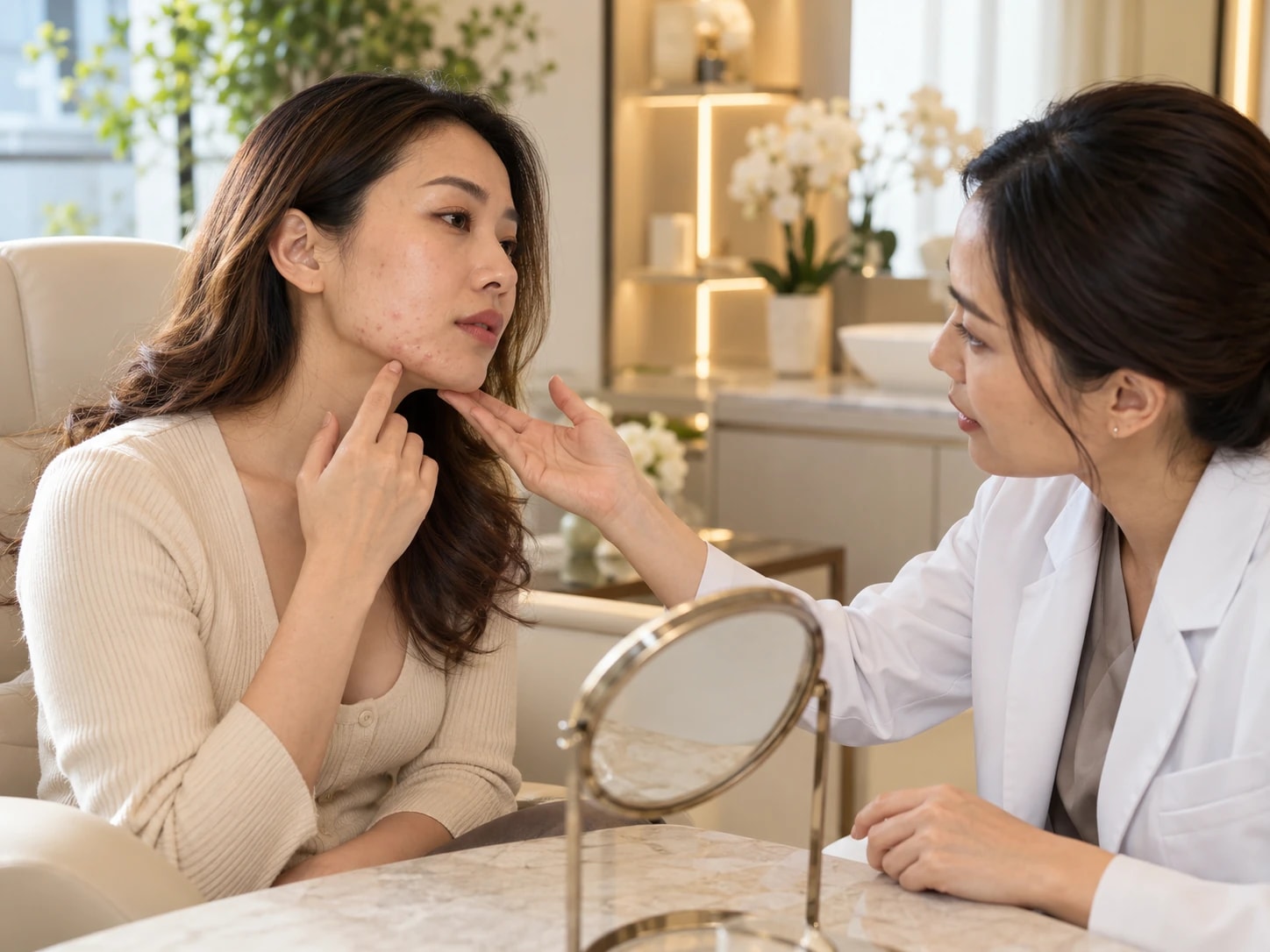
Adult acne
Finding the cause
It is true that adult acne differs significantly from teenage acne in both presentation and optimal treatment, which is why treating it as the latter is not always effective.
Whereas the breakouts of the teenage years are likely to be distributed across the T-zone, adult acne is commonly concentrated towards the jawline, chin and lower cheeks, sometimes with a cyclical pattern to their appearance for women, who have begun menstruating. This is due in part to the differing causes of adult and teenage acne, which informs their treatment.
Clinical Note
Adult acne is more often the result of a hormonal imbalance, stress and in some cases PCOS, than the simple increase in oil production associated with puberty. A cyclical pattern to breakouts concentrated on the jawline is indicative of this, and should be treated accordingly.
There are a few distinct characteristics that set adult acne apart from the type seen in teenagers, which have direct implications for their treatment.
It is uncommon for adult acne to have a singular cause, which is part of the reason why the condition can be so perplexing and slow to respond to treatment.
| Cause | Presentation | Consideration |
|---|---|---|
| Hormonal imbalance | Jawline / chin breakouts, cyclical pattern | More common in women, occurring around the menstrual cycle |
| PCOS | Persistent hormonal-related breakouts | Possible combination of additional symptoms |
| Stress | Breakouts flaring up during periods of stress | Cortisol increases oil production |
| Skincare or cosmetics | Breakouts flaring where skincare / cosmetics are applied | Specific product may be aggravating the skin |
| Diet or lifestyle | Varies from person to person | Usually only a contributing factor |
Cause
Hormonal imbalance
Presentation
Jawline / chin breakouts, cyclical pattern
Consideration
More common in women, occurring around the menstrual cycle
Cause
PCOS
Cause
Stress
Cause
Skincare or cosmetics
Cause
Diet or lifestyle
Women with cyclical hormonal-related breakouts, particularly where these occur in tandem with irregular periods, may wish to consider a broader hormonal evaluation, particularly if the condition proves resistant to topical treatments. The same applies to cases where adult acne is persistent and severe, where a more targeted systemic approach may be required to effectively regulate the condition. This is particularly pertinent to women with PCOS, in whom persistent acne, irregular or absent periods and thinning hair can present together.
As skin with adult acne is more tolerant of active ingredients, and the condition has a higher likelihood of presenting with additional concerns, treatment is likely to be more intensive than for teenage acne.
One of the most distinctive characteristics of adult acne is its frequent association with pigmentation concerns, both from the condition itself and from years of cumulative sun exposure. Malaysian skin types are particularly prone to post-inflammatory hyperpigmentation following any inflammatory skin condition, and this risk increases with age, as skin renewal slows.
This is one of the reasons why treatment for adult acne tends to be more intensive than for teenage acne, as it frequently needs to address both active breakouts and any persistent pigmentation or fine lines. The clinic's own research into laser treatments for acne pigmentation specifically in Malaysian skin types is explored in more detail here, and applies to adult acne in particular.
| Factor | Adult Acne | Teenage Acne |
|---|---|---|
| Typical location | Jawline, chin, lower cheeks | T-zone, forehead, nose |
| Common driver | Hormonal imbalance, stress, PCOS | Pubertal hormone surge |
| Treatment intensity tolerance | Generally higher | More conservative starting point |
| Pigmentation risk | Higher, slower healing | Lower, faster skin turnover |
| Cyclical pattern | Common, especially in women | Less pronounced |
Factor
Typical location
Adult Acne
Jawline, chin, lower cheeks
Teenage Acne
T-zone, forehead, nose
Factor
Common driver
Factor
Treatment intensity tolerance
Factor
Pigmentation risk
Factor
Cyclical pattern
In some cases, adult acne can be an indicator of an underlying health concern, which should be investigated. A few warning signs that acne may be a symptom of a larger issue are as follows:
In these cases, treating the symptoms of acne is unlikely to be sufficient, as the cause of the condition is likely to continue to have an effect on the skin, regardless of topical treatment.
At Nexus Clinic, adult acne assessment looks beyond the skin surface to the potential effects of hormonal imbalance and stress, as well as a patient's current skincare routine, to determine the best course of treatment for their condition.
Adult-onset acne is more common than many are aware, and is often the result of a number of different factors, including hormonal imbalance and changes in skincare products, with very little to do with the pubertal causes of teenage acne.
Yes, in general more intensive due to the increased toleration of active ingredients in adult skin, and the higher likelihood of an underlying hormonal cause being present.
Persistent jawline or chin acne with a cyclical pattern and additional PCOS-related symptoms such as irregular periods can be indicative of this condition, and should be investigated as such.
As skin renewal slows with age, post-inflammatory marks from adult acne take longer to clear than they would have at a younger age.
While stress is unlikely to be the sole cause of adult acne, it can contribute to breakouts through an increase in cortisol production.
Generally these are addressed sequentially, with active acne being controlled before a dedicated treatment course for scarring is commenced.
Adult acne rarely responds to guesswork and has more potential underlying causes than most are likely to be aware of. A proper assessment considers the full picture before recommending a course of treatment. Book a consultation at Nexus Clinic KL, or message us on WhatsApp to find out what's driving your adult acne.
✓ Reviewed by Dr. Preetha Nair, Aesthetic Medical Doctor at Nexus Clinic KL
Real Google reviews from patients who came to Nexus Clinic for acne treatment.
Guides and answers from our doctors on this treatment.