
Pico Laser Pigmentation Treatment Malaysia Removing Dark Spots Uneven Tone and Stubborn Marks
That dark spot on your cheek appeared gradually, and now it is the first thing you notice every time you look in the mirror. The post-acne marks you assumed would fade on their own are still there, two years later. And the uneven skin tone that makes full-coverage foundation a daily necessity? Skincare alone is not going to shift it.
Pigmentation that sits deep in the skin needs something that reaches that depth. Pico laser works because it delivers energy in trillionths of a second, directly targeting melanin clusters without the heat damage that creates new pigmentation problems. At Nexus Clinic KL, we start every pigmentation case with a proper assessment because not all dark spots are the same type and not all of them respond to the same approach.
Important Clinical Note
Over 5,000 Aesthetic Procedures Completed. Our doctors are trained in Southeast Asian skin physiology and the calibration of picosecond laser parameters for Fitzpatrick III to V patients.
Wavelength-Calibrated
755nm • 1064nm • 532nm Selected Per Concern
Pico Laser Pigmentation Treatment at Nexus Clinic KL at a Glance
Everything you need to know before booking
Treatment
Spot Mode for individual lesions; Toning for diffuse pigment; wavelengths matched to depth
Session Time
20 to 40 minutes including topical numbing
Downtime
Minimal; pigment may darken 3 to 7 days before shedding
Sessions Required
1 to 3 for sunspots; 4 to 6 for PIH; 6 to 10 for ABNOM
Pico laser fragments melanin clusters through photoacoustic pressure. There is no surface burn, which is why it is the lowest-PIH-risk option for Malaysian skin compared with older Q-switched lasers. Your doctor maps which type of pigmentation you have before any laser is used.
The Different Types of Pigmentation Pico Laser Treats
This matters more than most clinics let on. Treating the wrong type of pigmentation with the wrong wavelength produces minimal results and occasionally makes things worse.
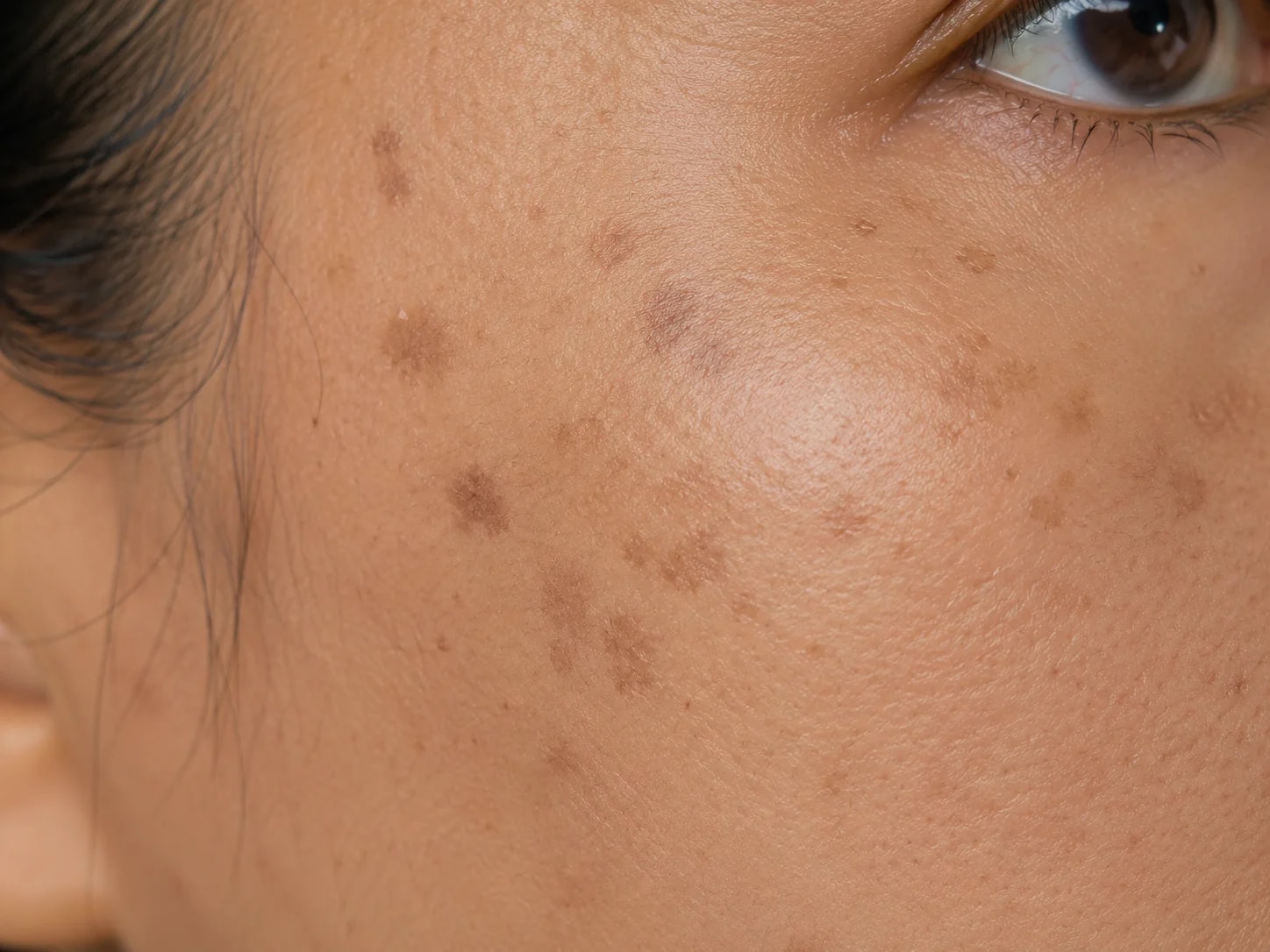
Sunspots and age spots are flat brown marks from cumulative UV exposure, mostly epidermal, very common across Malaysian cheeks, temples, and the backs of hands. Post-inflammatory hyperpigmentation (PIH) is the dark mark left behind after acne, eczema or any skin injury. Freckles are genetically predisposed and UV-activated.
Melasma is hormonal pigmentation with epidermal and dermal components,more complex, more prone to recurrence and extremely heat-sensitive. ABNOM and Hori's nevus are acquired deep dermal pigmentation unique to Asian skin, appearing as bilateral bluish-grey patches on the cheekbones and temples. They require the deepest penetrating wavelength.
Your doctor maps which type you have, how deep it sits, and whether there are multiple types in the same area, all before any laser is used.
How Pico Laser Targets Different Pigmentation Types
Wavelength selection per depth
The effectiveness of pico laser for pigmentation comes down to wavelength selection. Each wavelength penetrates to a different depth and is absorbed at different rates. Using the wrong wavelength does not just reduce results. It misses the target entirely.
The 755nm wavelength has the highest melanin absorption and penetrates from the epidermis into the superficial dermis. It is the workhorse wavelength for sunspots, freckles, and mild epidermal pigmentation in Fitzpatrick III to IV skin.
The 1064nm wavelength penetrates deep into the dermis and has lower surface melanin absorption, which means it bypasses the epidermis and targets dermal pigmentation directly. It is used for deep melasma, ABNOM, and Hori's nevus. It is also the safest wavelength for darker Fitzpatrick Types IV to V.
The 532nm wavelength targets red and orange pigmentation including vascular marks and red post-acne spots. It carries a higher PIH risk in darker skin and is used selectively and conservatively.
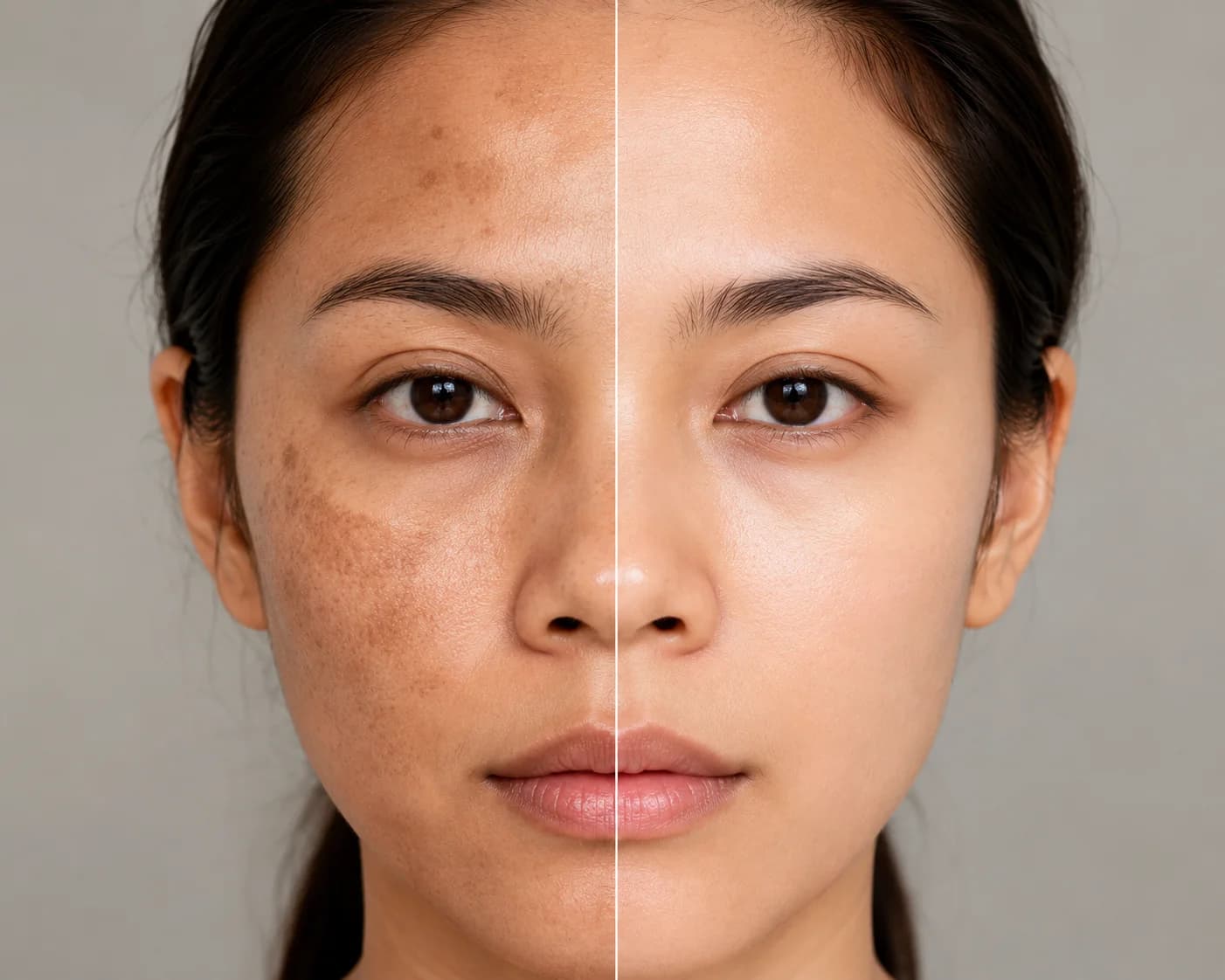
Patients managing hormonal pigmentation primarily can find the specific long-term protocol in our Melasma Treatment Malaysia guide.
Session by Session: What Actually Happens
Session One
Treated spots typically appear darker for three to seven days. This is fragmented melanin rising toward the skin surface before the body clears it. The spots then shed naturally. Most patients notice the skin looks marginally brighter even before the spots are fully gone.
Sessions Two to Three
Visible lightening that people around you start to notice. The overall skin tone evens out. Patients frequently report that foundation sits better and coverage requirements reduce.
Sessions Four to Six
For PIH, meaningful clearing typically takes four to six sessions because the melanin sits at mixed depths. Superficial sunspots often clear in one to three sessions. Deep ABNOM can take six to ten sessions or more.
Maintenance
Once cleared, SPF50 every morning and reapplication every two hours outdoors prevents new deposits forming. For PIH from acne, controlling the underlying acne is what prevents new marks from appearing.
Pico Laser Pigmentation Treatment Price at Nexus Clinic KL
Multi-session package pricing available
| Treatment / Option | Area | Unit / Duration | Normal Price RM | Selling Price RM | Promo Price RM | Package / Notes |
|---|---|---|---|---|---|---|
| Discovery PICO Rejuvenation | Face | Per session (1h 15m inc. numbing) | RM1,500 | RM1,200 | NIL | Standard pigmentation treatment |
| Brightening Laser Curas Package | Face | Full treatment course (1h 45m) | RM1,398 | RM846 | NIL | Brightening protocol incorporating Pico |
| Free Consultation | Includes Wood's lamp / pigmentation mapping | Single visit | RM0 | RM0 | NIL | Required before first session |
Treatment / Option
Discovery PICO Rejuvenation
Area
Face
Unit / Duration
Per session (1h 15m inc. numbing)
Normal Price RM
RM1,500
Selling Price RM
RM1,200
Promo Price RM
NIL
Package / Notes
Standard pigmentation treatment
Treatment / Option
Brightening Laser Curas Package
Treatment / Option
Free Consultation
Pico Laser Pigmentation Side Effects and Aftercare
Common Expected Side Effects
- Treated spots darken for 3 to 7 days before flaking off
- Mild redness for several hours after Toning mode
- Possible pinpoint crusting that resolves in 5 to 7 days
- Temporary skin dryness as cell turnover accelerates
Aftercare Instructions
- Do not pick or scrub the darkened spots,let them shed naturally
- SPF50 every morning, reapplied every two hours when outdoors
- Pause retinol, AHA, BHA and physical exfoliants for 5 to 7 days
- Medical-grade vitamin C, kojic acid combinations and niacinamide between sessions amplify results
- Avoid aggressive exfoliation, back-to-back high-intensity treatments and heat exposure during the course
Who Pico Laser for Pigmentation Is For (And Who Should Pause)
You are a good candidate if:
- You have sunspots, freckles, age spots, PIH or ABNOM
- You want overall skin brightening with minimal downtime
- You have darker skin and want a laser with low PIH risk
- You have failed to see lasting results from topical brightening creams
You may need to pause or adjust if:
- You are pregnant or breastfeeding
- You have active skin infection, severe acne inflammation or open wounds
- You have taken isotretinoin within the past 6 months
- Your primary concern is melasma,covered in a dedicated protocol
Frequently Asked Questions
Pico laser permanently destroys the melanin clusters it targets. New pigmentation can form if UV exposure, hormonal changes, or skin inflammation continue to trigger melanin production. Sun protection post-treatment is the single most important step in keeping cleared areas clear.
Superficial sunspots typically clear in 1 to 3 sessions. PIH from acne usually needs 4 to 6 sessions. Deeper conditions like ABNOM or dermal melasma can require 6 to 10 sessions. Your doctor will give you a realistic session estimate after assessing the type and depth of your pigmentation.
If settings are too aggressive for your skin type, PIH can result. At Nexus Clinic KL, this is addressed through conservative settings, correct wavelength selection, and protocols calibrated for Malaysian Fitzpatrick Types. The temporary darkening you see in the days after a session is normal frosting, not worsening of your condition.
IPL uses broad-spectrum light and a heat-based mechanism. It carries higher PIH risk in darker skin types and cannot target specific pigment depths precisely. Pico laser uses targeted wavelengths with a pressure-based mechanism that produces more precise results with a significantly lower PIH risk profile for Malaysian skin tones.
Yes. The 1064nm wavelength is specifically chosen for darker skin tones because it bypasses surface melanin and delivers energy at depth with minimal surface heat. Conservative energy levels and appropriate session spacing are standard for Fitzpatrick IV to V patients.
Yes. When different pigmentation types exist in the same area, your doctor uses a combination of wavelengths and settings to address each one. PIH from acne and UV sunspots in the same zone are both addressable in the same session with appropriate technique.
Superficial sunspots begin visibly clearing within one to two weeks of the first session as the fragmented melanin sheds. Deeper pigmentation types show incremental improvement per session, typically with meaningful visible change appearing after sessions 3 to 4.
Complete avoidance is impractical for most Malaysians. What is non-negotiable is SPF50 every morning and reapplication every two hours when outdoors. Sun exposure without protection during a treatment course significantly reduces results and increases PIH risk.
After general toning mode sessions, makeup can typically be worn the next day. After spot mode sessions targeting individual lesions at higher fluence, your doctor will advise the appropriate window based on how your skin responds. For some patients this is 24 hours, for others slightly longer.
Yes. Pico laser treats pigmentation on the neck, chest, hands, forearms, and body effectively. Energy settings are adjusted for different areas and skin thicknesses. Body pigmentation treatment is available at Nexus Clinic KL.
Right Diagnosis. Right Wavelength. Right Result.
Getting the right result from pigmentation treatment starts with getting the right diagnosis. Book a consultation at Nexus Clinic KL and walk away knowing exactly what type of pigmentation you have, what will shift it, and how many sessions are realistic for your skin.
Limited slots available this week | Located at Wisma UOA II, Jalan Pinang, KLCC — Serving Malaysia since 2001