
Pico Laser Tattoo Removal Malaysia Remove All Ink Colours with Minimal Scarring
Tattoo regret is more common than anyone admits. Whether it is a name that no longer makes sense, a design that belonged to a different version of you, or simply work that was not done well enough to keep, the ink is in the dermis and it stays there until something effective reaches it.
Pico laser tattoo removal in Malaysia is the most effective method currently available. The ultra-short picosecond pulses shatter tattoo ink into particles fine enough for the immune system to clear completely, and it does this significantly faster and with less damage to surrounding tissue than older Q-switch laser methods.
Important Clinical Note
Over 5,000 Aesthetic Procedures Completed. Black ink, coloured ink, and resistant tattoos that did not fully clear with previous treatments.
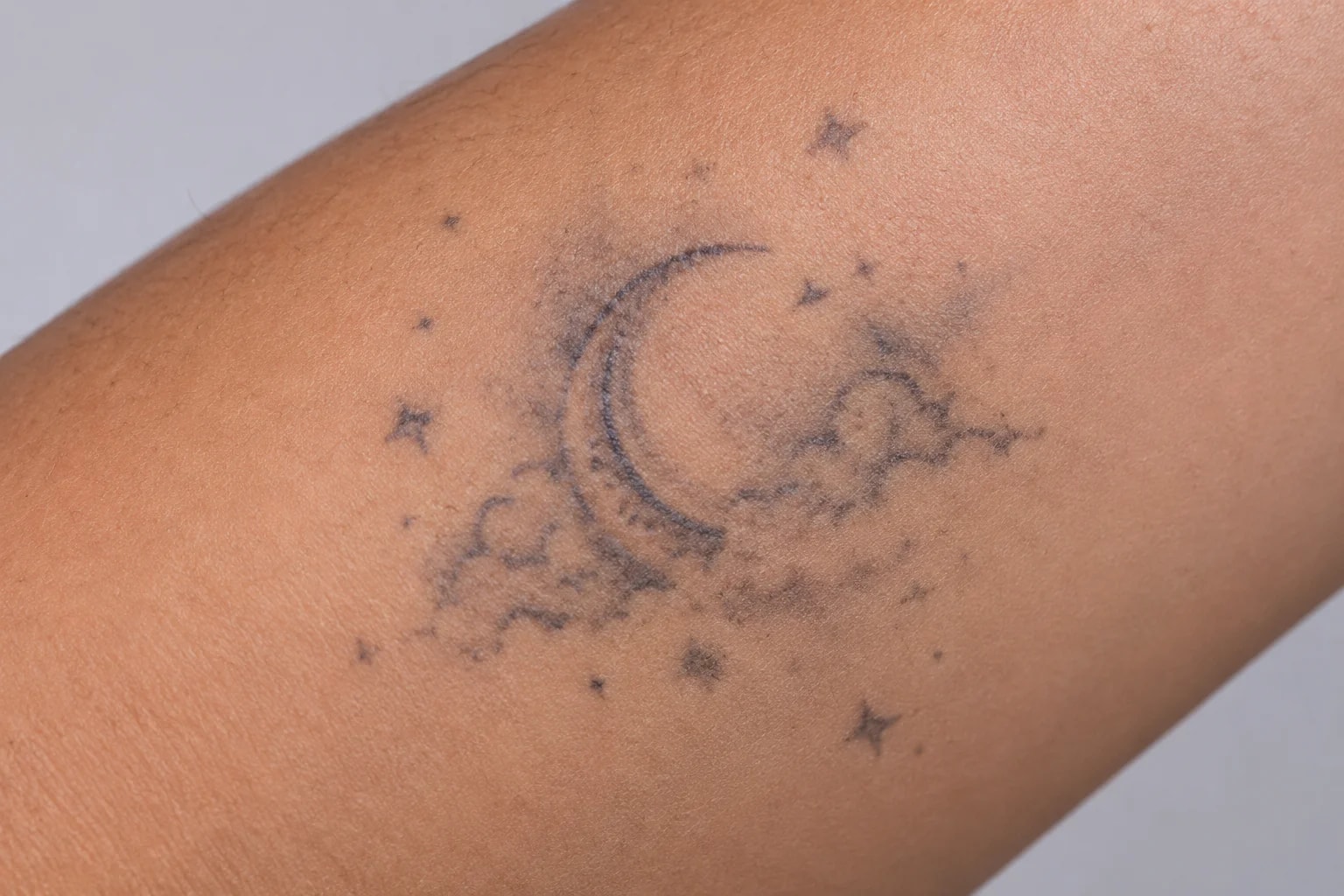
Multi-Wavelength Approach
1064nm • 755nm • 532nm Across Ink Colours
Pico Laser Tattoo Removal at Nexus Clinic KL at a Glance
Everything you need to know before starting
Treatment
Multi-wavelength Pico Laser: 1064nm, 755nm, 532nm per ink colour
Session Time
30 minutes to 2 hours depending on tattoo size
Downtime
1 to 2 weeks healing; occasional mild blistering
Sessions Required
4 to 10+ sessions spaced 6 to 8 weeks apart
Pico laser shatters tattoo ink into dust-sized fragments through photoacoustic pressure. The immune system clears them naturally over 6 to 8 weeks between sessions. Multi-colour tattoos require multiple wavelengths in the same session or across sessions.
Why Tattoo Ink Is So Hard to Remove
Tattoo ink sits in the dermis. That is the second layer of skin, below the epidermis you can see and touch. It was placed there deliberately, deep enough to be permanent, and the particles are too large for the immune system to recognise and clear on its own.
When a laser hits the ink, it shatters the particles into smaller pieces. If those pieces are small enough, the immune system treats them as foreign material and removes them through the lymphatic system. The problem with older lasers was that they broke the particles into pieces that were still too large for efficient immune clearance. Multiple sessions produced frustratingly slow fading. High heat from the photothermal mechanism also caused significant skin damage in the surrounding tissue.
Pico laser changes this because the ultra-short pulse duration creates a photoacoustic effect that shatters ink into dust-sized fragments. Immune clearance is much more efficient. Fading per session is faster. The surrounding tissue sustains significantly less collateral damage.
Which Ink Colours Pico Laser Can Remove
Multi-wavelength per colour
Not all ink responds to the same wavelength. Colour matters when planning tattoo removal, and using the wrong wavelength on a given colour produces little result. At Nexus Clinic KL, we use a multi-wavelength approach that addresses the full range of ink colours.
Black and dark grey ink responds to 1064nm wavelength. The most commonly removed colour, usually showing the fastest clearance per session. Blue and green ink responds to 755nm wavelength with intermediate clearance speed.
Red, orange, and yellow ink responds to 532nm wavelength. Warm colours are historically the hardest to clear. Pico laser at 532nm is significantly more effective than Q-switch for these. Purple and violet ink is typically treated with a combination of 1064nm and 532nm wavelengths.
Multi-coloured tattoos require multiple wavelengths in the same session or across sessions. Your doctor maps the colours at consultation and designs the wavelength sequence to address all of them.
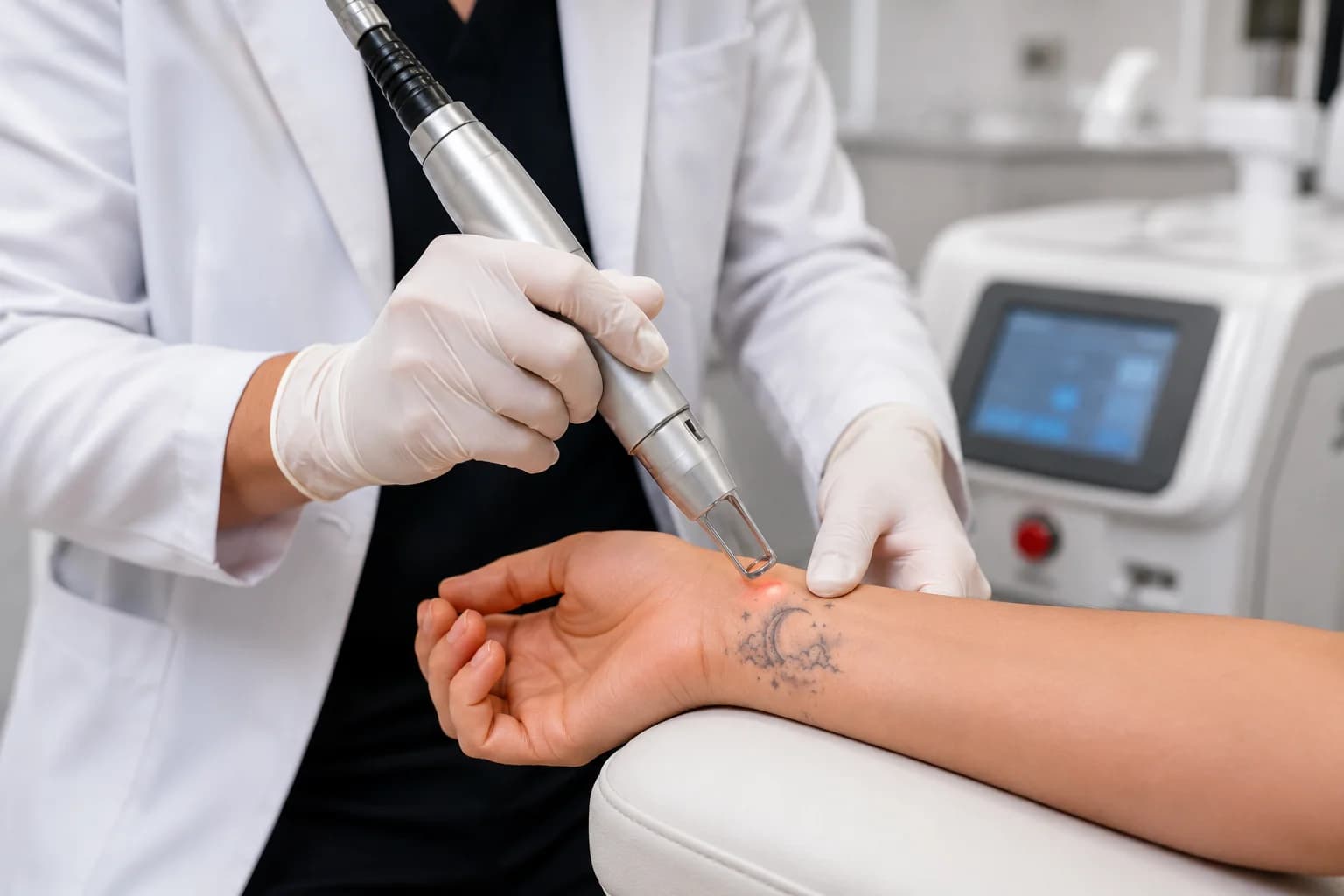
For tattoos with significant scarring from previous laser sessions, combining pico laser removal with fractional laser resurfacing can address both remaining ink and textural damage simultaneously.
What Pico Laser Tattoo Removal Feels Like and What to Expect
Immediately After the Session
Numbing cream is applied for 20 to 30 minutes before every session. The treatment feels like fast rubber band snaps. Immediately after, the skin around the tattoo appears red and mildly swollen. A frosting white effect may be visible on the tattoo surface,a normal immediate response.
Between Sessions
In the weeks after each session, the tattoo progressively fades. The fading is not uniform. Some areas clear faster than others. Lines and edges may fade before filled areas because they have less ink density. By six to eight weeks after a session, the cumulative clearance is visible before the next treatment begins.
Realistic Session Count
A small single-colour black tattoo from a professional artist may fade completely in four to six sessions. A large multi-colour sleeve from multiple artists with layers of ink can take ten sessions or more. Variables include tattoo age, ink density, body location, skin tone, and ink quality.
After the Final Session
Pico laser typically achieves equivalent ink clearance in fewer total sessions compared to Q-switch. For patients who plateaued with Q-switch removal, pico laser frequently produces further clearance because shorter pulses can shatter residual particles Q-switch could not fragment fully.
Pico Laser Tattoo Removal Price at Nexus Clinic KL
Pricing assessed at consultation,depends on size, colour, and session count
| Treatment / Option | Area | Unit / Duration | Normal Price RM | Selling Price RM | Promo Price RM | Package / Notes |
|---|---|---|---|---|---|---|
| Discovery PICO Tattoo Removal | Body | Per session (1h 15m inc. numbing) | POA | POA | NIL | Assessed at consultation |
| Free Consultation & Removal Plan | Tattoo assessment + session count estimate | Single visit | RM0 | RM0 | NIL | Required before first session |
Treatment / Option
Discovery PICO Tattoo Removal
Area
Body
Unit / Duration
Per session (1h 15m inc. numbing)
Normal Price RM
POA
Selling Price RM
POA
Promo Price RM
NIL
Package / Notes
Assessed at consultation
Treatment / Option
Free Consultation & Removal Plan
Aftercare After Pico Laser Tattoo Removal Sessions
Common Expected Side Effects
- Redness and mild swelling around tattoo for several days
- Frosting white effect on tattoo surface immediately after,fades within hours
- Possible mild blistering in some patients (normal tissue response)
- Mild scabbing or crusting over treated area for up to 2 weeks
Aftercare Instructions
- Keep treated area clean, covered with thin layer of medical-grade barrier ointment for first 48 hours
- Avoid submerging the area in water,no swimming, open water, or prolonged showering for first week
- Avoid sun exposure throughout removal course; SPF50 on the area if sun-exposed
- Do not pick or scratch the area during the healing phase
- Blisters should be left to resolve naturally,picking increases infection risk and scarring
Who Is Suitable for Pico Laser Tattoo Removal
You are a good candidate if:
- Black, coloured, or mixed-ink tattoos seeking full or partial removal
- Tattoos that plateaued with previous Q-switch treatment
- Cosmetic micropigmentation that needs to be removed
- Patients willing to commit to 6 to 8 week intervals between sessions
You may need to pause or adjust if:
- Fresh tattoo less than 6 to 8 weeks old,skin needs to fully heal first
- Active skin infection in the tattoo area
- Pregnant or breastfeeding
- History of keloid scarring (requires careful planning)
Frequently Asked Questions
Session count depends on tattoo size, ink colours, density, age, and location. A small black tattoo may clear in 4 to 6 sessions. A large multi-colour tattoo may require 10 or more. Sessions are spaced 6 to 8 weeks apart. Your doctor will give you a realistic estimate at consultation after assessing all variables.
Pico laser is the most effective method currently available for multi-colour tattoo removal. Black and dark inks respond best. Blue and green respond well to 755nm. Red, orange, and yellow respond to 532nm and are historically the hardest colours to clear but respond better to pico than to Q-switch. Complete clearance of all colours is possible but varies by tattoo and patient.
Yes. Pico laser outperforms Q-switch laser in fragmentation efficiency and tissue damage profile. The shorter pulse duration shatters ink into finer particles for faster immune clearance and fewer total sessions. It is the current gold standard for tattoo removal.
Numbing cream is applied before every session. The sensation is typically described as fast rubber band snaps. Most patients find it manageable with adequate numbing. Body areas with thinner skin or bony surfaces tend to be more sensitive than fleshier areas.
When performed correctly at the right settings and with proper aftercare, pico laser does not cause scarring. The photoacoustic mechanism minimises thermal damage to surrounding tissue. The risk of scarring increases if blisters are picked, the area is exposed to infection, or settings are too aggressive for the skin type. Your doctor at Nexus Clinic KL calibrates settings to minimise this risk.
Yes. Pico laser can continue treatment on tattoos that reached a plateau with Q-switch. The shorter pulse duration fragments residual ink particles that Q-switch could not fully shatter. Many patients who felt stuck with a partially faded tattoo after Q-switch see further meaningful clearance with pico laser.
Six to eight weeks minimum between sessions. This is the time needed for the immune system to fully clear the fragmented ink from the previous session. Starting a new session before this clearance is complete is counterproductive.
Black ink responds best to pico laser. Complete clearance is achievable for most black ink tattoos, though session count varies by density, depth, and the type of ink used. Professional tattoos are typically applied deeper and more densely than amateur tattoos and may need more sessions.
Temporary hyperpigmentation can occur in the treated area, particularly in darker skin tones. At Nexus Clinic KL, settings are calibrated to minimise this risk. Consistent SPF50 use on the treated area throughout the removal course significantly reduces hyperpigmentation risk.
Waiting at least 6 to 8 weeks after getting a tattoo before starting removal is recommended. The skin needs to fully heal from the tattooing process first. For fresh tattoos, starting removal immediately increases inflammation risk and reduces the effectiveness of the first session.
Tattoo Removal Is a Commitment of Time
Book a free consultation at Nexus Clinic KL to get a clear session plan and realistic timeline for your specific tattoo before starting any treatment.
Limited slots available this week | Located at Wisma UOA II, Jalan Pinang, KLCC — Serving Malaysia since 2001