 Hair Treatment
Top Myths About PRP Hair Treatment in Malaysia That Are Keeping You From Getting Results
10 min read


Medically reviewed by Dr. Ashvinia Bala, MBBS (AIMST University), MMC Registration No. 82489 | Last reviewed:
Hair treatments, regenerative in particular, have come a long way since the introduction of PRP hair treatment several years ago, and one of the most commonly asked comparisons is between this and exosomes. Both of these treatments fall under the umbrella of regenerative medicine and work in a similar way, by delivering biological signals to the hair follicles, but the similarities end there.
PRP or exosomes?
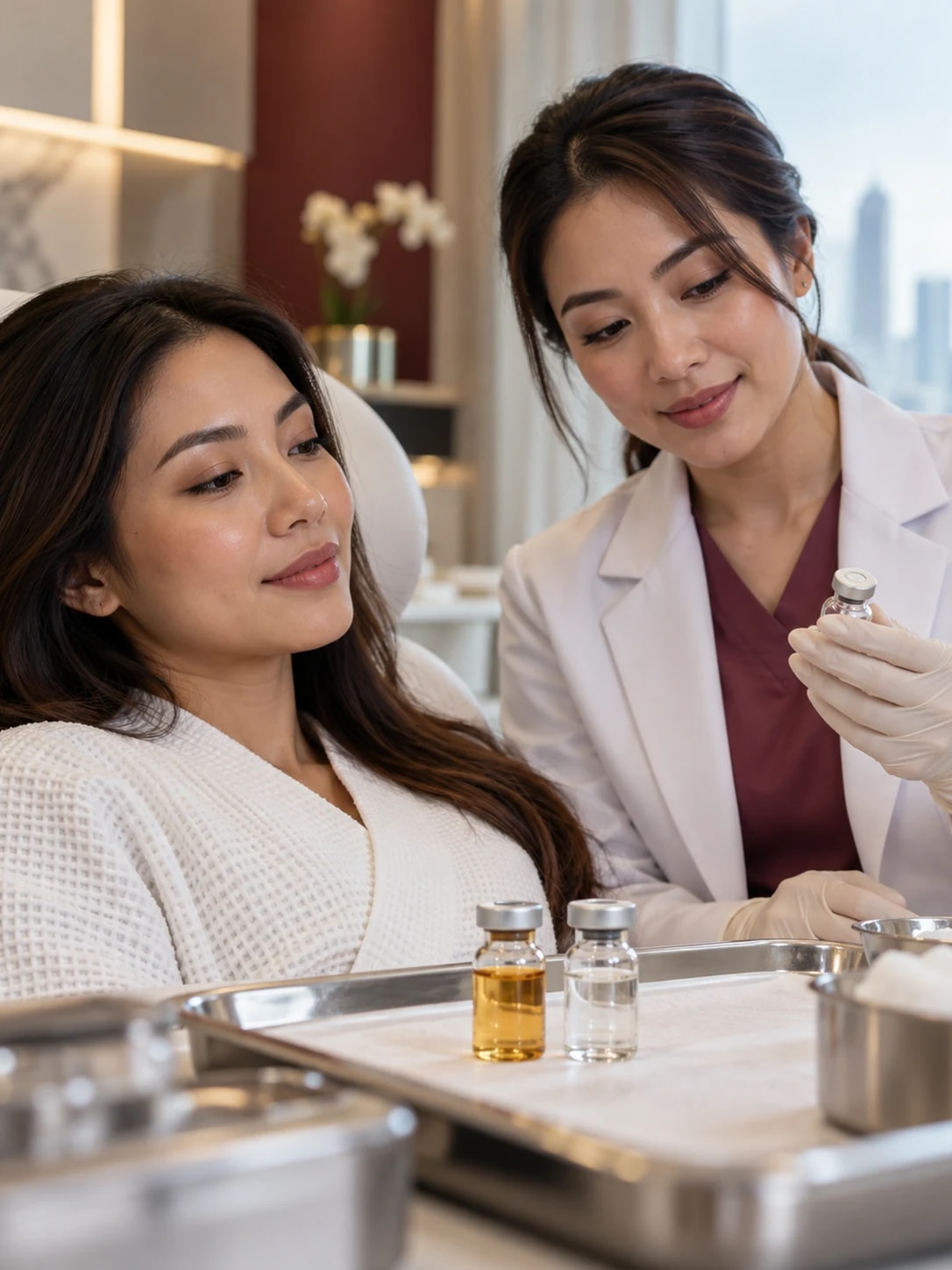
Two regenerative options
On a fundamental level, the biggest difference between PRP and exosome hair treatments is that the former contains concentrated growth factors, obtained from the patient's own blood, while the latter is made from stem cells. This has a downstream effect on their safety profile, mechanism of action, and target audience.
Clinical Note
Both PRP and exosomes hair treatments are generally safe, but for PRP one of the advantages is that because it is derived from your own blood, there is no risk of an adverse immune reaction. With exosomes, make sure the clinic can provide information on the source of theirs, as well as any regulatory approvals.
| Aspect | PRP | Exosomes |
|---|---|---|
| Source | Patient's own blood | Lab-cultured mesenchymal stem cells |
| What's delivered | Concentrated platelets and growth factors | Cell-free vesicles with proteins, mRNA and signalling molecules |
| Mechanism | Broad, general tissue repair signal | More specific, targeted signalling |
| Immune reaction risk | Essentially none | Low |
| Evidence base | Well-established, multiple randomised controlled trials | Growing, but still an emerging treatment |
| Typical sessions needed | 4 to 6 sessions | Often fewer sessions reported in early studies |
Aspect
Source
PRP
Patient's own blood
Exosomes
Lab-cultured mesenchymal stem cells
Aspect
What's delivered
Aspect
Mechanism
Aspect
Immune reaction risk
Aspect
Evidence base
Aspect
Typical sessions needed
Dermatologists sometimes note that while PRP provides a broad signal to stimulate healing, Exosome hair treatment can be a more specific and concentrated form of the same treatment. Both of them target the dermal papilla, a structure on the base of the follicle that controls its function. The mechanism of action is different in these treatments, however, as exosomes do not require live cells to deliver their cargo, they are delivered directly to the cell.
To provide a balanced view, it is worth briefly recapping the current evidence base for both treatments.
As mentioned, PRP has been around for longer and has a more developed evidence base, with numerous studies, including randomised controlled trials, published in the past decade. Exosome therapy is an emerging area of research and while some of the early studies are also positive about its efficacy in hair restoration, they tend to be smaller and less rigorous.
Clinical Note
While both PRP and exosomes hair treatments are generally well-tolerated and only require a few sessions, keep in mind that the two treatments have different indications and are appropriate in different stages of hair loss.
There are no hard and fast rules, but when it comes to the choice between PRP and exosomes, there are certain trends that can be observed.
Exosome therapy is often considered an appropriate next step for patients who have had limited improvement with PRP.
In many ways, this decision is similar to the choice between PRP and surgery, in both cases, the recommendation is based primarily on the patient's current condition rather than a preference for one type of intervention.
Just as with PRP versus surgery, comparing these two regenerative treatments in isolation does not take into account the possibility of combining them.
It is not uncommon for practitioners to recommend exosomes as an additional step for patients who have had limited improvement with PRP. In these situations, exosomes act as a supplement to the main treatment.
PRP can be used as a foundation and exosomes added on top of it as an additional step, or the two can be combined into a single integrated protocol. This option is also sometimes seen in patients having had a hair transplant, as both treatments support the healing process and the survival of the grafts. Patients with diffuse hair loss who also have other conditions affecting the scalp often combine these two treatments with mesotherapy to deliver additional nutrients to the follicles.
The difference in cost and the number of sessions needed for these two treatments is also worth discussing, as it may impact the choice between them.
| Factor | PRP | Exosome Therapy |
|---|---|---|
| Per-session cost | Generally lower | Typically higher |
| Number of sessions in a course | 4 to 6 | Often fewer, sometimes 2 to 4 |
| Maintenance | Every 3 to 6 months | Varies, but often about the same |
Factor
Per-session cost
PRP
Generally lower
Exosome Therapy
Typically higher
Factor
Number of sessions in a course
Factor
Maintenance
While a lower number of sessions for exosome therapy can be seen as a plus, it is important to consider the overall cost of the treatment course rather than the per-session price.
As part of our treatment design, we will always recommend either PRP or exosomes, based on a realistic assessment of the patient's scalp condition, rather than pushing either of these treatments. Here is how we evaluate the options:
Not necessarily. Exosomes appear to be a promising treatment with a mechanism of action that is somewhat more targeted than that of PRP, but the latter has a more extensive evidence base to support its use in hair restoration.
Yes, in fact, this is one of the most common reasons for considering exosomes, specifically, for more advanced cases of thinning that have not responded to PRP.
Generally speaking, yes, but because exosomes are derived from stem cells rather than being autologous, their source and regulation are important considerations.
Some practitioners use exosomes as an additional step within a PRP regime, for patients who have had only partial improvement with the former.
The derivation of exosomes from mesenchymal stem cells involves additional laboratory work, which contributes to the cost of this procedure.
Overall, both of these hair treatments have their time and place, but the choice between them depends on the patient's stage of hair loss, history with similar interventions, and the evidence for their use in a given situation. An honest assessment of one's scalp condition is what ultimately informs this recommendation, rather than following trends among those who have had similar concerns. Book a free consultation at Nexus Clinic KL to learn which of these treatments is appropriate for your condition, or contact us on WhatsApp to ask any questions prior to scheduling.
✓ Reviewed by Dr. Ashvinia Bala, Aesthetic Medical Doctor at Nexus Clinic KL.
Real Google reviews from our patients, including those treated for PRP hair treatment.
Guides and answers from our doctors on this treatment.