 Hair Treatment
Hair Transplant Cost in Malaysia and 18 Things You Should Never Do After Getting One
11 min read


Medically reviewed by Dr. Ashvinia Bala, MBBS (AIMST University), MMC Registration No. 82489 | Last reviewed:
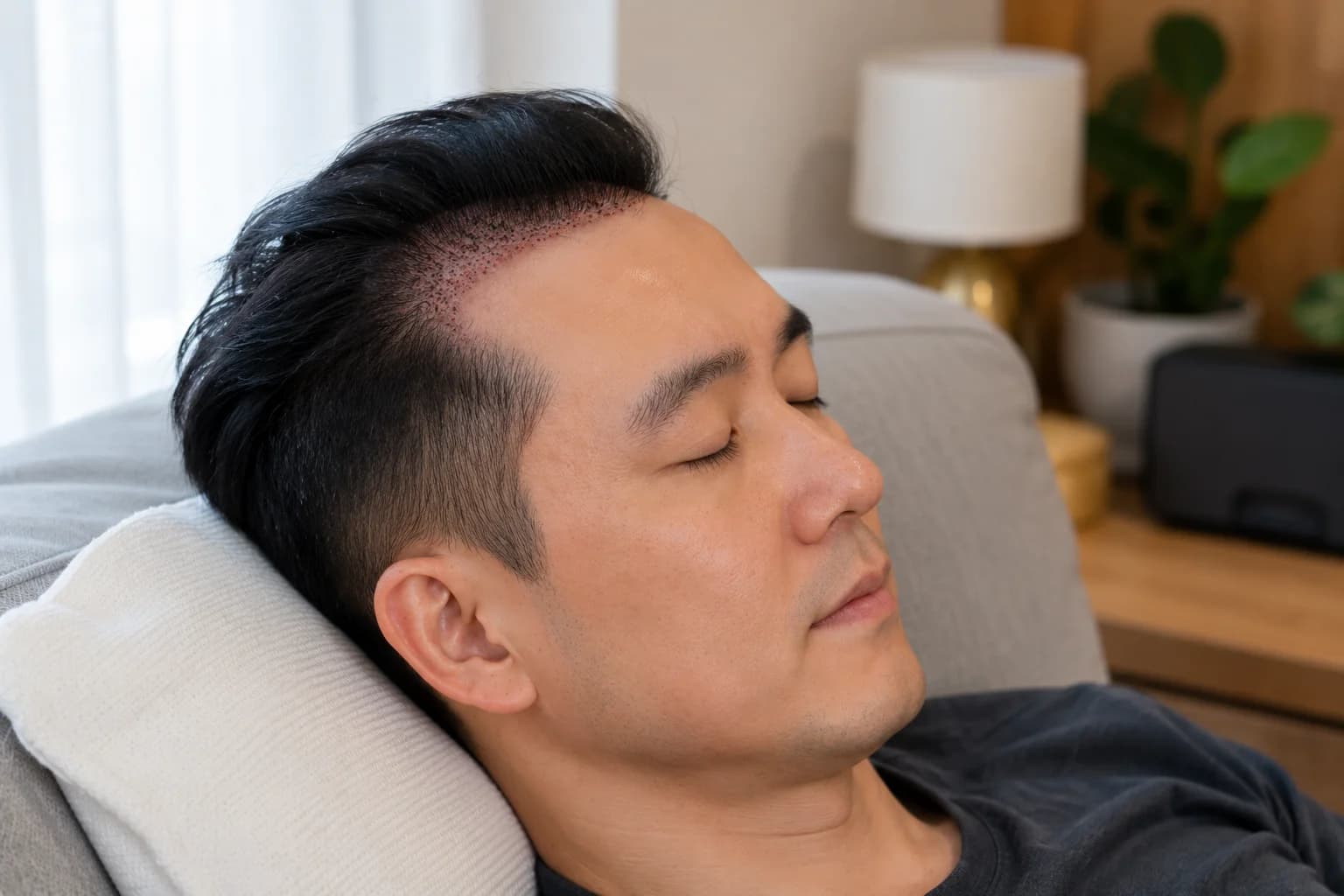
Most before and after photos of hair transplants reveal a lot less information than you may think. A thick, full head of hair in the after photo means little if the month of surgery isn't stated, the number of grafts that went into making that result aren't disclosed, or the lighting and length of hair in the 'after' photo aren't comparable to the 'before' photo. To read realistic results for a procedure in Malaysia beforehand, photos are only as informative as you know how to interpret them.
Realistic Results
Month by month
Important Clinical Note
Results shown in any hair transplant gallery, including our own, vary from patient to patient based on donor hair quality, graft survival, and individual healing. At Nexus Clinic KL, we discuss realistic outcomes for your specific case during consultation rather than guaranteeing results based on another patient's photos.
A transplant done at month 3 with an after photo taken at month 12 is, as far as the results gallery is concerned, the same procedure as a month 3 transplant with a month 3 after photo. Growth is non-linear, and a clinic that only showcases its best cases at their most developed stage is only showing a skewed version of what to expect when results mature.
Before consulting any gallery, look for the following details:
Getting an understanding of what's happening between the day of surgery and full maturity of your results is useful in determining if the 'after' photo you're looking at is a snapshot of early growth or the final destination.
| Timeframe | What Happens | What You'll See |
|---|---|---|
| Day 0 to 14 | The grafts settle into their permanent place on the head | Redness around the follicles and small scabs, the overall look of a freshly 'planted' scalp |
| Weeks 2 to 8 | Shock loss of transplanted hairs | Temporary thinning where the grafts have been placed on the head |
| Months 3 to 4 | The follicles begin a new cycle of growth | Fine wisps of new hairs growing |
| Months 6 to 9 | The hair shaft thickens and density increases | Visible signs of improvement for most people after an FUE hair transplant |
| Months 9 to 12+ | Results mature to a fully thick and healthy density | Results have reached their natural endpoint |
Timeframe
Day 0 to 14
What Happens
The grafts settle into their permanent place on the head
What You'll See
Redness around the follicles and small scabs, the overall look of a freshly 'planted' scalp
Timeframe
Weeks 2 to 8
Timeframe
Months 3 to 4
Timeframe
Months 6 to 9
Timeframe
Months 9 to 12+
A 2-month after photo usually looks worse than the before photo because the in-between stage, often referred to as the shedding phase, is a normal part of the procedure that doesn't reflect a failed treatment. Clinics which only publish at the 12-month mark without showing the earlier months aren't misleading you by stating this fact, but they're also not being honest about the part of the journey that actually takes place.
Photos from other patients are only an example of what is possible. Your own personal journey is dependent on a number of factors unique to your scalp that aren't shown in the gallery you were looking at. A few of the biggest influencers:
Two different patients that received the same graft count can have visibly different results simply because one had a better supply of donor hairs than another.
A popular practice among patients who are looking to schedule a procedure is to base their decision solely on whichever clinic has the most impressive before and after photo. When consulting any gallery, a few practical questions beforehand can ensure you're not misled:
A clinic that is open about the shedding phase and the slower months is more trustworthy than a provider that only shows the end point.
If you're consulting the before and after results as a means of research for moving forward with your own surgery, it helps to understand the cost side of things as well. Our hair transplant price page outlines how graft count and technique can affect your total investment, so that you aren't viewing photos without taking into account what the procedure includes.
If your hair loss is in an early stage, it's always good to confirm whether a surgical procedure is necessary for your current condition. Non-surgical options like PRP hair treatment can sometimes increase density without a transplant, which our hair loss treatment page discusses.
At Nexus Clinic's hair treatments hub, results are discussed honestly during the consultation, including the common shedding phase most patients go through before density takes off. Instead of showing only the most improved final results, our doctors can discuss what your own timeline of healing is likely to be based on your graft count, donor supply, and technique, so that you understand what to expect at every stage instead of being surprised by the in-between months.
This is the shedding or shock loss phase, where the transplanted hairs fall out before growing back. This is a normal and expected part of healing, not a sign of a failed procedure.
Most patients see meaningful density by month 6 to 9, and final, fully matured results are visible between month 9 and 18 depending on individual healing.
Only loosely. Your outcome is dependent on your donor supply, hair loss pattern and graft plan, so galleries are useful but not an exact predictor of your own results.
Not necessarily. FUE, sapphire FUE and DHI can all yield very different visual results, so it's important to check what technique a photo is using if comparing.
Yes, particularly between weeks 2 and 8 during the shedding phase, and again briefly as new growth comes in around month 3 to 4.
Ask about how many months the after photo is of surgery, if the same surgeon performed the procedures shown, and if mid-stage photos are available to review.
No. Donor hair quality, the hairline design, and how density is distributed across the scalp are just as important factors.
Photos only tell part the story - the most accurate representation of your own likely results is determined by a proper scalp assessment. Book a consultation with Nexus Clinic KL through our contact page, or WhatsApp us directly to discuss what results you can realistically expect.
✓ Reviewed by Dr. Ashvinia Bala at Nexus Clinic KL
Real Google reviews from patients who came to Nexus Clinic for hair transplants.
Guides and answers from our doctors on this treatment.
Hair Treatment Hair Transplant
 Hair Treatment