 Hair Treatment
Top Myths About PRP Hair Treatment in Malaysia That Are Keeping You From Getting Results
10 min read


Medically reviewed by Dr. Ashvinia Bala, MBBS (AIMST University), MMC Registration No. 82489 | Last reviewed:
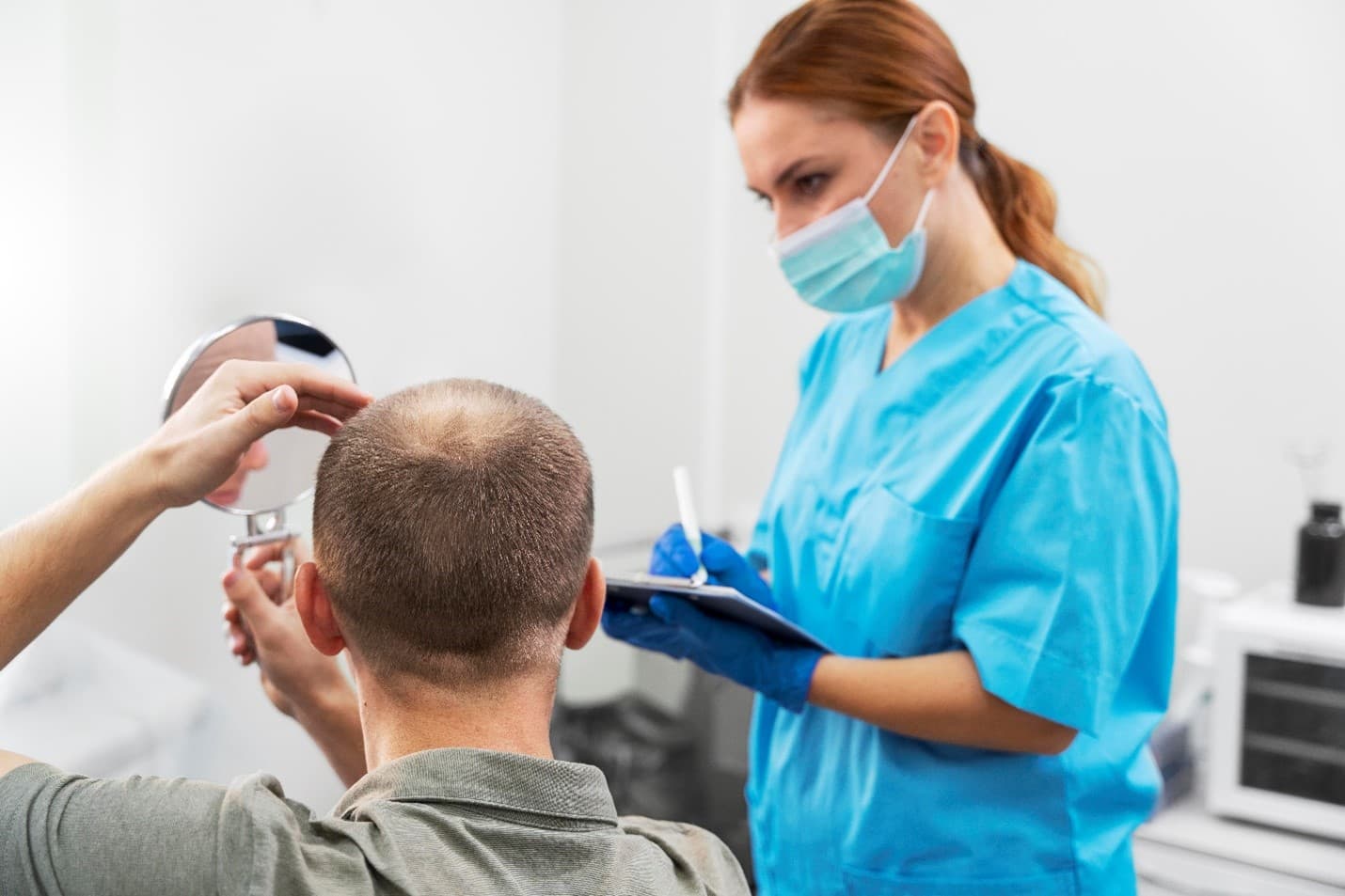
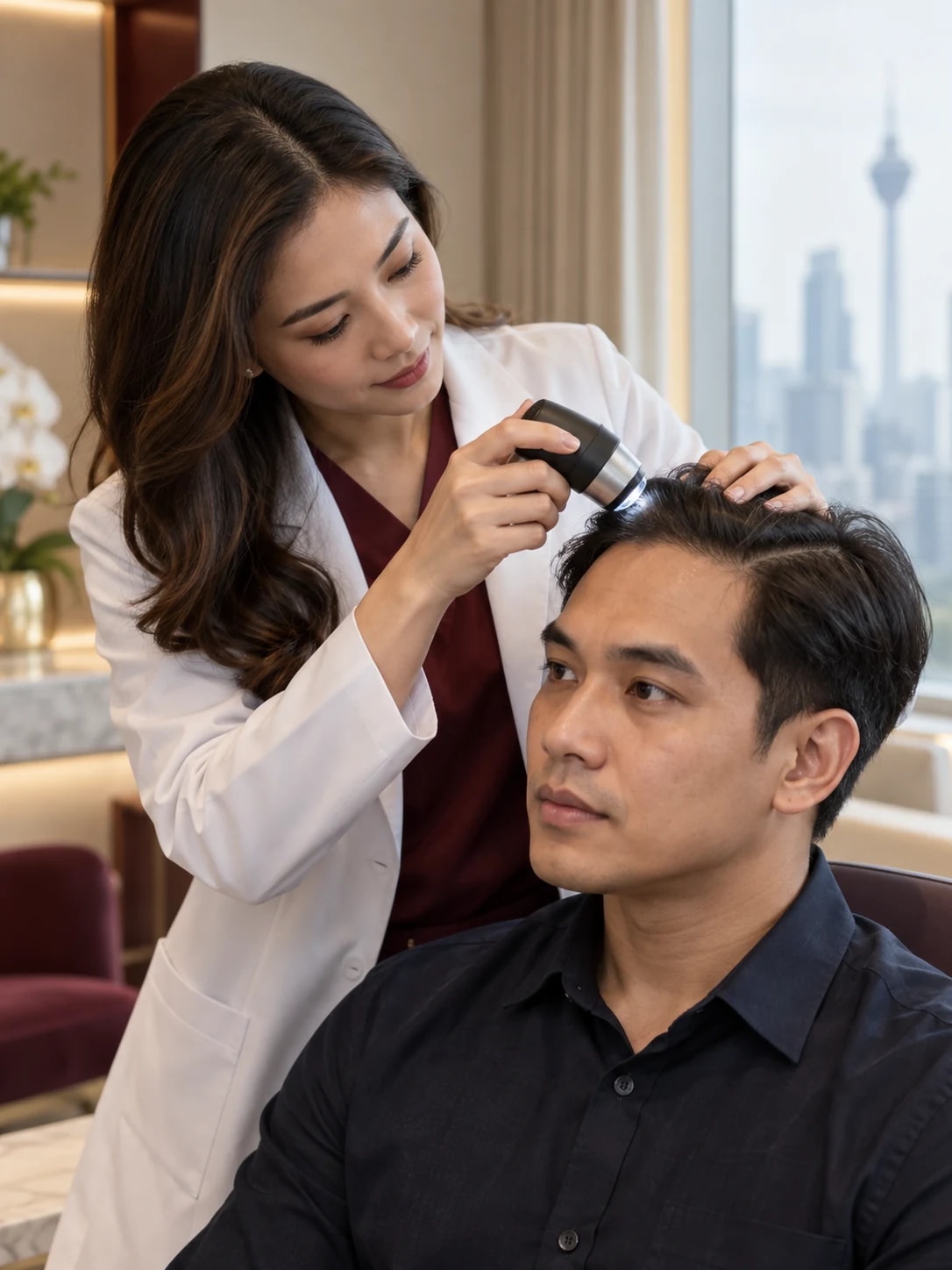
Male pattern hair loss always progresses the same way, so you can tell what stage it's at by looking at the loss along the front edges and the parting in the top. This is helpful for doctors, because they can fairly early identify that a PRP hair treatment will not help or that it could be a useful addition to hair loss therapy.
Norwood staged
Planned by stage, not package
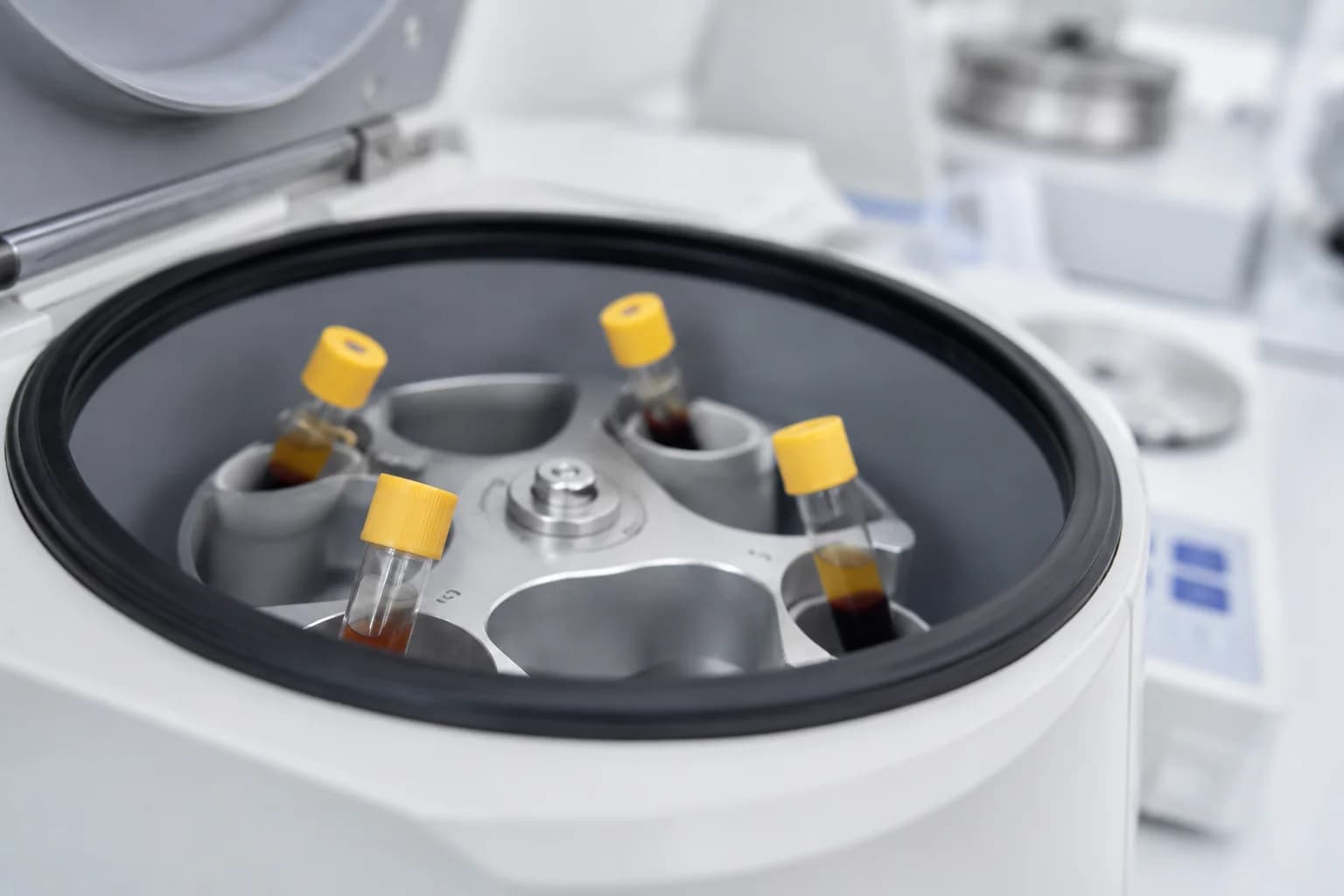
Platelet rich plasma hair treatment works by isolating and concentrating the platelets and growth factors from a man's own blood, and injecting the mixture into the scalp, stimulating weak hair follicles which have been gradually shrinking under the influence of DHT. Androgenic alopecia, the condition responsible for most male hair loss, does not destroy hair follicles, especially in early stages, but causes their miniaturisation. Growth factors are most effective at reversing this process.
Clinical Note
Men with Norwood Stage 1 to 4 tend to respond most consistently well to PRP, as a substantial number of follicles are still present, only weak and underperforming. After that point and beyond, the follicles lost to miniaturisation are no longer available to be reactivated.
Male pattern baldness can be largely driven by a hormone called dihydrotestosterone (DHT), which leads to the gradual miniaturisation of the hair follicles on the hairline and crown while leaving the sides and back of the head unaffected. This is different to female pattern baldness, which is not as localised, and also informs how PRP treatment is administered.
More Malaysian men have been considering PRP as awareness has grown alongside interest in PRP therapy for skin and hair more broadly, with a large number of men coming in at the early stages of spotting thinning which is not yet visibly apparent to the naked eye.
Not every man who comes in for a PRP consultation is at the same starting point, and the stage of hair loss informs what result a person can realistically expect.
| Norwood Stage | Hair Loss Pattern | PRP Response |
|---|---|---|
| Stage 1 to 2 | Very minimal recession at temples | Strong response, likely best candidates |
| Stage 3 | Visible recession on temples, hairline is moving backwards | Good response, likely when combined with medication |
| Stage 3 Vertex | Similar recession on the temples but beginning to affect the crown | Moderate to good response |
| Stage 4 | Very visible recession, loss on the top is considerable | Limited response alone |
| Stage 5 to 7 | Widespread balding, very little hair loss left | PRP alone unlikely to be beneficial, hair transplant becomes more reasonable |
Norwood Stage
Stage 1 to 2
Hair Loss Pattern
Very minimal recession at temples
PRP Response
Strong response, likely best candidates
Norwood Stage
Stage 3
Norwood Stage
Stage 3 Vertex
Norwood Stage
Stage 4
Norwood Stage
Stage 5 to 7
Men are not necessarily ruled out from a PRP session at Stages 4 and beyond, however a doctor should be honest at the consultation about what PRP is realistically capable of, rather than selling a full course of sessions regardless.
Men rarely get the best results from PRP on its own. Androgenetic alopecia, the condition responsible for most male hair loss, is a hormone driven issue. Addressing DHT alongside reactivating the follicles is likely to give a more complete result.
| Combination | How It Helps Men Specifically |
|---|---|
| PRP + Finasteride | Finasteride prevents the production of DHT, while PRP activates the follicles still affected |
| PRP + Minoxidil | Minoxidil prolongs the growth phase and improves blood circulation, while PRP adds growth factors |
| PRP + Mesotherapy | Adds a layer for nutrient delivery on top of the pattern loss treatment |
| PRP + FUE Hair Transplant | PRP injection around a transplanted site can aid in graft take-up and native hair protection |
Combination
PRP + Finasteride
How It Helps Men Specifically
Finasteride prevents the production of DHT, while PRP activates the follicles still affected
Combination
PRP + Minoxidil
Combination
PRP + Mesotherapy
Combination
PRP + FUE Hair Transplant
Finasteride is worth specifically mentioning, as it directly addresses androgenetic alopecia and should be discussed with a doctor if not already tried, as men's thinning is often a result of the condition. Some men are wary of the side effect profile of finasteride, in which case PRP alongside minoxidil is the more common starting point.
The process does not significantly differ by gender, though there are a few points which are slightly more applicable to men.
Sessions are 45 to 60 minutes long, and most often, the man is able to return to work the same day if not immediately after the session, with no significant downtime, which is one reason why PRP appeals to working men at an early stage.
Cost is not determined by gender, it is the PRP type, number of tubes and sessions which contribute to the price.
| PRP Option | Unit | Price |
|---|---|---|
| Regen PRP | Session | RM2,500 |
| Normal Tube PRP | 1 tube | RM900 (buy 4, get 1 free) |
| Korean PRP | 1 tube | RM1,800 normal, RM1,300 selling (buy 4, get 1 free) |
PRP Option
Regen PRP
Unit
Session
Price
RM2,500
PRP Option
Normal Tube PRP
PRP Option
Korean PRP
Men with more widespread thinning may require two tubes for a single session at times, changing the total price. Your doctor will clarify the breakdown at the consultation once they have assessed the scalp.
Being honest about limitations matters. PRP will not reverse advanced baldness, and men who have waited until an area is completely bald are likely to find surgical options more appropriate.
PRP is not limited to treating hair loss. The same growth factors which have been concentrated are also the source for skin rejuvenation approaches like RF microneedling combined with PRP, which some male patients explore after already being familiar with the process.
Treatment planning for male pattern baldness begins with an honest Norwood assessment rather than a standard set of recommended sessions.
Not inherently, although male pattern baldness follows a more predictable pattern, allowing for easier staging and result estimation.
PRP can slow progression and strengthen existing follicles, but it does not address the root cause of DHT. Combining with finasteride is a better option for managing the cause.
No, PRP needs viable follicles to reactivate. A bald area typically requires a hair transplant.
Most often 4 to 6 sessions spaced 4 to 6 weeks apart for the initial course, then once a year for maintenance.
Many doctors recommend it, as finasteride directly addresses the cause of hair loss while PRP addresses the affected follicles. It is best discussed at a consultation.
Yes, PRP can be used around transplant sites to aid in graft take-up, and separately to maintain existing hair.
The right treatment for male pattern baldness depends on a man's stage, and not on what is suggested by a brochure. A proper Norwood assessment will indicate whether PRP on its own is indicated, whether it should be combined with a medication like finasteride, or if a transplant is realistically a discussion. Book a free consultation at Nexus Clinic KL to obtain a better understanding of your hair loss stage, or message us on WhatsApp to ask questions before booking.
✓ Reviewed by Dr. Ashvinia Bala, Aesthetic Medical Doctor at Nexus Clinic KL.
Real Google reviews from our patients, including those treated for PRP hair treatment.
Guides and answers from our doctors on this treatment.