 Nexus Clinic
Acne Scar Types Explained: Which Treatment Fits?
12 min read


Medically reviewed by Dr. Ashvinia Bala, MBBS (AIMST University), MMC Registration No. 82489 | Last reviewed:
Boxcar scars get their name from their shape, broad, defined, box-like depressions with distinctly sharp edges rather than the soft, sloping borders of a rolling scar. That edge definition is actually the key clinical detail here. It's not primarily depth that makes boxcar scars visible, it's the shadow those sharp borders cast, which means treatment needs to address the edges specifically, not just fill the depression.

Boxcar scars
Softening defined edges
Boxcar scars typically form when inflammatory acne, often moderate cystic lesions, destroys collagen across a wider, more uniform area than an ice pick scar would, leaving behind a depression with consistent depth and defined boundaries. Understanding this shape is what determines which combination of procedures actually improves them.
Clinical Note
Boxcar scars sit at a shallow to moderate depth with sharply defined edges, distinguishing them from the narrow, puncture-like ice pick scar and the soft, sloping rolling scar. Because the sharp edges contribute significantly to visibility, treatment generally focuses on softening those borders alongside stimulating collagen within the depression itself.
Not all boxcar scars sit at the same depth, and this distinction changes the treatment approach meaningfully.
| Boxcar Type | Depth | Typical Treatment Emphasis |
|---|---|---|
| Shallow boxcar | Less than 0.5mm | Resurfacing-focused, microneedling or laser alone often sufficient |
| Deep boxcar | Greater than 0.5mm | Combination approach, often microneedling plus fractional laser, sometimes with subcision |
Boxcar Type
Shallow boxcar
Depth
Less than 0.5mm
Typical Treatment Emphasis
Resurfacing-focused, microneedling or laser alone often sufficient
Boxcar Type
Deep boxcar
Shallow boxcar scars tend to respond well to resurfacing-based treatments alone, while deeper boxcar scars generally need a combined approach addressing both the depression and the defined edges together.
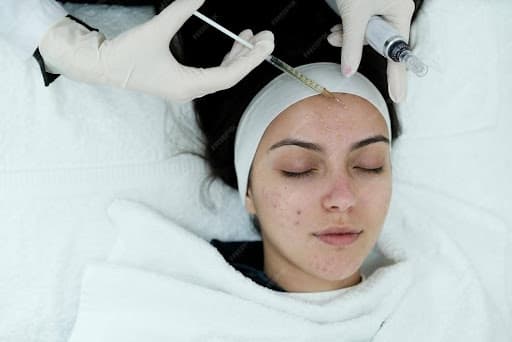
RF microneedling (Dermapen) tends to be a strong first-line option for boxcar scars specifically, since it works by creating controlled micro-channels directly into the scar tissue, stimulating collagen production from within the depression itself rather than only resurfacing the surface above it.
Where microneedling addresses depth, fractional laser resurfacing works more directly on the sharp, defined edges that make boxcar scars so visually noticeable. By creating controlled micro-injuries across the surrounding skin, fractional laser helps blend the transition between scarred and unscarred tissue, softening the shadow-casting border that gives boxcar scars their characteristic appearance.
Combining both approaches, microneedling for depth and fractional laser for edge blending, tends to outperform either used alone, particularly for moderate to deep boxcar scarring where a single mechanism isn't enough to address the full problem.
Since boxcar scar protocols commonly combine microneedling and fractional laser, recovery reflects both components working together. Based on how laser resurfacing recovery is generally described for acne scarring, pain associated with the procedure typically subsides within about two hours, though redness at treated sites can persist for up to ten days.
A few things to expect and manage during recovery:
A few preparation steps support a smoother outcome and reduce complication risk:
Treatment for boxcar scars diverges meaningfully from what works for ice pick or rolling scars, since the underlying structural cause differs between all three.
| Scar Type | Defining Feature | Primary Treatment Approach |
|---|---|---|
| Boxcar | Sharp, defined edges, consistent depth | RF microneedling plus fractional laser |
| Ice pick | Narrow, deep, puncture-like channel | TCA CROSS, applied directly into the scar |
| Rolling | Soft, sloping, tissue-tethered depression | Subcision, often combined with laser |
Scar Type
Boxcar
Defining Feature
Sharp, defined edges, consistent depth
Primary Treatment Approach
RF microneedling plus fractional laser
Scar Type
Ice pick
Scar Type
Rolling
Patients unsure which category their own scarring falls into, or dealing with a mix of more than one type, may find it useful to read how pitted acne scars differ by type before assuming boxcar-specific treatment is the right fit on its own.
As with any acne scar treatment, it's worth being upfront that complete elimination isn't the typical outcome, even with a well-matched combination of microneedling and fractional laser. In the best cases, boxcar scars become substantially less visible as both the depression fills and the edges soften, though the exact degree of improvement varies between patients and isn't fully predictable in advance.
At Nexus Clinic, boxcar scar assessment distinguishes shallow from deep presentations before recommending a protocol, rather than applying the same intensity regardless of depth. A few specifics:
For a fuller technical picture of how fractional laser resurfacing works across acne scarring generally, the clinic's own guide to laser resurfacing for acne scars covers benefits, side effects, and aftercare in more depth than a single scar-type page can.
Boxcar scars have sharply defined, box-like edges and consistent depth, unlike the narrow puncture of an ice pick scar or the soft, sloping shape of a rolling scar.
Neither alone is necessarily better. Microneedling addresses depth by stimulating collagen within the depression, while fractional laser softens the defined edges, and combining both typically produces a more complete result than either used in isolation.
This varies by depth, shallow boxcar scars may improve with fewer sessions of resurfacing alone, while deeper scars generally need a longer combined protocol spaced over several months.
Complete removal is uncommon. Significant, visible improvement through a combined microneedling and laser approach is a realistic and commonly achieved outcome.
Pain typically subsides within about two hours, with redness at treated sites lasting up to ten days, and full visible improvement developing over several weeks beyond that.
Yes, generally avoiding blood thinners and retinol products for two weeks beforehand and refraining from smoking supports a smoother recovery.
Boxcar scars respond best when treatment addresses both their depth and their defined edges together, not one in isolation. A proper assessment confirms exactly what approach your scarring needs. Book a scar assessment at Nexus Clinic, or message us on WhatsApp to find out which combination of treatments fits your boxcar scarring.
✓ Reviewed by Dr. Preetha Nair, Aesthetic Medical Doctor at Nexus Clinic KL
Real Google reviews from patients who came to Nexus Clinic for acne scar treatment.
Guides and answers from our doctors on this treatment.