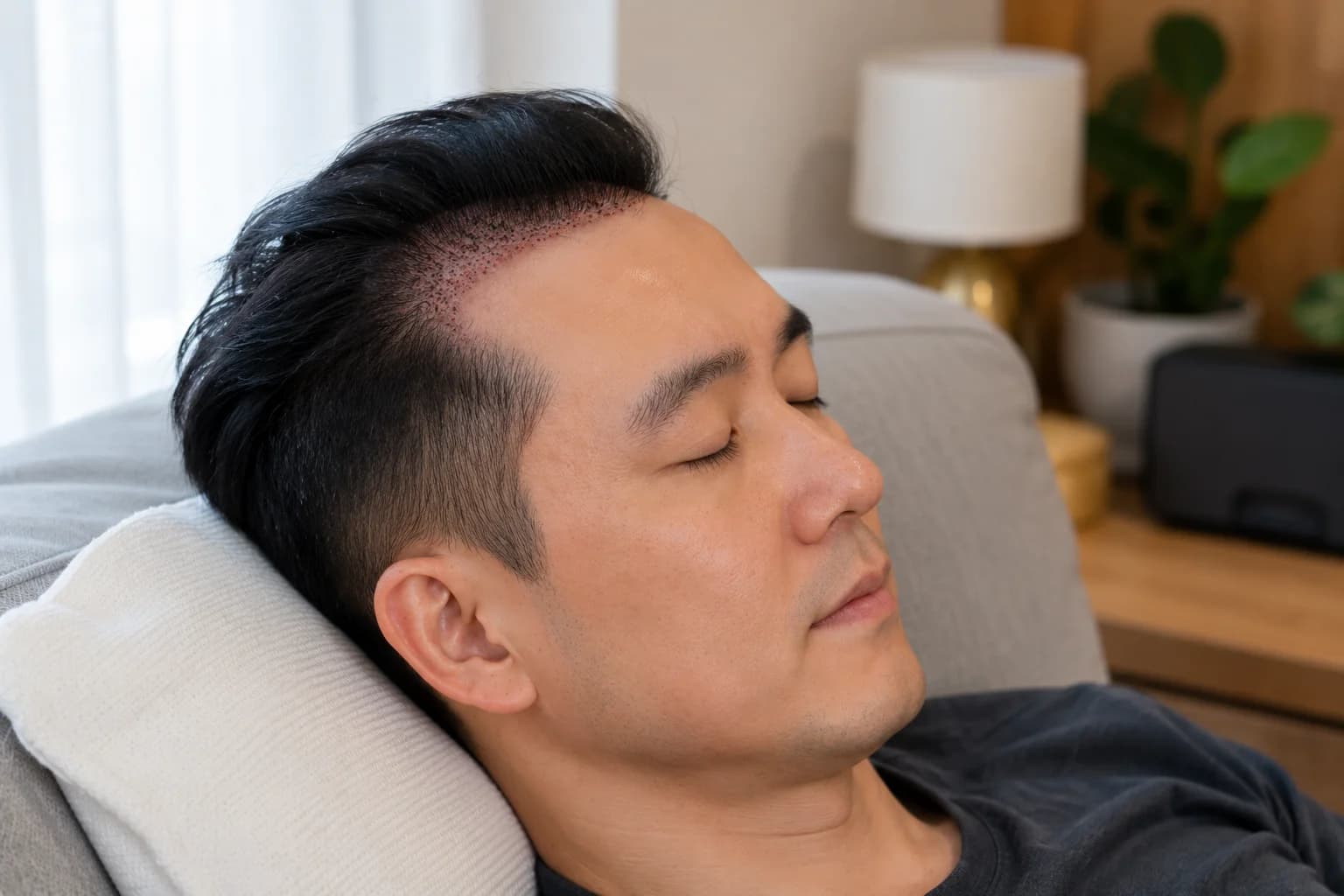
 Hair Treatment
Hair Transplant Cost in Malaysia and 18 Things You Should Never Do After Getting One
11 min read


Medically reviewed by Dr. Ashvinia Bala, MBBS (AIMST University), MMC Registration No. 82489 | Last reviewed:
Before and after discussions around FUE hair transplant tend to focus on the front of the head, the hairline, the crown, the areas everybody sees. Rarely does anyone talk of the donor area – the back and sides of the scalp, where grafts actually came from, even though it goes through its own transformation saying a lot about the quality of the procedure itself.
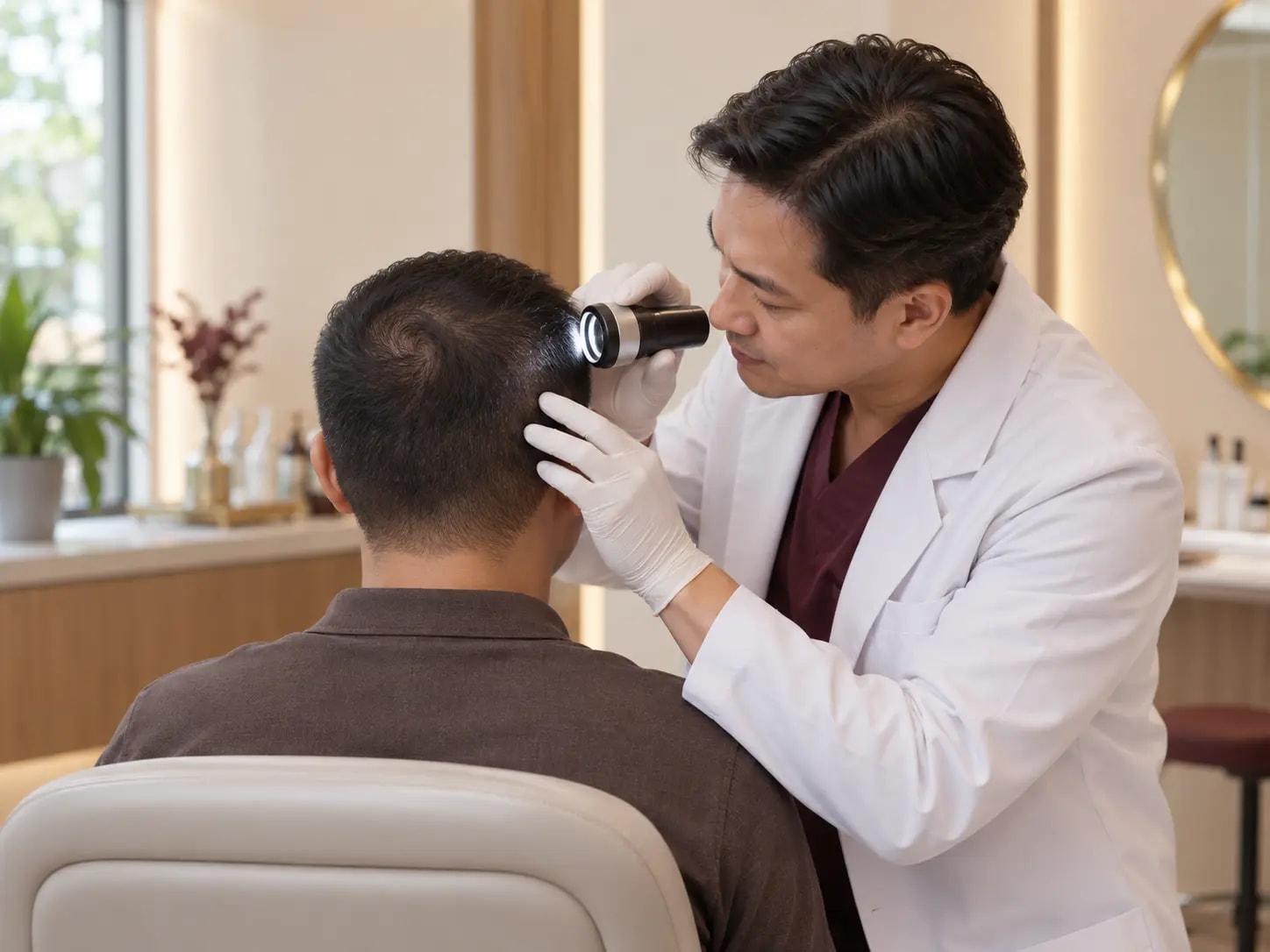
Donor Area Healing
Recipient and donor results
Any FUE before and after has two storylines running at the same time. The recipient area where the grafts have been placed is the one everyone photographs and shares. The donor area where the grafts have been extracted says just as much about surgical quality, but rarely receives that kind of attention.
Important Clinical Note
At Nexus Clinic KL, we plan to extract from the donor area in a way that distributes grafts across a wide zone, rather than concentrating removal in one section to help the donor area retain natural appearances even after a large graft session.
FUE extracts follicles from the donor area one by one, using a tiny circular punch, usually under 1mm wide, rather than removing a strip of the scalp the way older FUT techniques used to. This distinction is the whole reason FUE donor areas heal the way they do.
| Timeframe | What the Donor Area Looks Like |
|---|---|
| Day 1 | Tiny scabs across the extraction zone, some redness |
| Day 7 | Scabs mostly gone, area fully healed enough to return to work |
| Day 14 | Safe to cut hair normally, extraction sites no longer tender |
| Weeks 3 to 4 | Small dot scars visible only up close, fading further |
| Month 3 onward | Dot scars essentially invisible once hair regrows to length 1 or 2 |
Timeframe
Day 1
What the Donor Area Looks Like
Tiny scabs across the extraction zone, some redness
Timeframe
Day 7
Timeframe
Day 14
Timeframe
Weeks 3 to 4
Timeframe
Month 3 onward
Each individual scar ends up somewhere around 0.7 to 0.9mm, which is genuinely tiny, but thousands of them scattered across a small area can still be noticeable if you know exactly where to look, particularly with very short hairstyles or a shaved head.
Not every FUE donor area will end up looking the same at 6 months. A few things can distinguish a donor area that remains discreet from one that shows visible thinning or patchiness.
This is one of the more underrated signs of a well planned FUE procedure. A surgeon focused solely on the visible recipient result, without careful management of donor distribution, can leave you with a donor area that looks patchy under short hair even years later.
Most patients assume one FUE session is the whole story, and for many it is, but donor management still matters, since a poorly extracted donor zone limits your options if you ever want more coverage later, whether hair loss progresses further or you simply want additional density elsewhere. A surgeon extracting conservatively and evenly leaves you with enough remaining donor density for a future procedure if needed, while aggressive harvesting from one concentrated zone can genuinely limit that option, no matter how good the first result looks in the mirror.
The front of the head has its own separate timeline, worth understanding alongside the donor area timeline, since patients often fixate on one and forget the other is happening simultaneously.
When looking at FUE before and after galleries, the questions worth asking go beyond just how full the hair looks in the final photo.
A gallery only ever showing the front of the head, never the back, is not necessarily hiding something, but it is giving you an incomplete picture of what a procedure with that clinic actually looks like from every angle.
If you are still weighing surgery as an option, it is worth knowing that FUE produces visibly different results to non-surgical treatments. Our earlier comparison piece, hair transplant vs PRP, covers this distinction in more depth PRP improves the thickness of hair that is already there, while FUE physically relocates hair into areas that are already bald. If your hair loss is early and diffuse rather than a defined bald patch, PRP hair treatment or mesotherapy might actually get you a satisfying before and after without surgery at all.
For readers curious about where the field is heading more broadly, our piece on stem cell and PRP therapy leading hair restoration in 2026 touches on regenerative approaches some patients now combine with FUE to support both the recipient and donor areas during healing.
At Nexus Clinic's hair treatments hub, FUE extraction is planned to protect the donor area in as careful a way as the recipient area is planned. Patients are shown realistic timelines for both zones during consultation, including the expectations from the donor area, rather than only discussing the front of the head where the visible transformation happens.
No, not generally. Individual dot scars are tiny and spread out, becoming essentially invisible once hair regrows past a very short length.
Most patients see full surface healing within 7 to 14 days, with the small extraction sites indiscernible from a normal scalp shortly after.
Usually yes, though very short styles make any donor area scarring slightly more visible than longer styles would, particularly after large graft sessions.
This typically comes down to overharvesting from a concentrated area, punch size used and how evenly the surgeon distributed extraction across the donor zone.
Yes. A gallery showing only recipient area results gives an incomplete picture of surgical quality, since donor area healing reflects extraction technique directly.
In most well executed cases yes, though final results depend on graft survival, hairline design and how closely aftercare instructions were followed during healing.
Photos only tell part of the story until you know how your own scalp and donor supply compare. Book a free consultation with Nexus Clinic KL, or message us on WhatsApp to discuss what realistic results would look like for you.
✓ Reviewed by Dr. Ashvinia Bala at Nexus Clinic KL
Real Google reviews from patients who came to Nexus Clinic for FUE hair transplants.
Guides and answers from our doctors on this treatment.
Hair Treatment Hair Transplant
 Hair Treatment