 Hair Treatment
How to Choose the Right Hair Transplant Clinic in KL Without Regretting It Later
9 min read


Medically reviewed by Dr. Ashvinia Bala, MBBS (AIMST University), MMC Registration No. 82489 | Last reviewed:
Women considering a hair transplant begin from a fundamentally different set of criteria than men, and this difference guides most aspects of the procedure. While male hair loss follows a recognisable pattern of receding, women often lose hair in a diffuse thinning across the top of the head - while the hairline itself may stay relatively intact.
Ludwig Scale Assessment
Cause first, then treatment
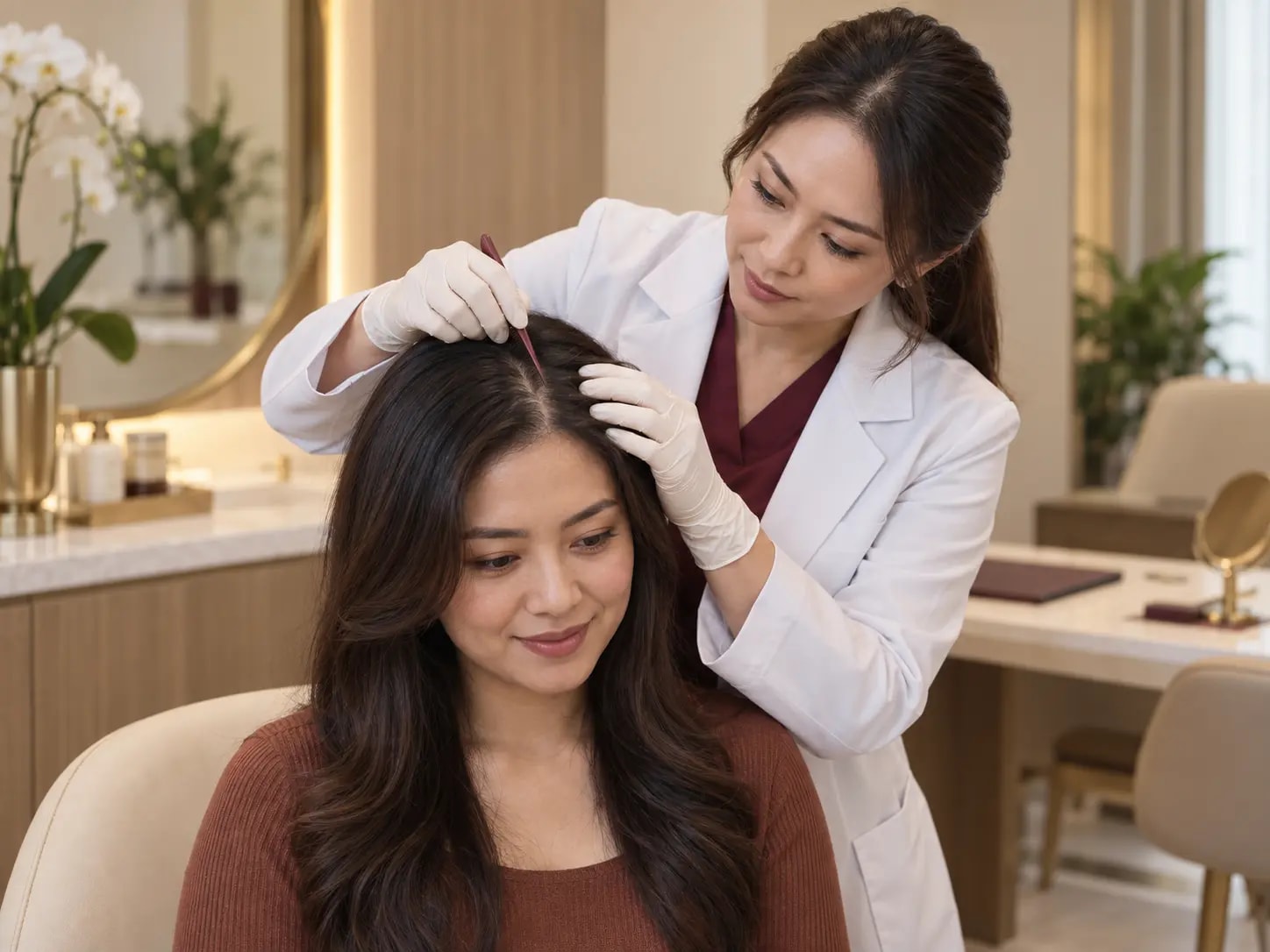
Female pattern hair loss is measured with the Ludwig scale - not the Norwood scale common to the male population - and classifies the condition based on the widening of parting and the visibility of the scalp, as opposed to a receding hairline found in men.
Important Clinical Note
At Nexus Clinic KL, women are assessed for stability of the donor hair before recommending a transplant, as for some women, the cause of hair loss can be temporary or unrelated to genetic factors, and surgery is only recommended after determining the root cause.
Doctors classify female pattern hair loss into three main categories based on severity:
| Ludwig Type | What It Looks Like | Usual Approach |
|---|---|---|
| Ludwig Type 1 | Mild widening of the parting, and thinning | Usually managed with topical treatment first |
| Ludwig Type 2 | More notably widened part, thinning towards the top | Combination of non-surgical treatment and surgical planning |
| Ludwig Type 3 | Extensive thinning, visibly sparse scalp across the top | Surgery usually recommended alongside continued treatment |
Ludwig Type
Ludwig Type 1
What It Looks Like
Mild widening of the parting, and thinning
Usual Approach
Usually managed with topical treatment first
Ludwig Type
Ludwig Type 2
Ludwig Type
Ludwig Type 3
Unlike in men, most women will have a donor area retained at the back and sides of the head regardless of the type of hair loss they experience.
This is where female hair loss fundamentally differs from male pattern baldness. A man's hair loss stems from an interplay of hormones and genetic factors, while women's hair loss can be driven by a variety of causes:
Some causes of hair loss are treatable, and will see improvement with time and care, which is another reason why a comprehensive diagnosis is essential before deciding on a transplant. Blood tests in combination with a Ludwig-scale analysis is standard procedure for a reason - not all causes of hair loss warrant a surgical procedure.
Not all women considering a graft will be eligible - and this is one of the most critical conversations to have with a doctor, particularly when it comes to hair transplants and thinning hair rather than loss of the hairline.
This is one of the main reasons a female hair transplant consultation takes longer than a male consultation - there are more factors to eliminate before surgery. Once you've been cleared for surgery, the procedure itself is similar across genders, though there are some differences in surgical planning. See our FUE hair transplant guide page for a closer look at the extraction technique - it works the same for female patients, albeit on a smaller scale. Rather than removing a strip of skin from the back of the head, follicular units are removed one at a time and re-planted on the recipient area.
The difference lies in density and coverage. While male hair transplants usually concentrate on a single defined hairline, female transplants usually require a broader coverage across the parting and top of the head, and a more natural density.
Most women considering a hair transplant will be in the earlier stages of Ludwig-type hair loss, and many of these cases can be effectively managed and delayed with non-surgical treatment, reducing the need for a transplant entirely.
It's not uncommon for a medical or regenerative treatment to be combined with surgery for women in later stages - maintaining existing hair and targeting permanently thin areas.
At Nexus Clinic's hair treatments hub, female patients go through a comprehensive assessment to identify a cause and suitable pattern of thinning, and any surgery or treatment is planned based on this. For those likely to have a temporary or medical cause for their hair loss, this area is investigated before a graft count or surgery date is suggested. When surgery is appropriate, grafts are planned around natural density rather than a distinct hairline, and non-surgical treatment is often used in conjunction with surgery rather than separately.
No, while hereditary female pattern hair loss occurs frequently, there is a wide range of causes, from hormonal imbalances to nutrition, and it's important to determine the root cause.
Yes, women experience diffuse thinning across the top of the head more often than a receding hairline, and hair transplants can be planned around this.
It's recommended, as several causes of female hair loss are treatable or temporary, and it's important to address this before a transplant.
Not necessarily, as postpartum shedding is a known cause of temporary hair loss and is best addressed without a transplant, as it will return on its own in time.
Yes, styles or extensions that pull on the hairline can cause traction alopecia that may become permanent if not treated.
Because of the extensive thinning, a person may not be a good candidate for surgery, so in this type of situation, non-surgical treatment is typically considered first.
The most effective way to treat women's hair loss is to determine the underlying cause first. Feel free to message us on WhatsApp if you have any inquiries before you book or book a free consultation with Nexus Clinic KL.
✓ Reviewed by Dr. Ashvinia Bala at Nexus Clinic KL
Real Google reviews from patients who came to Nexus Clinic for hair transplants.
Guides and answers from our doctors on this treatment.
Hair Treatment Hair Treatment
 Hair Treatment