 Hair Treatment
How to Choose the Right Hair Transplant Clinic in KL Without Regretting It Later
9 min read


Medically reviewed by Dr. Ashvinia Bala, MBBS (AIMST University), MMC Registration No. 82489 | Last reviewed:
Every surgical procedure carries a risk of complications to patients, and a hair transplant is no exception. Fortunately, it has a rather low rate of serious complications at around 0.1 percent. This means that for every 1,000 patients, only one will be dealt with something beyond the "typical" set of symptoms. The far more important question to ask is: what are these ordinary effects, and how do you differentiate them from something abnormal?
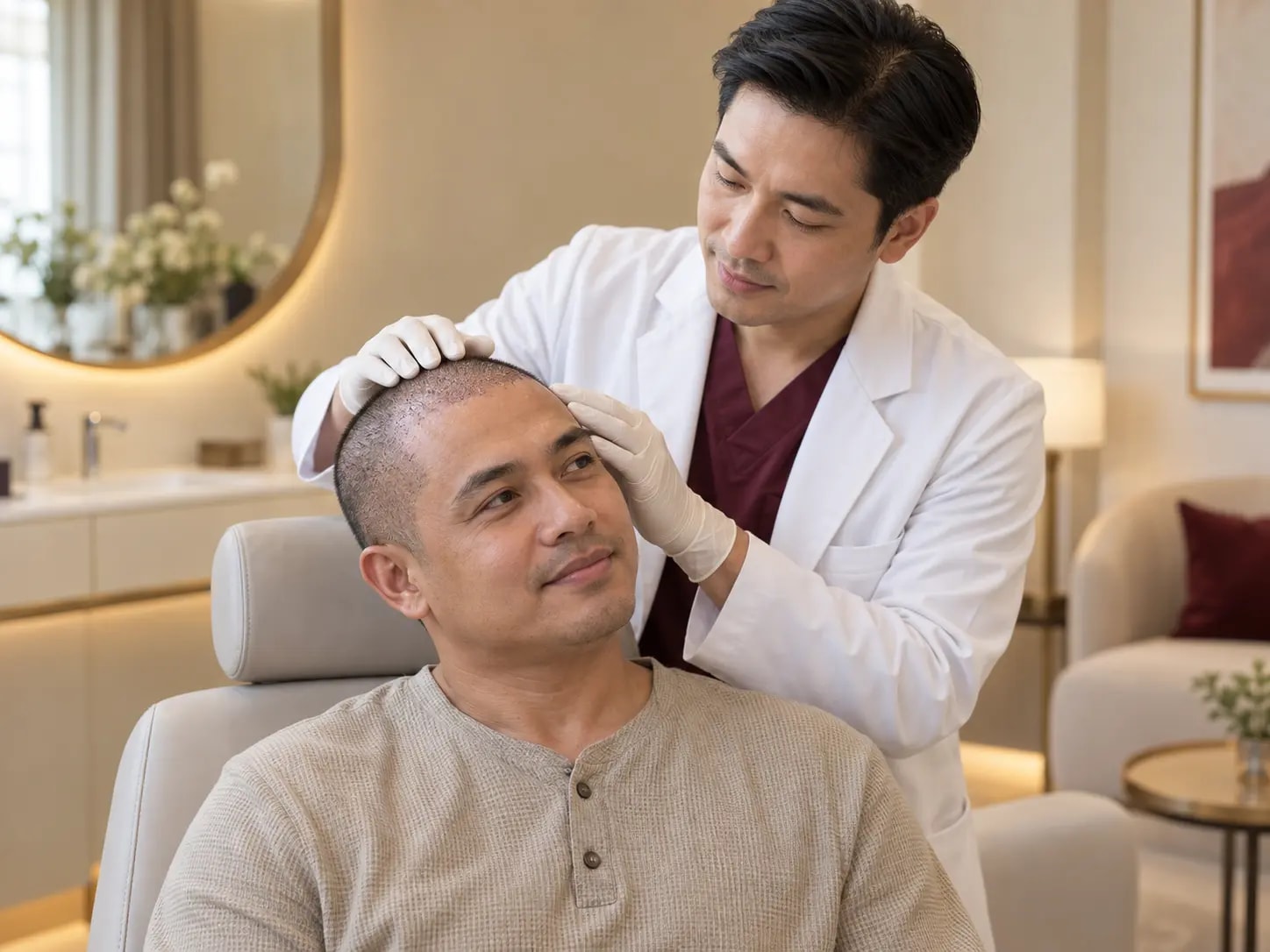
Doctor-Led Safety
Sterile surgical protocols
Important Clinical Note
At Nexus Clinic KL, all hair transplant procedures are performed under licensed, doctor-led supervision with sterile surgical protocols to minimise risk. If you experience any symptom beyond normal healing, our clinical team is available to assess it promptly rather than leaving you to monitor it alone.
These are not complications, but rather the healing process in the days after surgery which every patient should expect.
The swelling is expected to peak around day 3 or 4 after surgery and resolve by day 5. If your forehead looks puffy a few days into your recovery, there is nothing to be concerned about.
One of the more worrying side effects is shock loss, or the loss of hairs that have transplanted within the first 2 to 8 weeks after surgery. Patients who have not been briefed on this before are understandably concerned that the procedure did not work. In reality, the follicle underneath has usually survived and will go on to produce new hairs which patients should see again around month 3 or 4. It is the job of your clinic to tell you about shock loss before your procedure rather than after you've called, panicked, about losing your hairs.
There is a set of side effects that are more uncommon, but still fall under the category of being "manageable". These are generally not a concern unless they worsen:
| Side Effect | How Common | Typical Duration |
|---|---|---|
| Itching | Roughly 3 in 10 patients | 1 to 3 weeks |
| Folliculitis (inflammation of the follicles) | Uncommon | Days to a couple of weeks |
| Prolonged numbness | Uncommon | Up to 2 to 3 months |
| Excessive bleeding | Uncommon | Should stop within 1 to 2 days |
| Hiccups after surgery | Rare | Hours to a few days |
Side Effect
Itching
How Common
Roughly 3 in 10 patients
Typical Duration
1 to 3 weeks
Side Effect
Folliculitis (inflammation of the follicles)
Side Effect
Prolonged numbness
Side Effect
Excessive bleeding
Side Effect
Hiccups after surgery
Specifically, itching is something you want to note as a side effect, because it is common enough (most patients will experience it to some degree) and scratching can dislodge a graft that has not yet healed.
These side effects are uncommon but worth knowing about as they can be dealt with faster rather than waiting to see if they resolve on their own.
If something is going wrong, signs that it is not resolving on its own include: pain worsening rather than improving, signs of infection (pus, foul-smelling discharge), fever, or worsening of swelling rather than improvement after day 5.
Most of the more serious side effects and complications are caused by 2 factors: how the procedure was performed, and how well aftercare instructions were followed.
If you're still weighing the surgical route against non-surgical alternatives, our hair loss treatment page covers alternatives like PRP hair treatment, which have a much lower side effect profile because they do not require an incision. If you've decided on a surgical route, our FUE hair transplant page talks about the technique in detail, including why it tends to have fewer scarring-related side effects than the strip method.
If your reason for being concerned about side effects is the potential cost of the procedure, including any follow up visits, our hair transplant price page goes into detail on what a transparent quote should entail. If you want a realistic picture of what your scalp will look like at each stage of healing, our hair transplant before and after page goes into even more detail.
Patients with concerns about losing hair due to thinning on the back or sides of their scalp (often due to being on weight loss medication) might want to read our piece on Mounjaro and hair loss, which covers a source of shock loss unrelated but similar to the cause after a hair transplant.
At Nexus Clinic's hair treatments hub, every hair transplant is performed in conjunction with a licensed doctor, under a strict system of sterile procedures designed to keep the risk of infection as low as possible. Before your procedure, your medical history and medication will be assessed to ensure there are no risks for bleeding or complications during healing. After your procedure, you will be given the aftercare instructions and a follow up consult so that any concern, such as prolonged swelling or numbness, can be addressed promptly rather than being left to resolve on its own.
Yes. There is less than 0.1 percent chance for serious complications, making it one of the lower risk cosmetic surgical procedures when performed by an experienced and licensed surgeon.
No. Shock loss is the temporary shedding of transplanted hairs within the first 2 to 8 weeks, and it is a normal part of the healing process rather than a complication.
Swelling generally reaches its maximum between days 3 and 4 after the procedure and is gone by day 5, although in some patients it may persist longer than this.
Worsening pain, signs of infection (pus or discharge), fever, or prolonged and worsening swelling after day 5 are all reasons to get in contact with your clinic as soon as possible.
In general, FUE produces tiny dot scars rather than the linear scars of strip harvesting, so there are fewer worries about scars.
It is very rare, but when it does occur, it is usually resolved within a few weeks to a few months.
Yes, significantly. Following your clinic's washing schedule, avoiding pressure on the scalp, and disclosing your medical history beforehand have a major impact in reducing your risk of complications.
Most of what people search up under "hair transplant side effects" turns out to be a normal part of the healing process. If you want to know what you personally should expect, speak to a doctor. Book a consultation with Nexus Clinic KL through our contact page, or WhatsApp us directly if you have a particular symptom you want to ask about.
✓ Reviewed by Dr. Ashvinia Bala at Nexus Clinic KL
Real Google reviews from patients who came to Nexus Clinic for hair transplants.
Guides and answers from our doctors on this treatment.
Hair Treatment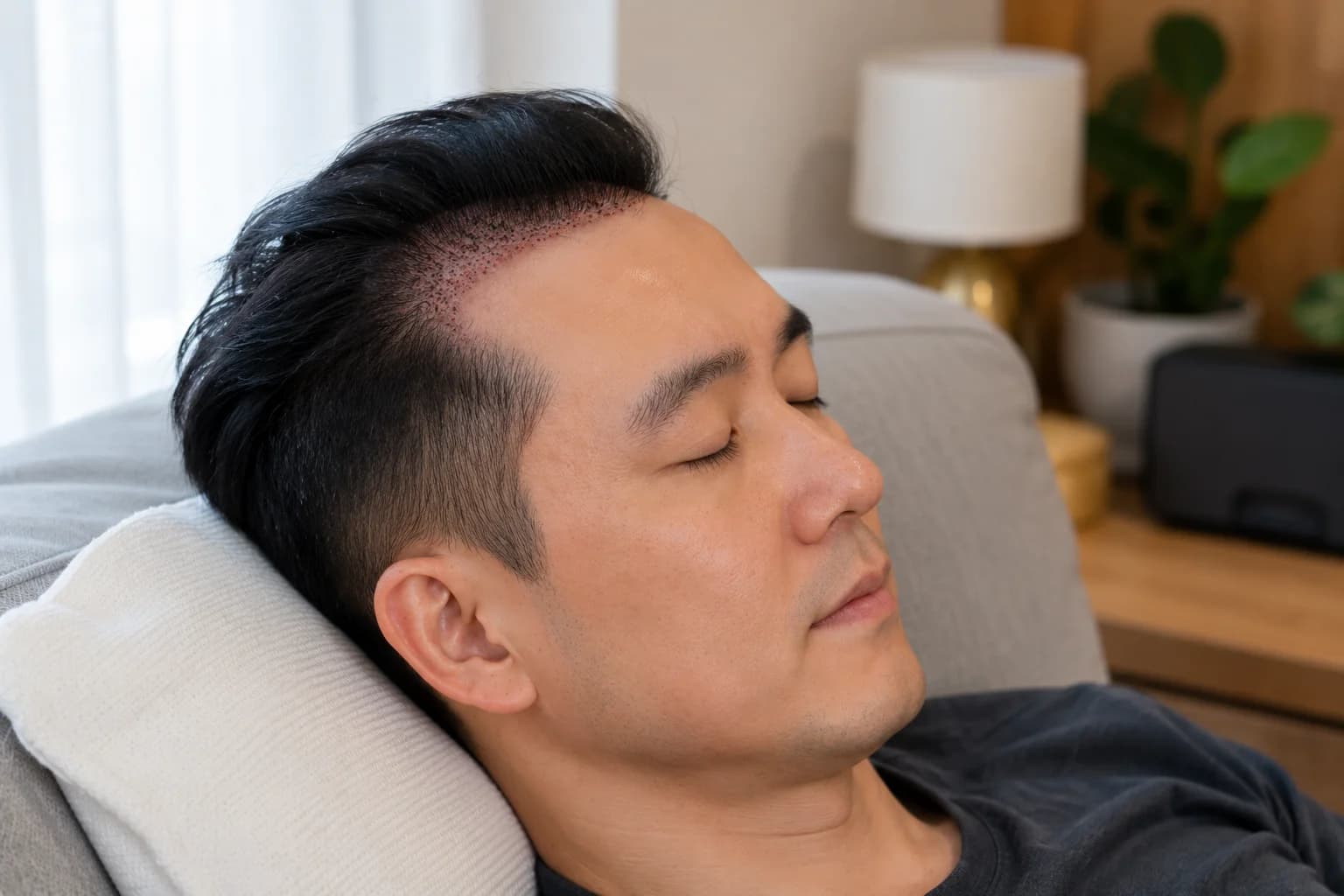 Hair Treatment
 Hair Treatment