 Hair Treatment
How to Choose the Right Hair Transplant Clinic in KL Without Regretting It Later
9 min read


Medically reviewed by Dr. Ashvinia Bala, MBBS (AIMST University), MMC Registration No. 82489 | Last reviewed:
An FUE hairline transplant rebuilds the upper lip line by extracting individual hairs from the donor area and implanting them one by one along the front edge of the scalp using single-hair grafts at the very front to create a soft transition. In Malaysia, such a procedure requires between 1,200 and 2,500 grafts depending on the extent of recession and typically takes 9-12 months to fully grow in.
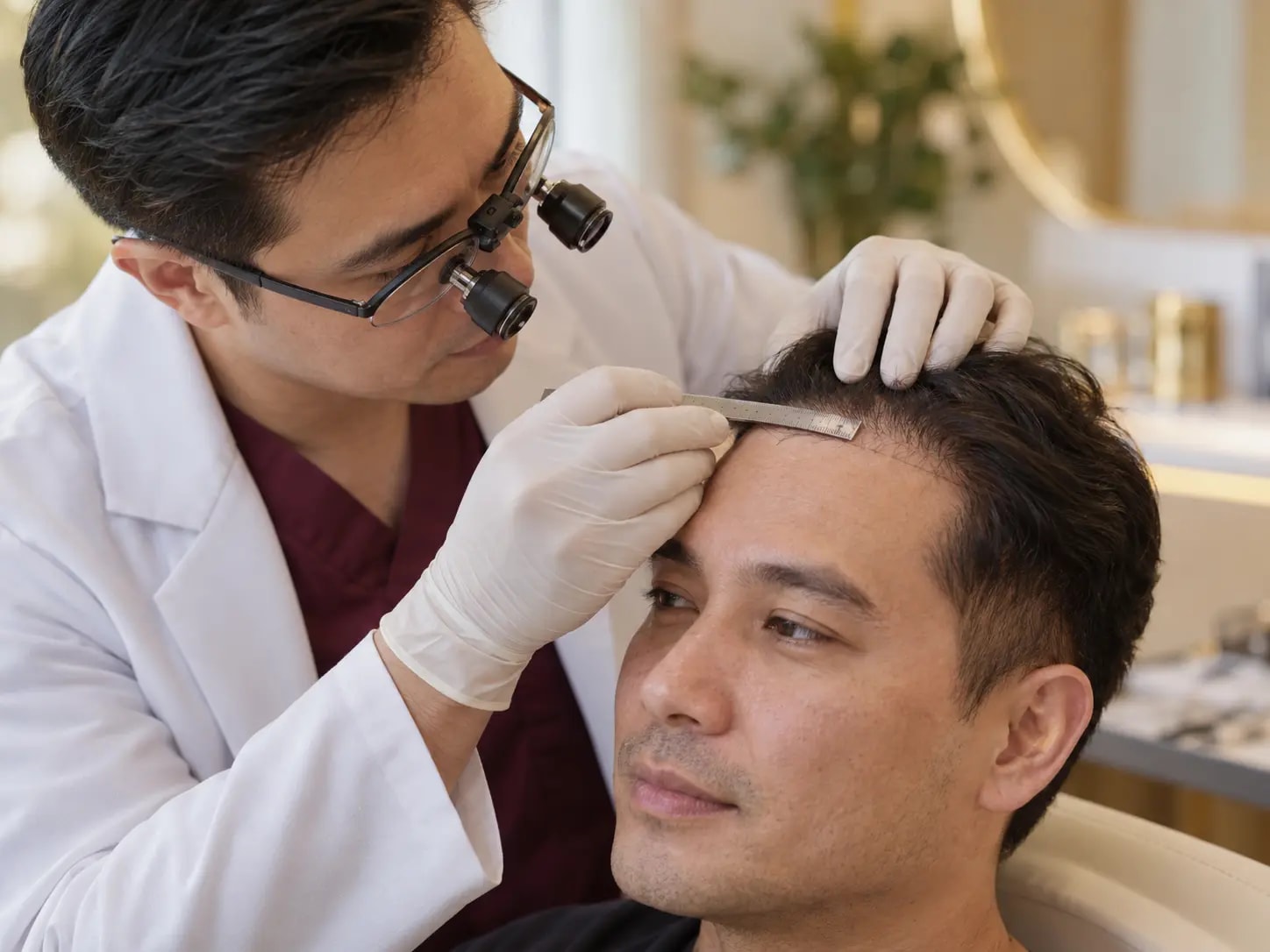
Single-Hair Grafts
Soft frontal transition
That is the short version of the story. The long version, which will determine whether your grafts will look natural and not drawn attention to themselves, concerns the specifics of the FUE hairline design, technique and the way individual grafts are placed to recreate the natural pattern of the upper lip line.
Important Clinical Note
Nexus Clinic KL exclusively uses single-hair grafts along the front transition zone during FUE hairline procedures, with multi-hair grafts used sparsely further back to add density while preserving the delicate appearance of the front edge.
Not every FUE procedure is a hairline case, and working on the upper lip line requires a substantially greater degree of precision than density-focused FUE work further back on the head. A misplaced graft in the latter region typically blends in with the general density of the scalp, whereas a single graft placed incorrectly along the upper lip line will be immediately apparent due to the visibility of the edge. This is why hairline-focused FUE procedures typically involve
Hairline-focused FUE procedures typically utilise a more limited graft count than density-building procedures applicable to the whole scalp due to the smaller surface area covered by the hairline.
| Hair Loss Stage | Focus of Work | Typical Graft Count |
|---|---|---|
| Early recession, temples only | Temple points, minor front correction | 1,200 – 1,500 |
| Norwood 3 – moderate recession | Full hairline and frontal third coverage | 1,500 – 2,000 |
| Advanced recession into mid-scalp | Hairline plus frontal thinning coverage | 2,000 – 2,500+ |
Hair Loss Stage
Early recession, temples only
Focus of Work
Temple points, minor front correction
Typical Graft Count
1,200 – 1,500
Hair Loss Stage
Norwood 3 – moderate recession
Hair Loss Stage
Advanced recession into mid-scalp
Graft count in hairline-focused FUE procedures typically falls within the 1,300-2,000 range according to the documented cases at Nexus Clinic KL, with more extensive sessions utilising greater graft numbers when thinning occurs both along and behind the hairline.
Hairline precision is one of those areas where the surgical skill of one doctor can be immediately distinguished from another, due to the visibility of the front edge. When speaking to a potential surgeon about the hairline, ask them specifically how many hairline cases they have done, as being able to distinguish one from the general density-building FUE procedures is an immediate filter for someone whose surgical specialisation is not hairline work. A surgeon who is confident about their hairline work will be able to describe their approach to designing the temporal points and the transition area in detail before discussing your particular case, including what considerations should be made to your facial features prior to graft count estimation.
Two patients with a similarly sized graft count can walk away from their hairline procedures with completely different results due to the importance of the front edge shaping. It is in the precision of hairline shaping that FUE procedures truly demonstrate their superiority over strip surgery, due to the ability to individually place every graft at the desired angle.
Patients looking to restore facial hair rather than the scalp hairline may also want to consider a beard transplant, as similar single graft precision techniques can be used on the jawline and cheek region.
Hairline procedures generally follow the standard post-operative FUE care guidelines, with the caveat that a greater number of patients report the early shedding phase to be more intense due to the front edge being more sensitive to the initial trauma. The early healing stage, during which time the grafts will begin to consolidate, typically takes between 7 and 14 days, with shedding occurring over the following weeks and new growth becoming apparent from approximately month 3 or 4. Full growth is typically seen by month 9-12.
A hairline transplant rarely works as a standalone procedure, as the surrounding area typically continues to thin regardless of the front edge being reconstructed.
Minoxidil and finasteride can often be used concurrently with the hairline procedure to slow down further recession around the implanted grafts, as a nicely reconstructed hairline framed by baldness soon looks out of place itself. In addition, PRP hair treatment can be used during the healing phase to accelerate recovery and improve graft take rates. If the thinning extends further back on the head in addition to the hairline itself, mesotherapy can be used to address this form of diffuse thinning as an adjunct to the hairline surgery rather than an alternative. If you are trying to decide whether surgery is right for your particular case of hair loss, you may want to review our general overview of surgical and non-surgical hair loss treatments which discuss the relative indications for each procedure in greater detail. Our article on stem cell and PRP therapy leading hair restoration in 2026 also covers some of the innovative surgical techniques which can be used in conjunction with the hairline procedure specifically.
Every hairline procedure at Nexus Clinic's hair treatments hub begins with an assessment of the patient’s facial features. The general proportions of the face, the current degree of recession and the projected natural pattern of continued recession are taken into account to inform the graft placement design. Single-hair grafts are utilised exclusively along the front transition zone, with the placement of the temporal points being carefully considered to ensure that the reconstructed hairline continues to look natural decades later.
The majority of hairline transplant procedures require between 1,200-2,500 grafts, depending on the degree of recession and whether additional frontal thinning needs to be addressed.
Single-hair grafts allow for a natural gradual transition at the front edge, while multi-hair grafts at the front would make the reconstructed hairline look too dense and therefore artificial.
Not necessarily, as fully closing the temporal points will often cause the reconstructed hairline to look unnatural as you continue to age. Temporal points can be left open or minimally corrected depending on your facial features.
New growth typically becomes apparent 3-4 months after the procedure, with fully-grown results generally visible by 9-12 months after surgery.
Yes, a hairline transplant can be combined with a variety of additional treatments. Minoxidil or finasteride can be prescribed to slow down further recession around the implanted grafts, while PRP hair treatment can be used to accelerate healing after the surgery.
Not necessarily, as a lower hairline will often look unnatural as you continue to age due to the natural progression of hair loss.
The right hairline is always specific to you and your facial features. Book a free consultation with Nexus Clinic KL, or contact us via message us on WhatsApp if you have any other questions and would like to discuss the options available to you.
✓ Reviewed by Dr. Ashvinia Bala at Nexus Clinic KL
Real Google reviews from patients who came to Nexus Clinic for FUE hair transplants.
Guides and answers from our doctors on this treatment.
Hair Treatment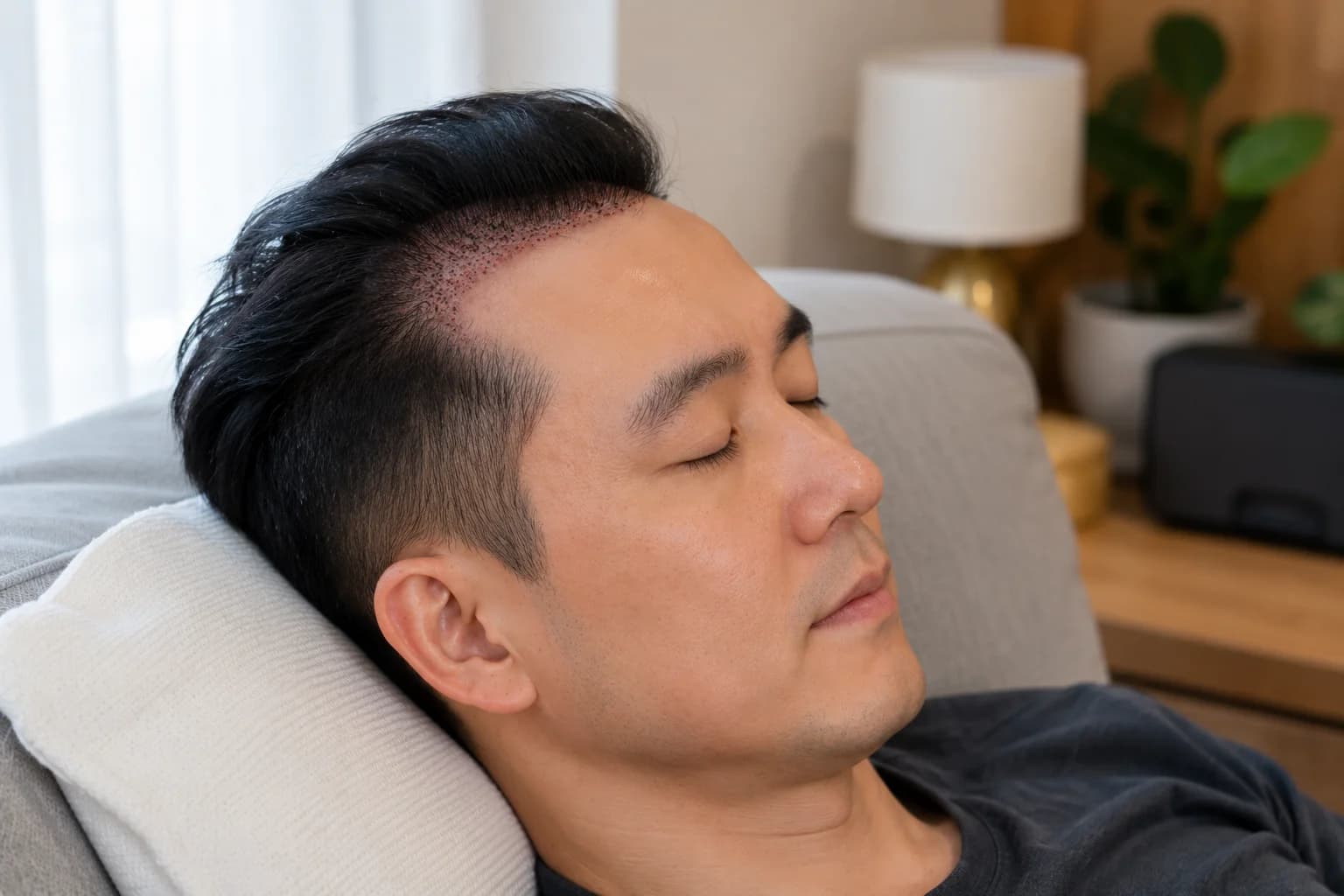 Hair Treatment
 Hair Treatment